Litter-box planning for a small apartment
A small apartment still needs enough full-size litter boxes in quiet, separate and accessible locations. Good placement and frequent scooping matter more than disguising one cramped box as furniture.
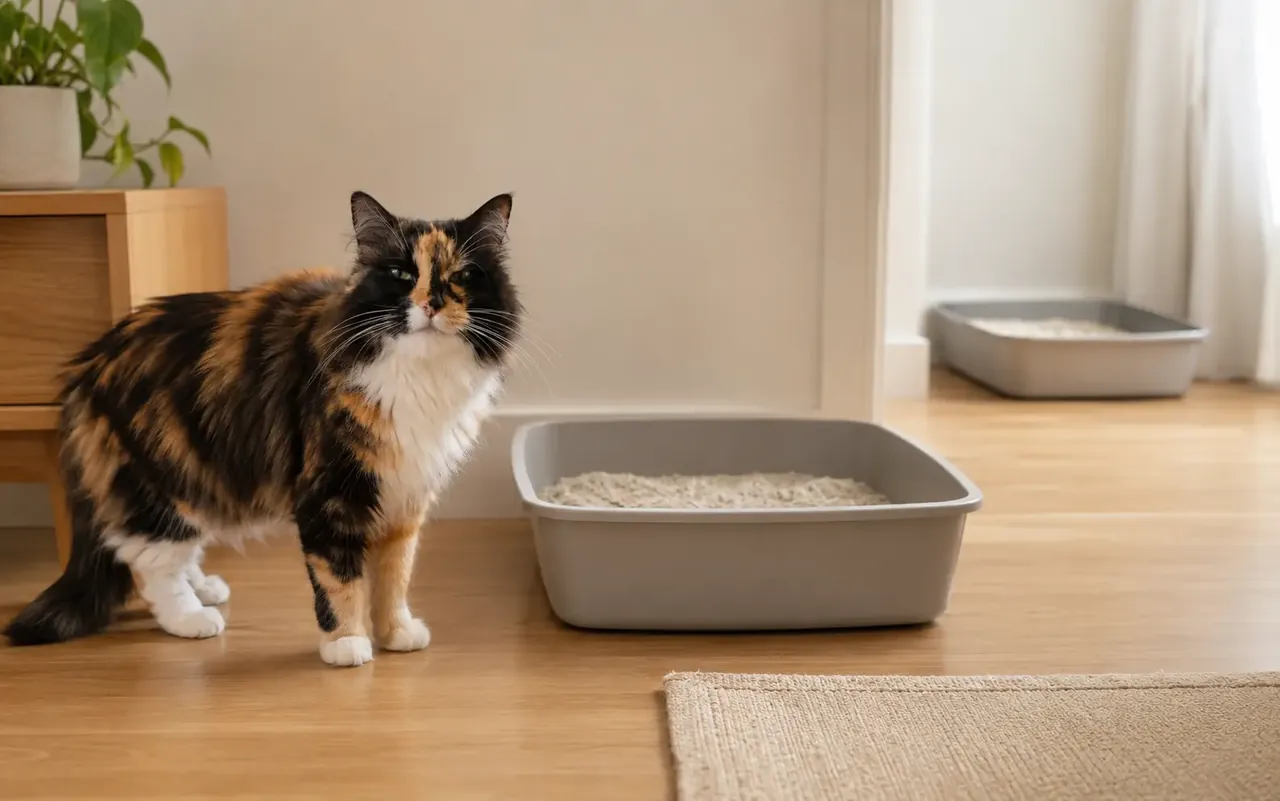 Topic illustration selected for this guide. Some learning images may be AI-assisted.
Litter-box planning for a small apartment — the quick answer
✓ Map quiet routes, ventilation, door access and places where the cat cannot be cornered.
✓ Use attractive screens or furniture spacing while keeping the entrance open and box spacious.
✓ Persistent avoidance requires both environmental review and veterinary assessment.
Limited space makes thoughtful placement more important, not less. This guide shows how to provide enough clean, private options without hiding every box in one cramped area, what equipment helps, how to protect trust and when routine care should become professional care.
Count usable locations, not rooms
Map where a box can stay available day and night without blocking doors, food, water or sleep areas. Separate boxes by meaningful distance or barriers; two trays touching each other function like one resource when another cat guards the area.
Protect privacy without creating a trap
Choose a quiet place with visibility and more than one approach where possible. Avoid dead-end closets, balconies, hot utility spaces and locations beside washers or sudden machinery. Decorative cabinets must preserve ventilation, turning space and an easy exit.
Use full-size boxes
Do not downsize the toilet simply because floor space is limited. A large simple tray may fit beneath an open table or along a low-traffic wall better than a bulky covered product. Keep the entrance unobstructed and move storage away from the route.
Control odour through maintenance
Scoop at least daily, remove waste promptly, wash trays appropriately and ventilate the room safely. Avoid perfumed litter, sprays and essential oils. A lid or cabinet can trap odour at the cat's nose even when people notice it less.
When accidents are not a space problem
Sudden avoidance, frequent visits, pain, constipation signs or urine outside the box needs veterinary assessment. Repeated attempts with little or no urine is an emergency. Do not keep moving the only box while delaying a health check.
Your quick checklist
Loading saved progress…
Three simple things you can do
You do not have to change everything today. Pick one step that feels realistic, try it and see how your cat responds.
- 1Observe your cat’s individual baseline.
- 2Make one gentle change at a time.
- 3Ask a qualified professional when health or safety is involved.
Common mistakes
×Waiting for a dramatic symptom instead of noticing smaller changes from the cat’s normal routine.
×Changing several things at once, making it difficult to learn what actually helped.
×Treating general guidance as a substitute for advice from a veterinarian who knows the individual cat.
Questions cat people ask
Does every cat follow the same rule?+
No. Age, health, history, temperament and environment all change what works for an individual.
When should I seek professional help?+
Seek veterinary advice for sudden, persistent or concerning changes and urgent help for breathing difficulty, collapse, seizures, poisoning or urinary obstruction signs.
Still looking for the right answer?
Search the full EverYes Cats encyclopedia with your own words — a symptom, food, behaviour, breed or everyday question.
Checked, dated and transparent
- Prepared by
- EverYes Cats editorial team
- Last updated
- Source checked
- Primary reference
- FelineVMA/ISFM: House-Soiling Guidelines ↗
We begin with the named reference, rewrite the information in plain language and add practical cat-parent steps. Urgent health statements are checked against veterinary sources. This guide has not been individually reviewed by a veterinarian unless explicitly stated. It provides education, not diagnosis or treatment.
How we choose and use sources →
Spotted something unclear or outdated? Tell us so we can review it.
Loading your saved choice…
A litter box should be large enough for the cat to enter, turn, dig and eliminate without crowding. Interior floor space and entry access matter more than a product label, decorative shape or claimed age range.
 01
 02
 03