How to prevent mats in a long-haired cat
Prevent mats by checking high-friction areas frequently and removing tiny tangles before they tighten. Gentle combing, mobility support and professional help are safer than pulling, scissors or waiting for a large felted area.
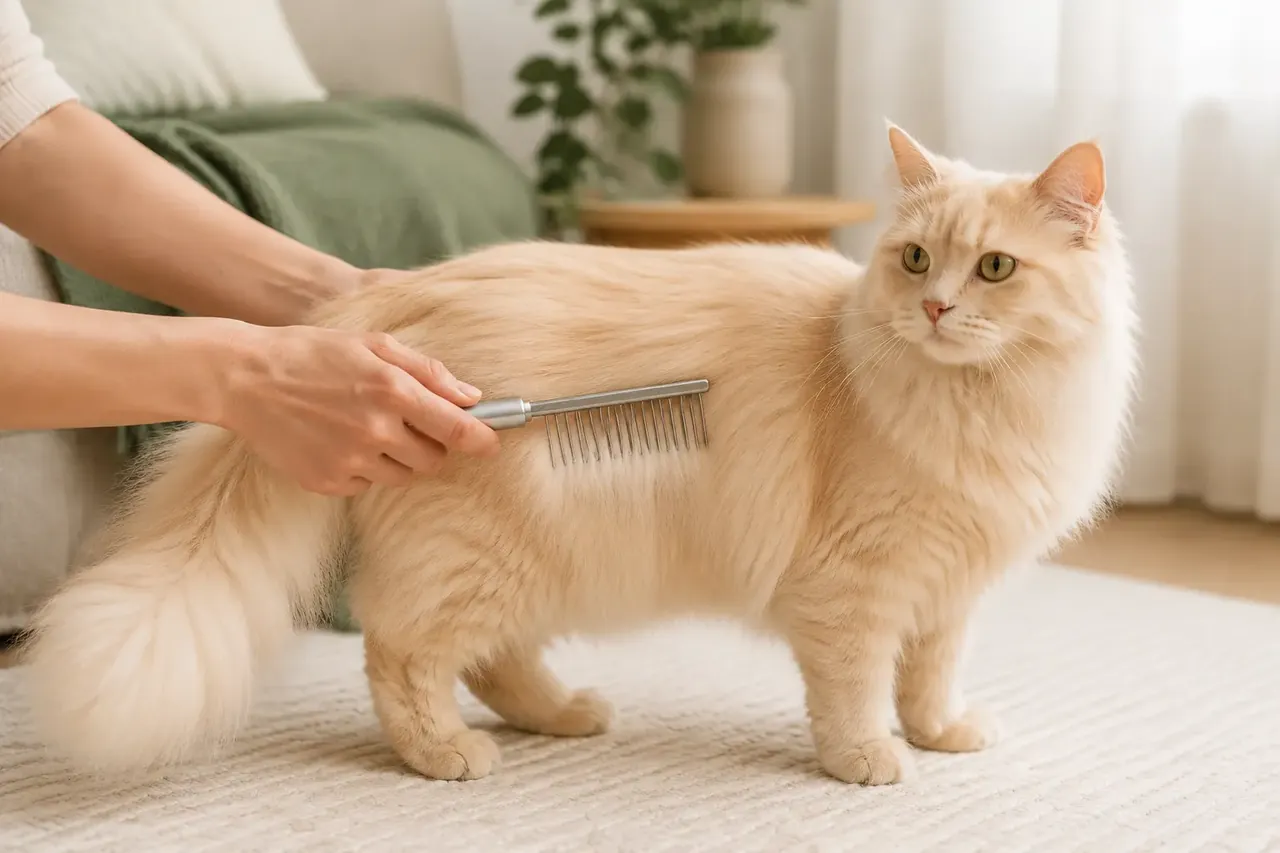
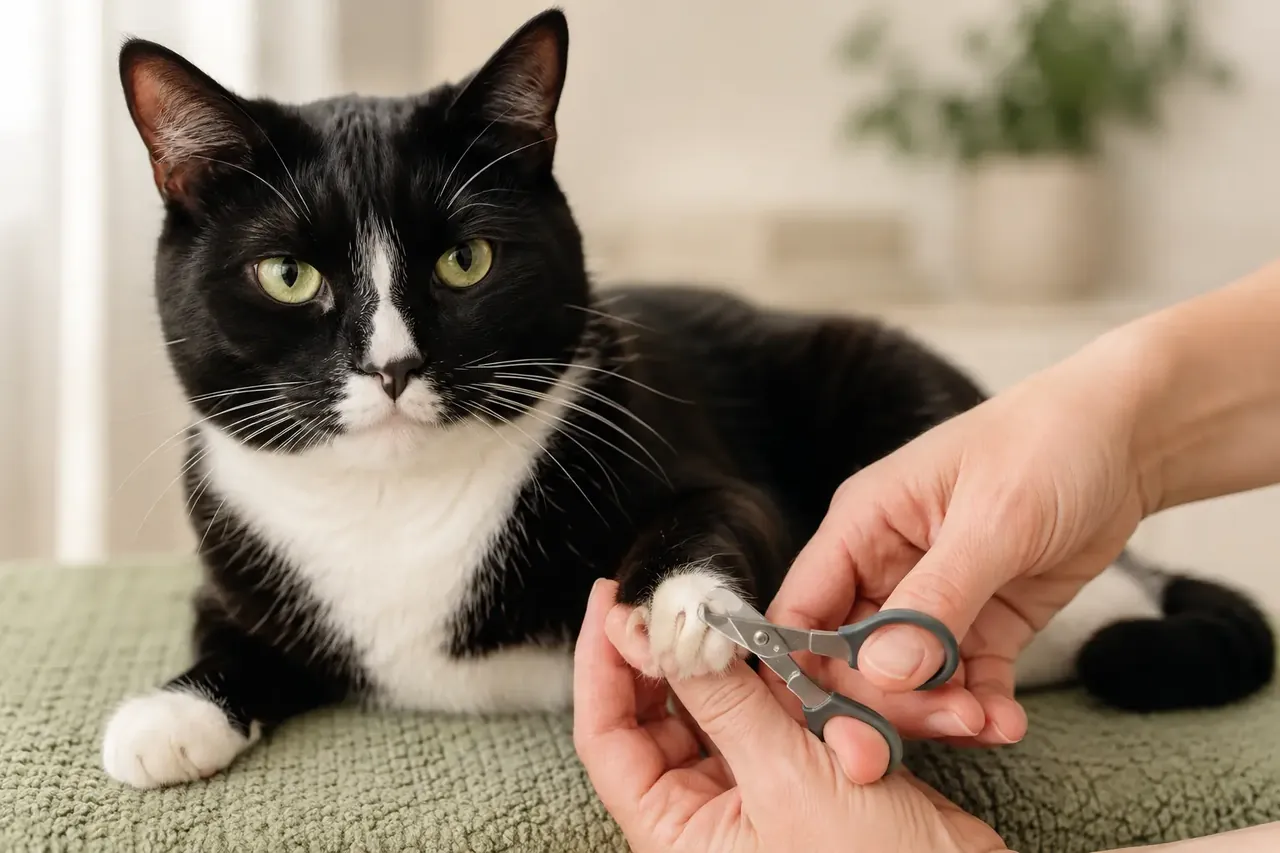 Topic illustration selected for this guide. Some learning images may be AI-assisted.
How to prevent mats in a long-haired cat — the quick answer
✓ Use a metal comb that reaches the coat base plus a soft brush for finishing.
✓ Comb high-risk areas in layers and confirm the teeth pass from skin level to hair tips.
✓ Use a groomer or veterinary team for tight, extensive or skin-attached mats.
Friction areas behind ears, under legs, around the collar and on the rear can knot quickly. This guide shows how to stop small tangles becoming painful felted mats, what equipment helps, how to protect trust and when routine care should become professional care.
Map the high-risk areas
Check behind ears, the ruff, armpits, chest, belly, groin, rear legs and beneath collar or harness contact points. Use fingers to feel for small changes while the cat stands comfortably. Dense coat can hide a tight mat close to skin.
Comb before tangles compact
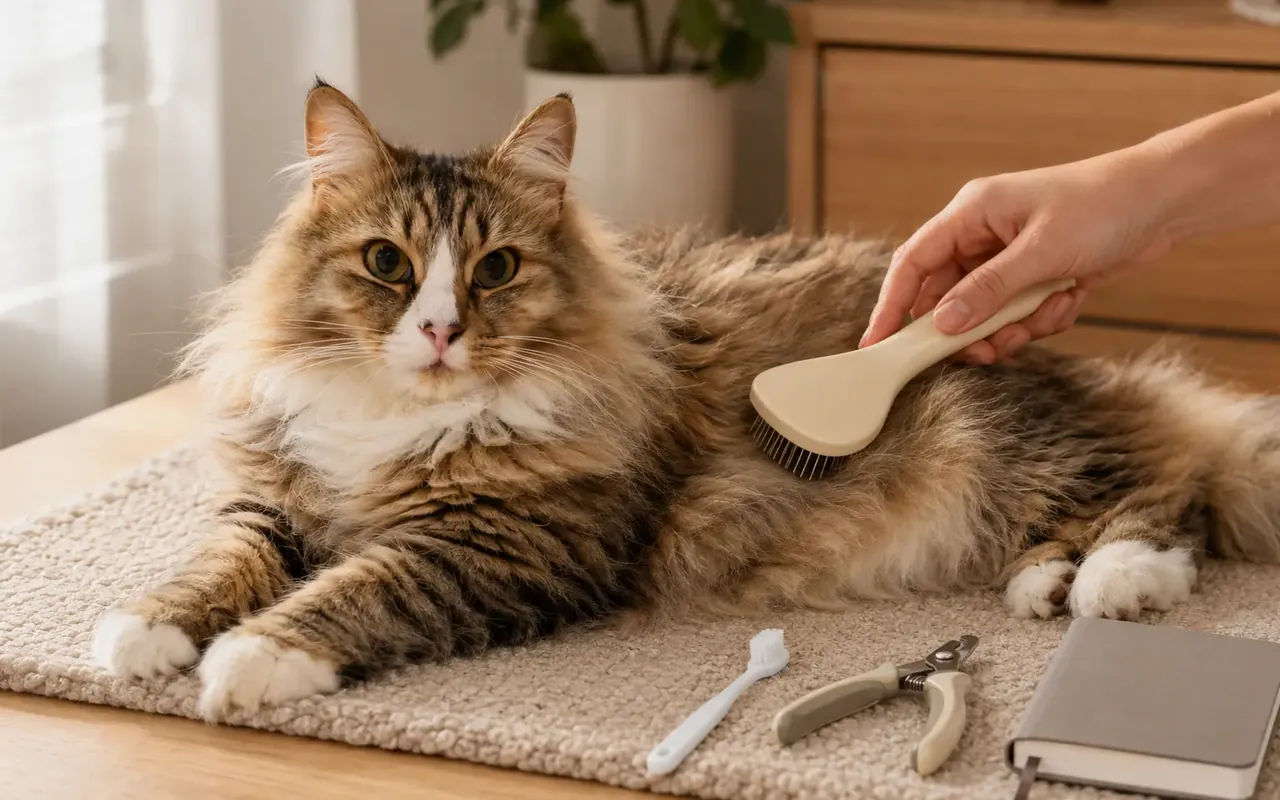
Work in short sessions with a coat-appropriate comb, supporting hair near the skin and starting at the outer ends. Separate a small section at a time and stop when resistance appears. Reward calm cooperation and rotate areas across days.
Reduce friction and moisture
Keep bedding dry, fit collars and harnesses correctly and remove outdoor debris promptly. Maintain rear hygiene when needed and dry damp coat thoroughly without high heat. Do not apply human conditioner, oils or detangler unless a veterinarian approves the exact product.
Support cats that cannot self-groom
Older, overweight, arthritic or unwell cats may not reach their back and rear. Add stable steps, discuss pain and weight with a veterinarian and schedule more frequent gentle checks. Sudden matting can be an early sign that mobility or health has changed.
Know when to stop home care
Tight, broad, painful or skin-level mats belong with a veterinarian or experienced cat groomer. Never slide scissors beneath a mat; cat skin is thin and easily pulled inside it. Redness, odour, discharge, wounds or parasites needs veterinary assessment.
Your quick checklist
Loading saved progress…
Three simple things you can do
You do not have to change everything today. Pick one step that feels realistic, try it and see how your cat responds.
- 1Observe your cat’s individual baseline.
- 2Make one gentle change at a time.
- 3Ask a qualified professional when health or safety is involved.
Common mistakes
×Waiting for a dramatic symptom instead of noticing smaller changes from the cat’s normal routine.
×Changing several things at once, making it difficult to learn what actually helped.
×Treating general guidance as a substitute for advice from a veterinarian who knows the individual cat.
Questions cat people ask
Does every cat follow the same rule?+
No. Age, health, history, temperament and environment all change what works for an individual.
When should I seek professional help?+
Seek veterinary advice for sudden, persistent or concerning changes and urgent help for breathing difficulty, collapse, seizures, poisoning or urinary obstruction signs.
Still looking for the right answer?
Search the full EverYes Cats encyclopedia with your own words — a symptom, food, behaviour, breed or everyday question.
Checked, dated and transparent
- Prepared by
- EverYes Cats editorial team
- Last updated
- Source checked
- Primary reference
- Cornell Feline Health Center: Feline Skin Diseases ↗
We begin with the named reference, rewrite the information in plain language and add practical cat-parent steps. Urgent health statements are checked against veterinary sources. This guide has not been individually reviewed by a veterinarian unless explicitly stated. It provides education, not diagnosis or treatment.
How we choose and use sources →
Spotted something unclear or outdated? Tell us so we can review it.
Loading your saved choice…
A cat that resists brushing may fear the tool, dislike restraint or experience pulling and pain. Stop forcing the session, rule out skin or mobility problems and rebuild cooperation from a single comfortable touch.
 02
 03
 04
 05