Dental pain in cats: the quiet signs
Cats often hide dental pain. New food dropping, one-sided chewing, bad breath, drooling, face rubbing or avoiding hard food deserves a veterinary dental examination.
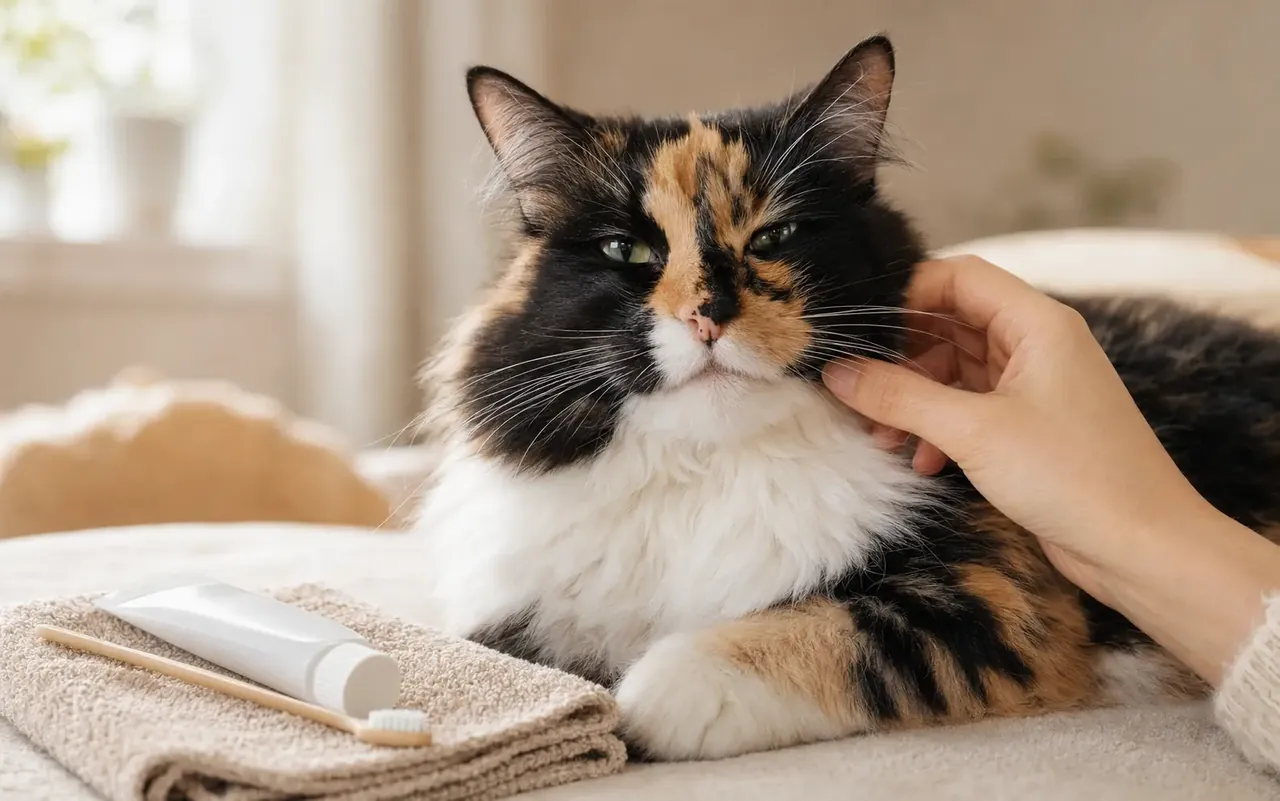 Topic illustration selected for this guide. Some learning images may be AI-assisted.
Dental pain in cats: the quiet signs — the quick answer
✓ Bad breath is not simply normal ageing
✓ Drooling or dropping food needs assessment
✓ Never use human toothpaste or pain medicine
✓ Home brushing cannot remove established tartar below the gumline
Cats often keep eating despite painful dental disease. Small changes in chewing, grooming and social behaviour may appear before complete food refusal.
Watch meals closely
Look for chewing on one side, dropping kibble, swallowing food without chewing, approaching then backing away, preferring soft food or taking longer to finish.
Look beyond the bowl
Bad breath, drooling, pawing at the mouth, face sensitivity, reduced grooming and irritability may accompany oral pain. Some cats show almost no obvious sign.
What not to do
Do not scrape tartar at home, force the mouth open or give human medication. Painful teeth require a veterinary oral examination and sometimes dental imaging under anaesthesia.
Prevention after treatment
Your veterinary team can recommend cat-safe brushing, approved products and recheck intervals. Introduce handling gradually when the mouth is comfortable.
What to check first
Measure actual intake and watch how the cat approaches, chews and swallows. Do not force the mouth open or assume normal appetite rules out pain.
What to do next
Offer the usual food in a comfortable texture while arranging a veterinary check, and use only medication prescribed for this cat. Not eating, facial swelling, bleeding, severe pain or difficulty breathing or swallowing requires prompt care.
Your quick checklist
Your progress is saved on this device.
Three simple things you can do
You do not have to change everything today. Pick one step that feels realistic, try it and see how your cat responds.
- 1Watch one whole meal for one-sided chewing, food dropping, slow eating or approaching then backing away.
- 2Note breath, drool, grooming, face sensitivity and preference for softer textures.
- 3Book a veterinary oral examination and introduce home dental care only after the mouth is comfortable.
Common mistakes
×Assuming normal appetite proves the teeth do not hurt.
×Scraping tartar or forcing a painful mouth open at home.
×Using human toothpaste, painkillers or an anaesthesia-free cleaning as a substitute for full assessment.
Questions cat people ask
Can a cat have dental pain and still eat?+
Yes. Cats often continue eating despite painful teeth or gums, sometimes by swallowing differently or favouring one side. Subtle meal changes can be important clues.
Does bad breath always mean dental disease?+
Persistent bad breath is not normal ageing and warrants examination. Dental disease is common, but other oral and medical problems can also change breath.
Still looking for the right answer?
Search the full EverYes Cats encyclopedia with your own words — a symptom, food, behaviour, breed or everyday question.
Checked, dated and transparent
- Prepared by
- EverYes Cats editorial team
- Last updated
- 14 August 2026
- Source checked
- 14 August 2026
- Primary reference
- AAHA/AAFP Feline Life Stage Guidelines ↗
We begin with the named reference, rewrite the information in plain language and add practical cat-parent steps. Urgent health statements are checked against veterinary sources. This guide has not been individually reviewed by a veterinarian unless explicitly stated. It provides education, not diagnosis or treatment.
Spotted something unclear or outdated? Tell us so we can review it.
Your answer helps us improve the cat encyclopedia.
Understand what wipes can and cannot do for plaque control with a calm, practical routine.