How to check your cat's body condition
A body-condition score uses ribs, waist and abdominal shape to judge fat cover more reliably than weight alone. Your veterinary team can show the correct hands-on method.
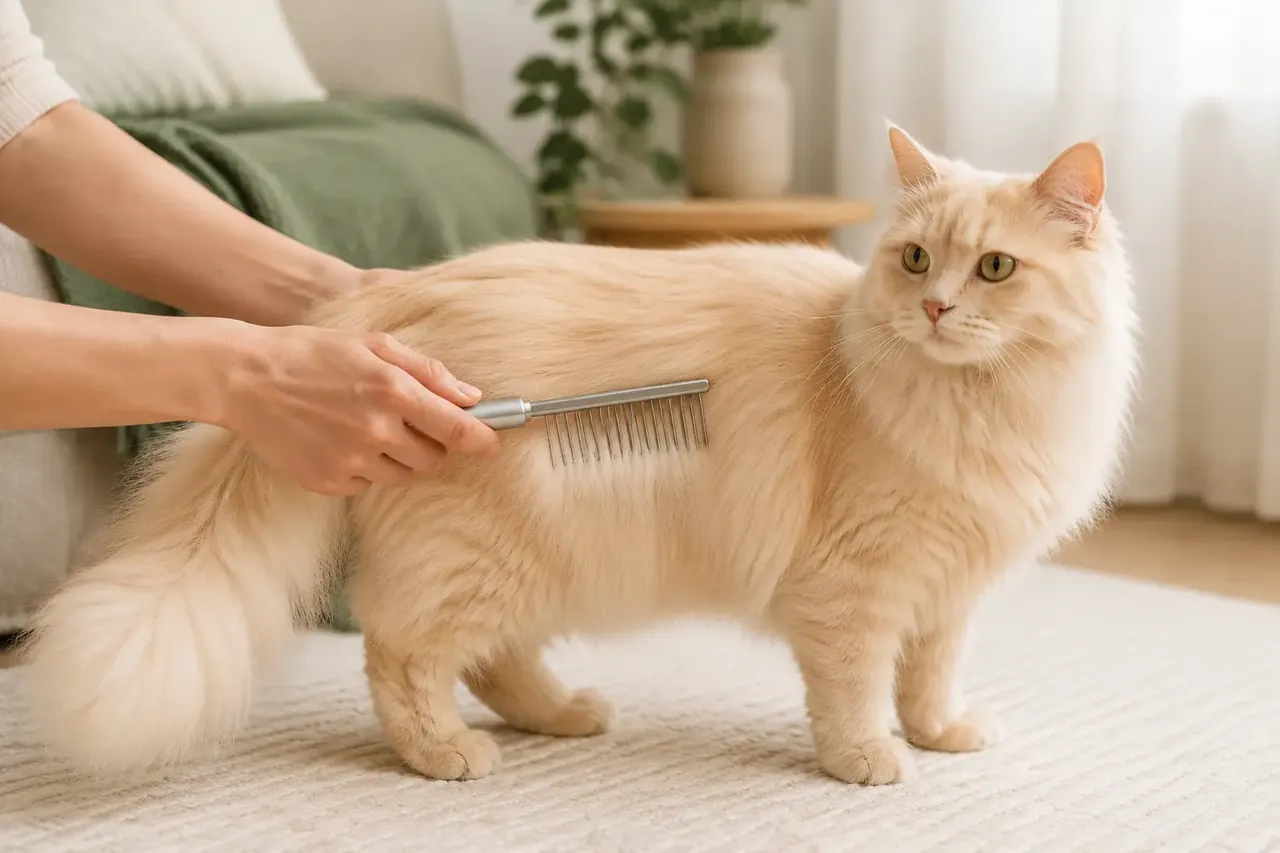 Topic illustration selected for this guide. Some learning images may be AI-assisted.
How to check your cat's body condition — the quick answer
✓ Feel as well as look
✓ Use the same scale and method each time
✓ A fluffy coat can hide both loss and gain
✓ Unexpected change deserves veterinary advice
Body weight is one number. Body condition describes fat cover, while muscle condition tracks tissue over the spine, shoulders, skull and hips. Both matter, especially in long-haired and senior cats.
Feel the ribs
With light pressure, you should be able to feel the ribs beneath a modest fat covering. Very prominent ribs or ribs that are difficult to feel suggest a body-condition review.
Look for a waist
Viewed from above, many cats have a gentle waist behind the ribs. From the side, the abdomen may tuck slightly. Breed and individual shape vary.
Check muscle separately
Gently feel over the spine, shoulder blades and hips. Muscle loss can occur even when the scale is stable or body fat is high.
Turn observations into a trend
Record monthly weight, photos and the same body-condition scale. Ask your veterinary team to score your cat so your home checks use a shared reference.
What to check first
Feel gently over the ribs and view the cat from above and side without pressing. Long or dense fur can hide gradual gain or loss.
What to do next
Record weight and photos consistently, ask for an individual target score and adjust food only with a safe measured plan. Rapid change, muscle loss, increased thirst or appetite, vomiting or weakness needs veterinary assessment.
Your quick checklist
Your progress is saved on this device.
Three simple things you can do
You do not have to change everything today. Pick one step that feels realistic, try it and see how your cat responds.
- 1Weigh monthly on the same scale and feel the ribs with light pressure through the coat.
- 2View the waist from above, then assess muscle separately over the spine, shoulders and hips.
- 3Ask the veterinary team to show and record a shared body- and muscle-condition score.
Common mistakes
×Judging weight from coat fluff or a hanging abdominal pouch alone.
×Using body weight as if it measured muscle and fat separately.
×Reducing food sharply after one home assessment without a safe nutrition plan.
Questions cat people ask
How should healthy ribs feel on a cat?+
They should usually be palpable beneath a modest fat covering without pressing hard. Exact shape varies, so use a recognised scoring system and veterinary demonstration.
Can an overweight cat still lose muscle?+
Yes. Fat can mask muscle loss, especially in senior or ill cats, which is why muscle condition over the spine, shoulders, skull and hips should be assessed separately.
Still looking for the right answer?
Search the full EverYes Cats encyclopedia with your own words — a symptom, food, behaviour, breed or everyday question.
Checked, dated and transparent
- Prepared by
- EverYes Cats editorial team
- Last updated
- 14 August 2026
- Source checked
- 14 August 2026
- Primary reference
- WSAVA Global Nutrition Guidelines ↗
We begin with the named reference, rewrite the information in plain language and add practical cat-parent steps. Urgent health statements are checked against veterinary sources. This guide has not been individually reviewed by a veterinarian unless explicitly stated. It provides education, not diagnosis or treatment.
Spotted something unclear or outdated? Tell us so we can review it.
Your answer helps us improve the cat encyclopedia.
Dental disease is common and often hidden until it hurts.