What normal cat grooming looks like
Normal grooming is regular but not damaging. Bald patches, broken skin, mats, a greasy coat or a sudden change in grooming can point to pain, parasites, allergy, stress or illness.
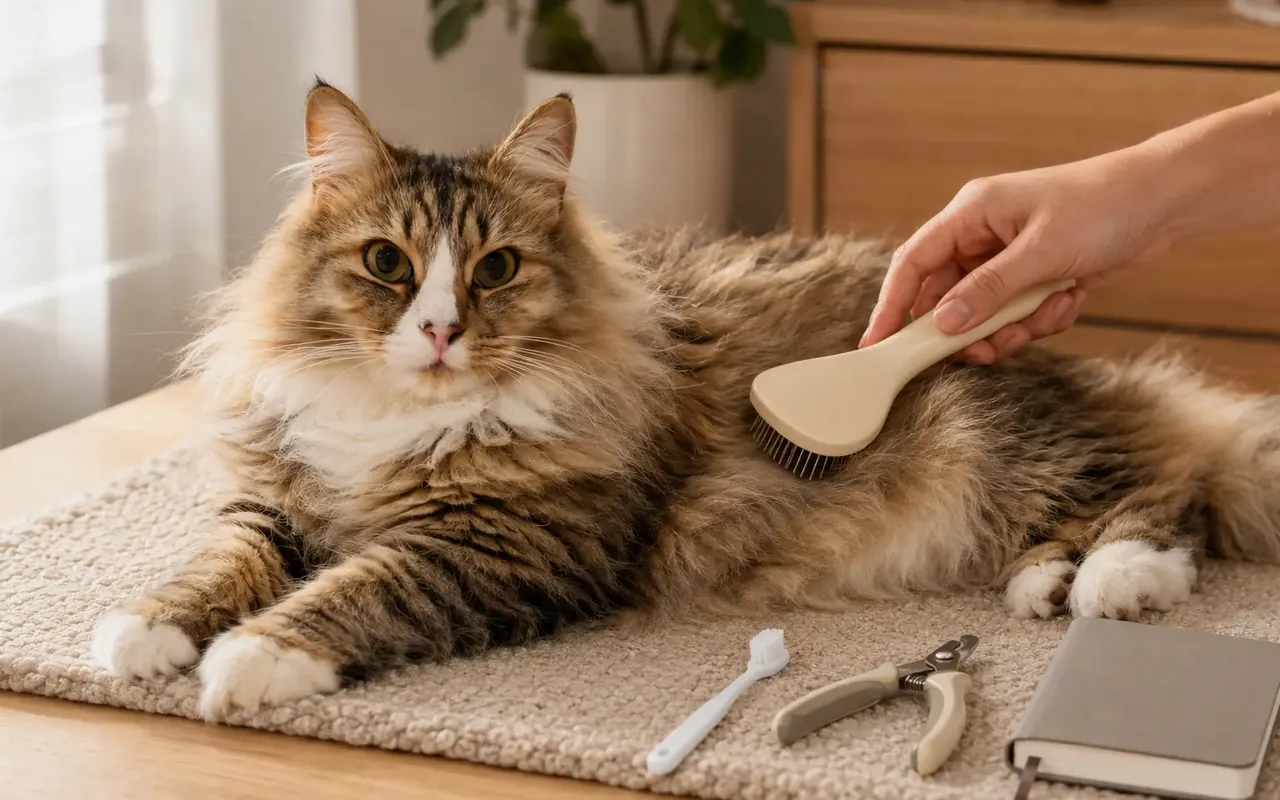 Topic illustration selected for this guide. Some learning images may be AI-assisted.
What normal cat grooming looks like — the quick answer
✓ Most cats groom throughout the day
✓ Bald patches or skin injury are not normal
✓ Reduced grooming can reflect pain or illness
Grooming keeps the coat clean, distributes oils and may help cats settle emotionally. Both too much and too little can be meaningful.
A daily routine
Healthy cats often groom after meals, sleep and social interaction. Long-haired cats may also need regular help with brushing.
When grooming increases
Fleas, allergies, pain and stress can contribute to overgrooming. Veterinary assessment can help find the cause.
When grooming stops
Obesity, dental pain, arthritis and illness may make grooming difficult. Greasy or matted fur deserves attention.
Create a useful grooming baseline
Notice which areas your cat can reach, when grooming happens and how the coat normally feels. Check behind the ears, under the legs and around the back end for tangles, redness, flakes, fleas or tenderness without turning the inspection into a struggle.
Do not treat the coat without finding the cause
Overgrooming and reduced grooming have many possible causes. Avoid human shampoo, essential oils and repeated home remedies. Photograph changes, note when they began and arrange veterinary assessment for baldness, sores, pain, persistent licking or loss of self-care.
Your quick checklist
Your progress is saved on this device.
Three simple things you can do
You do not have to change everything today. Pick one step that feels realistic, try it and see how your cat responds.
- 1Brush in short sessions before mats develop.
- 2Check skin, nails and coat while handling gently.
- 3Photograph a suspicious patch so change is easier to compare.
Common mistakes
×Waiting for a dramatic symptom instead of noticing smaller changes from the cat’s normal routine.
×Changing several things at once, making it difficult to learn what actually helped.
×Treating general guidance as a substitute for advice from a veterinarian who knows the individual cat.
Questions cat people ask
How often should a long-haired cat be brushed?+
Many benefit from frequent, sometimes daily, gentle grooming. Coat texture and the cat’s ability to self-groom affect the schedule.
Should I cut out a mat with scissors?+
Scissors can easily injure thin cat skin. Ask a groomer or veterinarian for safe removal of tight mats.
Still looking for the right answer?
Search the full EverYes Cats encyclopedia with your own words — a symptom, food, behaviour, breed or everyday question.
Checked, dated and transparent
- Prepared by
- EverYes Cats editorial team
- Last updated
- 13 August 2026
- Source checked
- 13 August 2026
- Primary reference
- AAHA/AAFP Feline Life Stage Guidelines ↗
We begin with the named reference, rewrite the information in plain language and add practical cat-parent steps. Urgent health statements are checked against veterinary sources. This guide has not been individually reviewed by a veterinarian unless explicitly stated. It provides education, not diagnosis or treatment.
Spotted something unclear or outdated? Tell us so we can review it.
Your answer helps us improve the cat encyclopedia.
Gentle claw nibbling can remove old sheaths, but repeated biting may signal irritation or pain. Learn what to check, what to change safely and when professional help matters.