Why litter-box size matters more than clever design
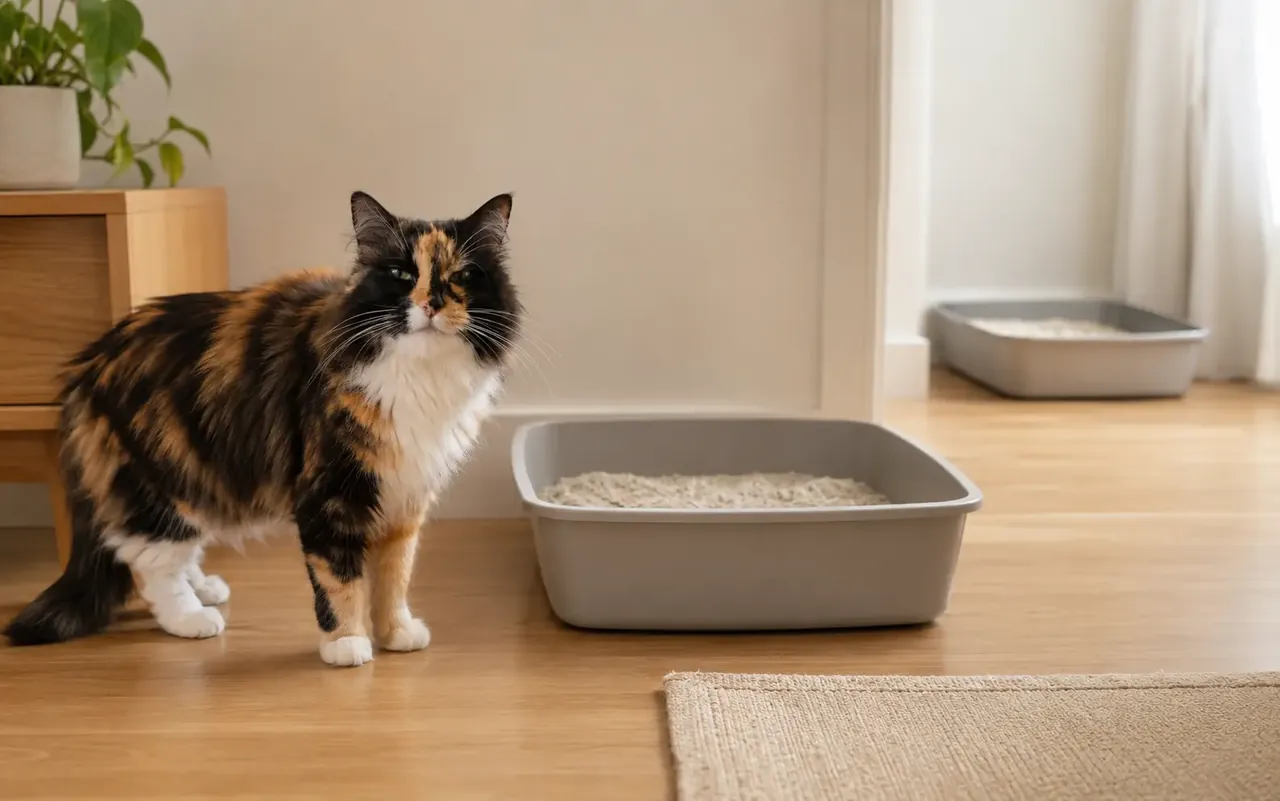
A litter box should be large enough for the cat to enter, turn, dig and eliminate without crowding. Interior floor space and entry access matter more than a product label, decorative shape or claimed age range.
 Topic illustration selected for this guide. Some learning images may be AI-assisted.
Why litter-box size matters more than clever design — the quick answer
✓ Measure the cat from nose to tail base and look for a spacious tray with easy entry.
✓ Test a large storage-style tray where safe, with smooth edges and familiar litter.
✓ Mobility difficulty or changed posture should be discussed at a health check.
Many commercial trays are smaller than a comfortable full-body working area. This guide shows how to give the cat room to turn, dig and eliminate without touching every wall, what equipment helps, how to protect trust and when routine care should become professional care.
Measure the cat and usable floor
As a practical starting point, choose a tray substantially longer than the cat from nose to base of tail, with enough width for an easy turn. Judge the flat interior after accounting for sloped walls, filters and mechanisms—not only the outside measurements.
Match entry to mobility
Use a low entrance for kittens, seniors and cats with pain while retaining higher sides elsewhere if needed for litter scatter or high urination. Provide a non-slip approach and avoid stairs or narrow routes when mobility is limited. The cat should not need to jump into the toilet.
Place more than one adequate box
In multi-cat homes, provide multiple boxes in separate useful locations rather than a row that functions as one resource. Each should offer visibility, quiet and more than one approach where possible. A huge box cannot compensate for another cat guarding the route.
Adapt containers safely
Large storage-style trays can work only when material is sturdy, edges are smooth and any cut entrance is finished safely. Avoid weak plastic, sharp modifications, lids that reduce ventilation and liners that catch claws. Clean and replace damaged surfaces.
Watch what posture reveals
Standing on the rim, eliminating over an edge, failing to turn or leaving quickly may indicate crowding, instability or pain. New posture change, straining, crying, blood or small output needs veterinary assessment; inability to urinate is an emergency.
Your quick checklist
Loading saved progress…
Three simple things you can do
You do not have to change everything today. Pick one step that feels realistic, try it and see how your cat responds.
- 1Observe your cat’s individual baseline.
- 2Make one gentle change at a time.
- 3Ask a qualified professional when health or safety is involved.
Common mistakes
×Waiting for a dramatic symptom instead of noticing smaller changes from the cat’s normal routine.
×Changing several things at once, making it difficult to learn what actually helped.
×Treating general guidance as a substitute for advice from a veterinarian who knows the individual cat.
Questions cat people ask
Does every cat follow the same rule?+
No. Age, health, history, temperament and environment all change what works for an individual.
When should I seek professional help?+
Seek veterinary advice for sudden, persistent or concerning changes and urgent help for breathing difficulty, collapse, seizures, poisoning or urinary obstruction signs.
Still looking for the right answer?
Search the full EverYes Cats encyclopedia with your own words — a symptom, food, behaviour, breed or everyday question.
Checked, dated and transparent
- Prepared by
- EverYes Cats editorial team
- Last updated
- Source checked
- Primary reference
- FelineVMA/ISFM: House-Soiling Guidelines ↗
We begin with the named reference, rewrite the information in plain language and add practical cat-parent steps. Urgent health statements are checked against veterinary sources. This guide has not been individually reviewed by a veterinarian unless explicitly stated. It provides education, not diagnosis or treatment.
How we choose and use sources →
Spotted something unclear or outdated? Tell us so we can review it.
Loading your saved choice…
A low-entry litter box reduces the step for kittens, senior cats and cats with pain while retaining enough wall height to contain litter. Provide a non-slip route, generous floor space and at least one easy box on every level the cat uses.
 01
 02
 06