How to help a cat who slips on smooth floors
Add non-slip routes immediately, but treat new slipping as health information. Smooth floors can expose painful joints, weak muscles, long claws or neurological problems that need assessment.
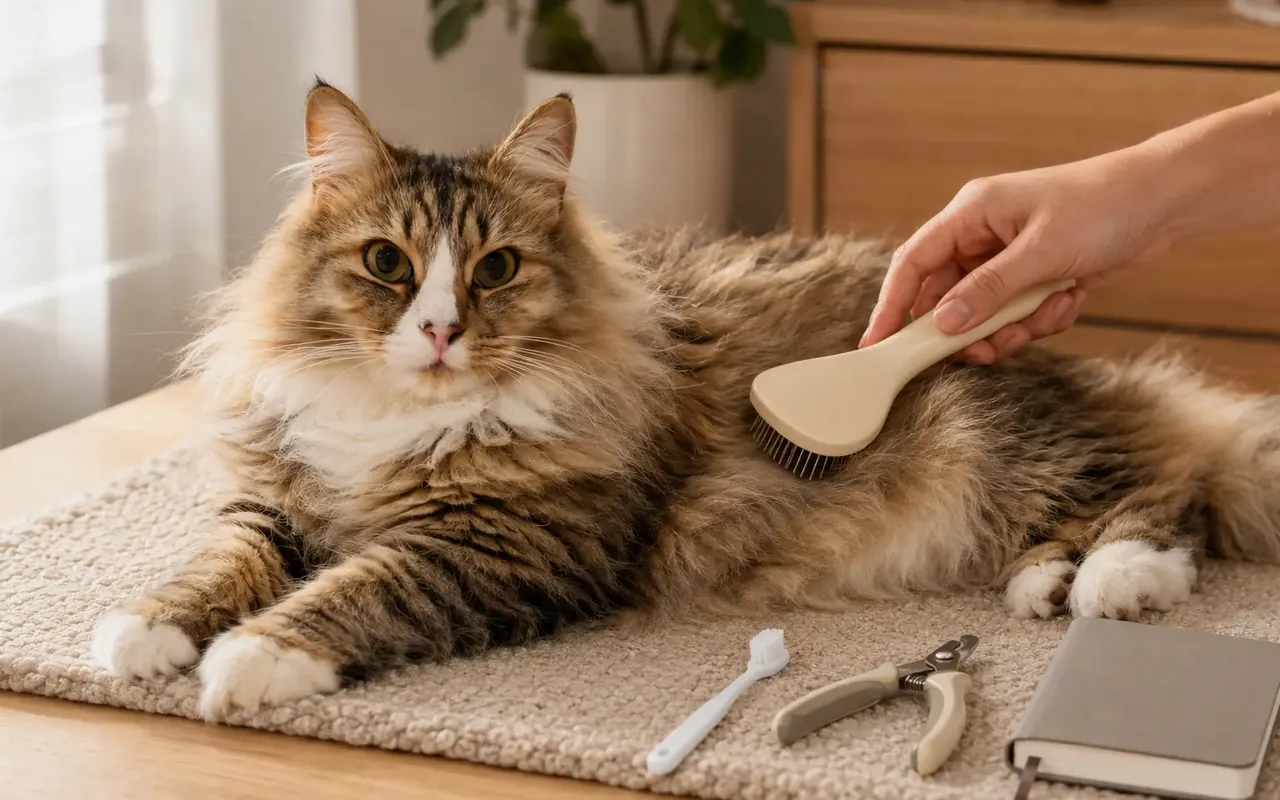 Topic illustration selected for this guide. Some learning images may be AI-assisted.
How to help a cat who slips on smooth floors — the quick answer
✓ Low traction can reduce confidence and expose weakness or joint discomfort
✓ Add washable non-slip runners along routes to food, litter, beds and stairs.
✓ New slipping, knuckling, weakness or falling requires veterinary assessment.
Low traction can reduce confidence and expose weakness or joint discomfort. Kittens learning speed and older cats losing strength may both struggle on polished surfaces.
The short answer
Low traction can reduce confidence and expose weakness or joint discomfort. Kittens learning speed and older cats losing strength may both struggle on polished surfaces.
What to observe first
Compare the moment with your cat’s usual pattern. Note timing, frequency, body language, appetite, litter-box use, mobility and any recent household change.
Why the setting matters
Kittens learning speed and older cats losing strength may both struggle on polished surfaces. One isolated detail rarely explains behaviour or health on its own, so look at the whole cat and the immediate environment.
What you can do
Add washable non-slip runners along routes to food, litter, beds and stairs.
A gentle way to test it
Make one small safe adjustment and give the cat time and choice. Avoid punishment, forced handling and several changes at once, because they make the response harder to understand.
When to contact a veterinarian
New slipping, knuckling, weakness or falling requires veterinary assessment.
Prepare useful information
Write down when it began and how often it occurs. A short video, clear photo, food record or litter record can help a veterinary professional assess a pattern that may not appear during the appointment.
Build one continuous safe route
Place washable rubber-backed runners between the cat's bed, food, water, litter box and favourite social areas. Secure every edge so it cannot bunch or slide. Add stable steps where jumping down would otherwise end on a polished surface.
DEEPER GUIDE1 more detailed sectionsOpen +
Check the cat as well as the floor
Film a short natural walk from the side and behind, without forcing movement. Note stiffness after rest, hesitation, unequal steps, knuckling, falling, reduced grooming or difficulty entering the litter box. Share persistent or sudden changes with a veterinarian.
Your quick checklist
Your progress is saved on this device.
Three simple things you can do
You do not have to change everything today. Pick one step that feels realistic, try it and see how your cat responds.
- 1Add non-slip runners between beds, litter, food and favourite heights.
- 2Keep claws appropriately trimmed and paw fur managed with professional guidance.
- 3Book a mobility assessment for new or worsening slipping.
Common mistakes
×Forcing exercise on the slippery surface.
×Applying sticky products to paws.
×Calling weakness normal ageing.
Questions cat people ask
Why does my cat slip on wooden floors?+
Smooth flooring offers limited traction, while long claws, paw fur, arthritis, weakness or neurological change can make slipping worse.
What flooring helps an older cat?+
Secure low-pile runners or yoga-style non-slip paths provide traction. Avoid loose rugs that bunch or slide.
Still looking for the right answer?
Search the full EverYes Cats encyclopedia with your own words — a symptom, food, behaviour, breed or everyday question.
Checked, dated and transparent
- Prepared by
- EverYes Cats editorial team
- Last updated
- 13 August 2026
- Source checked
- 13 August 2026
- Primary reference
- AAHA/AAFP Feline Life Stage Guidelines ↗
We begin with the named reference, rewrite the information in plain language and add practical cat-parent steps. Urgent health statements are checked against veterinary sources. This guide has not been individually reviewed by a veterinarian unless explicitly stated. It provides education, not diagnosis or treatment.
Spotted something unclear or outdated? Tell us so we can review it.
Your answer helps us improve the cat encyclopedia.
Scratching the wall after toileting is often an extended covering motion caused by a small box, awkward wall position or disliked litter depth.