How do you teach a cat to touch a target?
Target training teaches a cat to touch a small object with the nose voluntarily. It can guide movement without pushing or lifting and should be built through brief choice-based sessions.
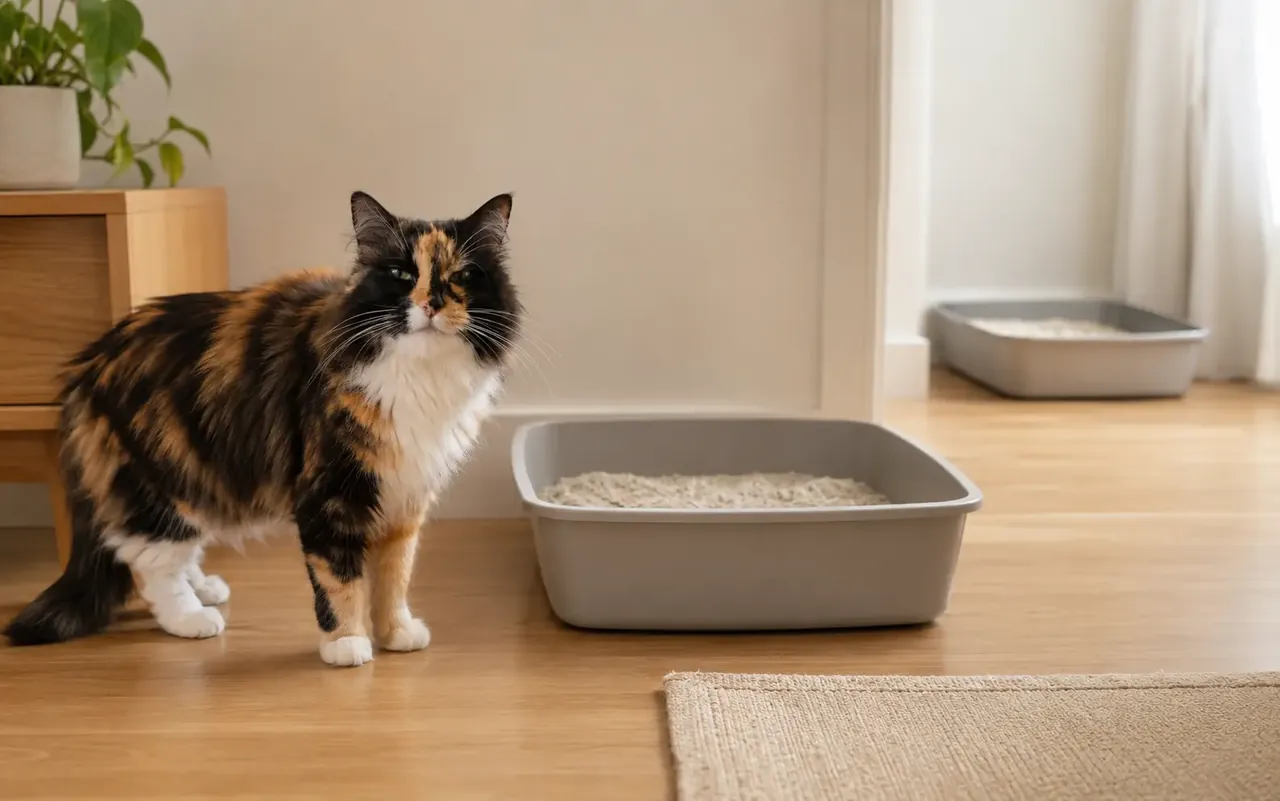 Topic illustration selected for this guide. Some learning images may be AI-assisted.
How do you teach a cat to touch a target — the quick answer
✓ Target training uses a small voluntary nose touch to guide movement without pushing or lifting the cat.
✓ Observe: Find a quiet reward the cat values and keep sessions under a minute initially.
✓ Try this: Present the target nearby, mark any investigation and reward before adding distance.
Target training uses a small voluntary nose touch to guide movement without pushing or lifting the cat. The useful question is not only what the moment resembles, but whether it fits this cat’s normal pattern. Context, frequency, recovery and accompanying changes make the interpretation safer and more accurate.
Choose a clear safe target
Use a blunt object such as a target stick, closed pen held by the body or two fingers presented sideways. Keep it away from eyes and never poke or advance into the face. Train on a nonslip surface with an open route away.
Mark the first investigation
Present the target a few centimetres from the nose. The instant the cat looks, leans or sniffs, use a soft marker word and deliver a tiny reward. Begin by rewarding interest; wait for a nose touch only after the cat approaches confidently.
Add distance in tiny steps
Move the target a few centimetres to one side, mark the touch and reward. Keep sessions under a minute at first and stop while the cat still wants more. Change only distance or direction—not both plus distractions in the same step.
Use the skill without coercion
A target can guide the cat onto a scale, into a carrier or away from a doorway, but it should not lure the cat into frightening restraint. Continue separate gradual training for handling and medical care. Ordinary meals and care must never be withheld.
When to pause training
Stop for avoidance, flattened ears, tense posture or reduced interest. Sudden reluctance to move, difficulty eating rewards, confusion or loss of previously learned behaviour may warrant veterinary advice.
Your quick checklist
Loading saved progress…
Three simple things you can do
You do not have to change everything today. Pick one step that feels realistic, try it and see how your cat responds.
- 1Observe your cat’s individual baseline.
- 2Make one gentle change at a time.
- 3Ask a qualified professional when health or safety is involved.
Common mistakes
×Waiting for a dramatic symptom instead of noticing smaller changes from the cat’s normal routine.
×Changing several things at once, making it difficult to learn what actually helped.
×Treating general guidance as a substitute for advice from a veterinarian who knows the individual cat.
Questions cat people ask
Does every cat follow the same rule?+
No. Age, health, history, temperament and environment all change what works for an individual.
When should I seek professional help?+
Seek veterinary advice for sudden, persistent or concerning changes and urgent help for breathing difficulty, collapse, seizures, poisoning or urinary obstruction signs.
Still looking for the right answer?
Search the full EverYes Cats encyclopedia with your own words — a symptom, food, behaviour, breed or everyday question.
Checked, dated and transparent
- Prepared by
- EverYes Cats editorial team
- Last updated
- Source checked
- Primary reference
- FelineVMA: Positive Reinforcement Training Toolkit ↗
We begin with the named reference, rewrite the information in plain language and add practical cat-parent steps. Urgent health statements are checked against veterinary sources. This guide has not been individually reviewed by a veterinarian unless explicitly stated. It provides education, not diagnosis or treatment.
How we choose and use sources →
Spotted something unclear or outdated? Tell us so we can review it.
Loading your saved choice…
Energetic digging and backward kicking can be normal, while a small tray, excessive litter depth or unstable footing increases scatter. Contain mess without making entry, turning or exit difficult.
 02
 03
 04