How to introduce tooth brushing to a cat
Build a few calm seconds at a time with cat-safe toothpaste.
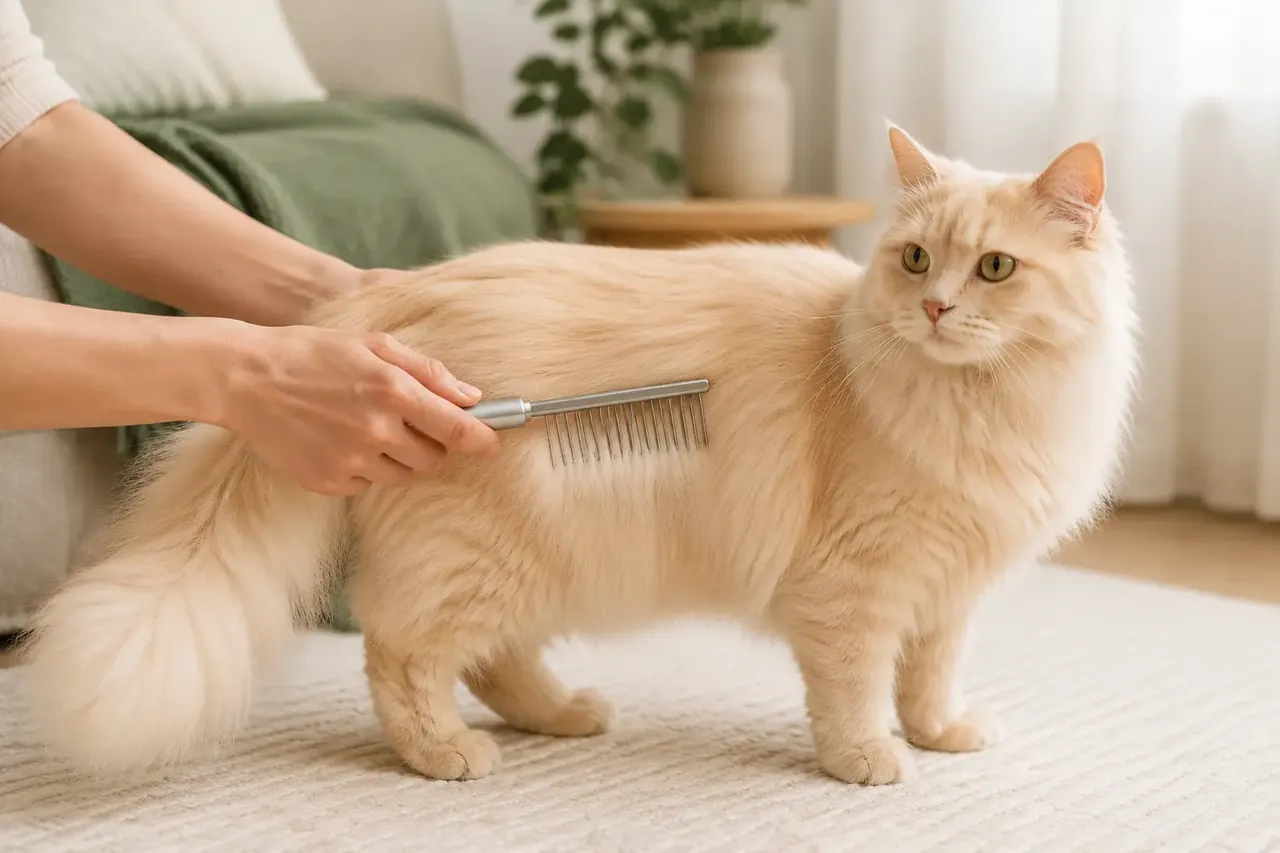 Topic illustration selected for this guide. Some learning images may be AI-assisted.
How to introduce tooth brushing to a cat — the quick answer
✓ Use toothpaste made for pets
✓ Never force open a painful mouth
✓ Train in tiny steps
✓ Dental checks still matter
Brushing can reduce plaque, but it cannot cure painful dental disease or remove established tartar. Start only when the mouth is comfortable and the veterinary team agrees.
Start after an oral check
Bad breath, drooling, red gums, food dropping or touch sensitivity needs examination before home brushing. Pain makes training unfair and unsafe.
Build consent
Reward cheek touch, then briefly lift the lip. Progress to a fingertip or soft tool at the outer tooth surface only while the cat remains relaxed.
Add the brush
Use a small soft pet toothbrush and cat-safe toothpaste. Focus on the outer surfaces with gentle short motions; perfect coverage is not required on day one.
Make it sustainable
Practise frequently for seconds rather than wrestling occasionally. Stop at tail flicks, head turning or tension and resume at an easier step later.
Your quick checklist
Your progress is saved on this device.
Three simple things you can do
You do not have to change everything today. Pick one step that feels realistic, try it and see how your cat responds.
- 1Ask for an oral examination before starting if the cat shows pain or bad breath.
- 2Build from cheek touches to tasting cat toothpaste, then one or two gentle brush strokes.
- 3Use only cat-safe toothpaste and a soft appropriately sized brush.
Common mistakes
×Using human toothpaste.
×Forcing open a painful mouth.
×Expecting brushing to remove established tartar or cure dental disease.
Questions cat people ask
How often should I brush my cat's teeth?+
Daily brushing offers the strongest plaque control when tolerated, but gradual training matters. Ask your veterinarian for an achievable plan.
Can I start if my cat has bad breath?+
Persistent bad breath may indicate dental disease. Arrange an examination first so painful problems are treated rather than brushed over.
Still looking for the right answer?
Search the full EverYes Cats encyclopedia with your own words — a symptom, food, behaviour, breed or everyday question.
Checked, dated and transparent
- Prepared by
- EverYes Cats editorial team
- Last updated
- 7 August 2026
- Source checked
- 7 August 2026
- Primary reference
- Cornell Feline Health Center ↗
We begin with the named reference, rewrite the information in plain language and add practical cat-parent steps. Urgent health statements are checked against veterinary sources. This guide has not been individually reviewed by a veterinarian unless explicitly stated. It provides education, not diagnosis or treatment.
Spotted something unclear or outdated? Tell us so we can review it.
Your answer helps us improve the cat encyclopedia.
Understand what wipes can and cannot do for plaque control with a calm, practical routine.