Litter boxes in a multilevel home
Provide at least one accessible litter box on every level a cat regularly uses, with additional distributed boxes for multi-cat homes. Stairs should never be the only route to every toilet.
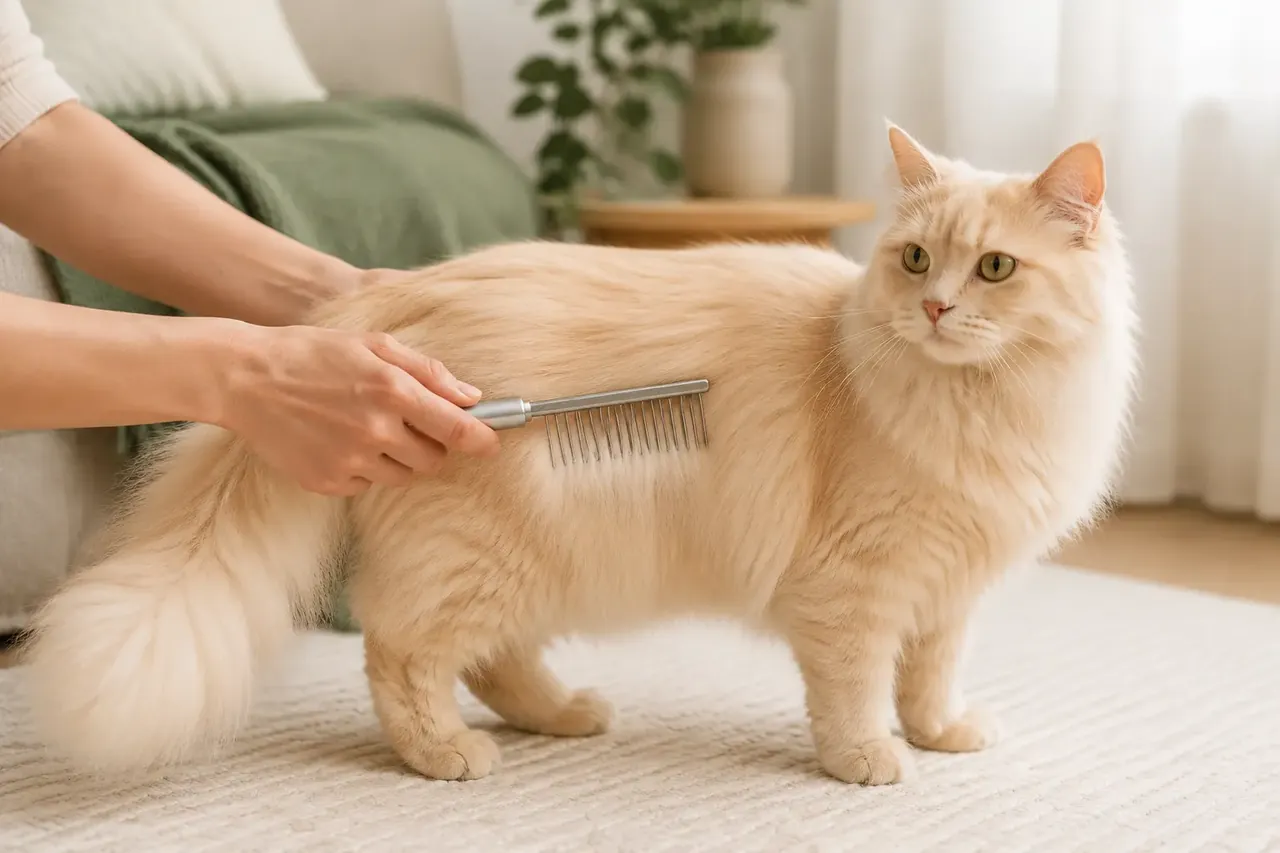 Topic illustration selected for this guide. Some learning images may be AI-assisted.
Litter boxes in a multilevel home — the quick answer
✓ Place at least one suitable box on each level the cat regularly uses.
✓ Choose quiet open routes and duplicate the litter type and cleaning standard.
✓ A new reluctance to use stairs can signal pain and deserves veterinary attention.
Kittens, sick cats and seniors may not travel across floors in time. This guide shows how to make a safe toilet reachable without stairs becoming the only route, what equipment helps, how to protect trust and when routine care should become professional care.
Map each cat's daily territory
Note sleeping, eating and social areas on every floor and the routes between them. A cat may hesitate to cross stairs when tired, frightened, blocked by another animal or experiencing pain. Place boxes where they remain accessible when doors close.
Distribute rather than cluster
Use separate quiet locations instead of keeping every box in one basement or utility room. In multi-cat homes, preserve multiple approaches and exits so one cat cannot guard the entire resource. Boxes side by side usually count as one station.
Match access to life stage
Provide low-entry trays and non-slip routes for kittens, seniors and cats with mobility change. Avoid steep stairs, dark landings and baby gates that block the path. Gentle route lighting can help, but should not replace a box on the current floor.
Keep maintenance consistent
Scoop every box regularly and track which cat uses which location when possible. Do not let a convenient downstairs box become cleaner than the upstairs options. Use the same accepted unscented litter unless testing one planned change.
When floor preference needs assessment
New refusal to use stairs, accidents near sleeping areas, changed jumping or stiffness needs veterinary assessment. Frequent visits, blood, crying or little to no urine is urgent. Add easier access immediately while arranging care.
Your quick checklist
Loading saved progress…
Three simple things you can do
You do not have to change everything today. Pick one step that feels realistic, try it and see how your cat responds.
- 1Observe your cat’s individual baseline.
- 2Make one gentle change at a time.
- 3Ask a qualified professional when health or safety is involved.
Common mistakes
×Waiting for a dramatic symptom instead of noticing smaller changes from the cat’s normal routine.
×Changing several things at once, making it difficult to learn what actually helped.
×Treating general guidance as a substitute for advice from a veterinarian who knows the individual cat.
Questions cat people ask
Does every cat follow the same rule?+
No. Age, health, history, temperament and environment all change what works for an individual.
When should I seek professional help?+
Seek veterinary advice for sudden, persistent or concerning changes and urgent help for breathing difficulty, collapse, seizures, poisoning or urinary obstruction signs.
Still looking for the right answer?
Search the full EverYes Cats encyclopedia with your own words — a symptom, food, behaviour, breed or everyday question.
Checked, dated and transparent
- Prepared by
- EverYes Cats editorial team
- Last updated
- Source checked
- Primary reference
- FelineVMA/ISFM: House-Soiling Guidelines ↗
We begin with the named reference, rewrite the information in plain language and add practical cat-parent steps. Urgent health statements are checked against veterinary sources. This guide has not been individually reviewed by a veterinarian unless explicitly stated. It provides education, not diagnosis or treatment.
How we choose and use sources →
Spotted something unclear or outdated? Tell us so we can review it.
Loading your saved choice…
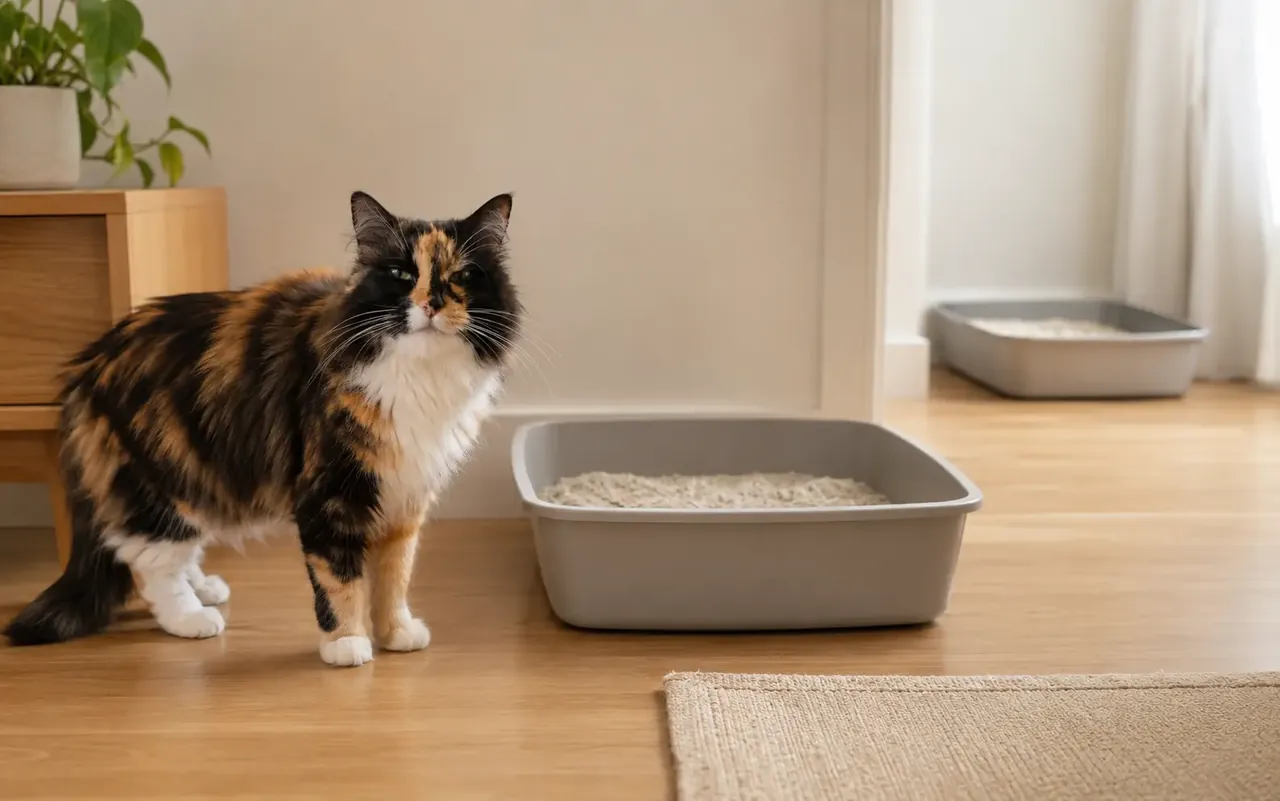
Many cats prefer the visibility and escape options of an uncovered box, while some use a roomy covered box comfortably. Offer a real choice, keep ventilation good and never use a lid to compensate for infrequent scooping.
 02
 03
 04