How to teach a cat to pause before an open door
Teach a door pause by rewarding a station away from the entrance, beginning with the door fully closed. Training never replaces a physical escape barrier.
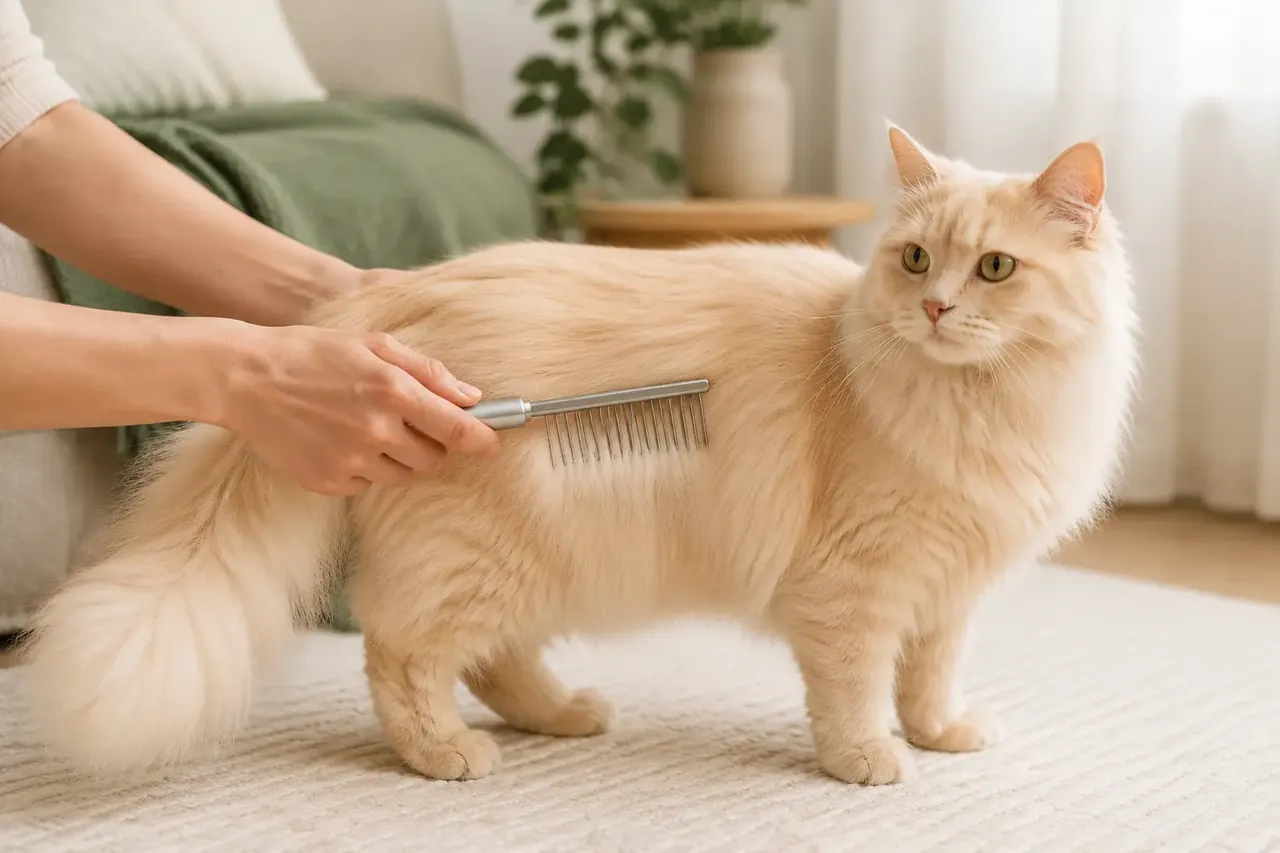 Topic illustration selected for this guide. Some learning images may be AI-assisted.
How to teach a cat to pause before an open door — the quick answer
✓ A rewarded pause station can reduce rushing without frightening or grabbing the cat
✓ Practise with the door closed first, reward a brief pause on a marked spot and increase difficulty in tiny steps.
✓ Never test the skill with an unsecured outside door; escape or sudden disorientation requires immediate local help.
A rewarded pause station can reduce rushing without frightening or grabbing the cat. Training supports safety but never replaces screens, closed doors and careful handling.
The short answer
A rewarded pause station can reduce rushing without frightening or grabbing the cat. Training supports safety but never replaces screens, closed doors and careful handling.
What to observe
Find the distance from the door where the cat can still focus and accept a reward.
How to read the situation
Training supports safety but never replaces screens, closed doors and careful handling. Compare the pattern with your cat’s usual behaviour and consider timing, body language, appetite, litter-box use, mobility and recent changes.
What to do now
Practise with the door closed first, reward a brief pause on a marked spot and increase difficulty in tiny steps.
What not to do
Do not punish, frighten, force or repeatedly test the cat. Avoid changing several things at once, because that makes the response harder to interpret.
When to contact a veterinarian
Never test the skill with an unsecured outside door; escape or sudden disorientation requires immediate local help.
What to record
Write down when it began, how often it happens and what occurs immediately before and after. A short video, clear photo, food record or litter record can give the veterinary team useful context.
What to check first
Find the distance where the cat can focus, eat a reward and remain relaxed without rushing toward the handle or opening.
DEEPER GUIDE1 more detailed sectionsOpen +
What to do next
Reward a brief pause on a mat, add handle movement and a tiny door gap in separate steps, and reset calmly after mistakes. Practise only with a second secure barrier. Never test at an unsecured outside door. If the cat escapes, use immediate local lost-cat procedures rather than chasing.
Your quick checklist
Your progress is saved on this device.
Three simple things you can do
You do not have to change everything today. Pick one step that feels realistic, try it and see how your cat responds.
- 1Start at an interior door with the cat well behind a marker.
- 2Reward a one-second pause before touching the handle.
- 3Increase duration and distraction gradually.
Common mistakes
×Training first at an open exterior door.
×Using fear or spraying.
×Opening while the cat is rushing.
Questions cat people ask
Can a cat learn to wait at a door?+
Yes, many cats can learn that pausing makes the door or reward available.
Does training replace physical security?+
No. Exterior doors still require barriers, identification and careful human management.
Still looking for the right answer?
Search the full EverYes Cats encyclopedia with your own words — a symptom, food, behaviour, breed or everyday question.
Checked, dated and transparent
- Prepared by
- EverYes Cats editorial team
- Last updated
- 14 August 2026
- Source checked
- 14 August 2026
- Primary reference
- International Cat Care ↗
We begin with the named reference, rewrite the information in plain language and add practical cat-parent steps. Urgent health statements are checked against veterinary sources. This guide has not been individually reviewed by a veterinarian unless explicitly stated. It provides education, not diagnosis or treatment.
Spotted something unclear or outdated? Tell us so we can review it.
Your answer helps us improve the cat encyclopedia.
Digging before defecating is normal preparation when it is brief and the cat passes stool comfortably. Prolonged digging can signal litter-box or medical discomfort.