How to clean a cat water fountain properly
Keep water appealing while cleaning hidden slime, filters and pump parts with a calm, practical routine.
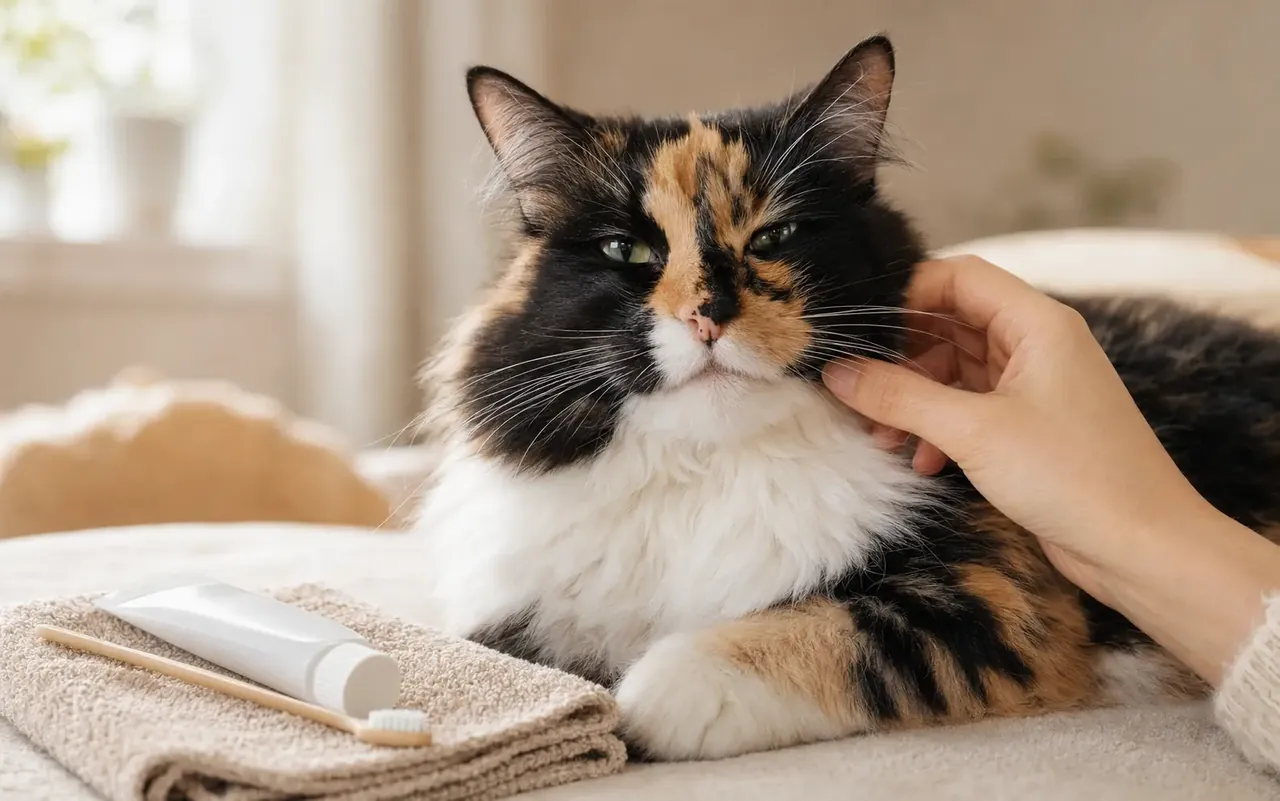 Topic illustration selected for this guide. Some learning images may be AI-assisted.
How to clean a cat water fountain properly — the quick answer
✓ Follow the manufacturer diagram, unplug the unit and keep a separate water bowl available.
✓ Disassemble all washable parts, clean the pump cavity, rinse well and replace filters on schedule.
✓ Contact a vet if drinking changes sharply or vomiting, weakness or urinary signs appear.
Moving water does not stay clean automatically; biofilm can develop in seams and pumps. This guide shows how to keep water appealing while cleaning hidden slime, filters and pump parts, what equipment helps, how to protect trust and when routine care should become professional care.
The goal
The aim is to keep water appealing while cleaning hidden slime, filters and pump parts. Good care is not measured by how much handling you can complete. It is measured by whether the routine protects health, remains safe and can be repeated without damaging trust. Start with your own cat's coat, body, mobility and temperament rather than an idealized timetable.
Why this routine matters
Moving water does not stay clean automatically; biofilm can develop in seams and pumps. A familiar routine also gives you a baseline. You become more likely to notice a new lump, sore area, odor, parasite, movement change or loss of tolerance. That does not mean inspecting constantly. Calm, regular contact is enough to make genuine changes easier to recognize.
Set up before the cat arrives
Follow the manufacturer diagram, unplug the unit and keep a separate water bowl available. Put everything within reach so you never leave the cat unattended on a raised surface. Close unsafe exits but keep a clear route to a familiar bed or hiding place. Preparation shortens the task and prevents the frustrating search for equipment after the cat has already agreed to participate.
A step-by-step method
Disassemble all washable parts, clean the pump cavity, rinse well and replace filters on schedule. Watch the face, ears, tail, skin and feet after every small step. A loose body and willingness to stay tell you more than silence alone. Pause often. If the cat walks away, the session is complete. You can continue another day without turning departure into a conflict.
Keep sessions shorter than you think
Many successful care sessions last between a few seconds and a few minutes. Stop after one claw, one tangle, one tooth surface or one small body area if that is what the cat can manage comfortably. Ending early creates a useful memory: the equipment appeared, something predictable happened and the cat retained control.
Read consent in real time
A cat may initially approach and then change their mind. Turning the head away, crouching, tail flicking, skin twitching, ears rotating back, gripping the surface or taking treats roughly are early requests for a pause. Growling, swatting or biting are late signals. Responding to the early signs makes late signals less necessary.
Use rewards thoughtfully
Food can help, but it should not be used to lure a frightened cat into restraint. Offer a tiny valued reward after an easy step, then let the cat choose whether to continue. Some cats prefer play, cheek rubs or access to a sunny window. The reward should make the process clearer, not distract from escalating fear.
What to avoid
Do not add fragrance, essential oils or rely on topping up cloudy water. Also avoid shouting, spraying water, scruffing and holding the cat in a position they cannot safely escape. These methods may finish today's task but make the next session harder. If essential care cannot be completed safely, professional assistance is a responsible plan rather than a failure.
DEEPER GUIDE21 more detailed sectionsOpen +
Choose equipment by function
A useful tool fits the cat and the task, feels comfortable in your hand and can be cleaned. Expensive or heavily marketed does not automatically mean gentle. Check edges, moving parts, noise, size and instructions. Introduce one item at a time and return or replace anything that pulls hair, pinches skin, wobbles or frightens the cat.
Make the surface secure
Slipping can make a tolerant cat panic. Use a stable floor, low bench or table with a rubber-backed mat. Avoid narrow counters and places beside loud appliances. Cats with arthritis, weakness or poor vision often cope better at floor level. Good footing reduces the need for restraint because the cat no longer has to balance and tolerate handling simultaneously.
Build cooperation between care days
Practise the smallest parts when no care is required. Show the tool, reward calm investigation and put it away. Touch a shoulder, paw or cheek for one second and release. Let the cat stand on the chosen mat without being handled. These neutral rehearsals turn equipment and locations into ordinary household cues rather than warnings.
Create a realistic frequency
Frequency depends on coat, age, health, season, product instructions and what your veterinarian has recommended. Start with the least intensive schedule that keeps the cat comfortable and the area healthy. Review it when seasons, mobility or health change. A simple routine you maintain is more valuable than an ambitious chart that repeatedly overwhelms both of you.
Keep a tiny care record
Record the date, what you completed and anything new. A phone note is enough. Include skin changes, claws, mouth odor, litter preferences, product reactions and tolerance. Photographs taken in similar light can show whether a finding is growing or improving. This record becomes especially helpful when several family members share care or a veterinary appointment is needed.
Hygiene without heavy fragrance
Clean tools according to their material, rinse away detergent and let everything dry fully. Wash hands before mouth or wound-related care and between pets if infection is possible. Cats experience scent intensely and groom products from their fur, so unscented cat-safe options are usually the sensible default. Never mix cleaning chemicals or improvise with essential oils.
The multi-cat version
Give each cat individual choice and avoid grooming one while another blocks the exit or steals rewards. Separate tools when infection or parasites are suspected and clean shared equipment carefully. Individual food bowls, litter observations and care notes help identify changes. Cats living together may have entirely different preferences, coat needs and tolerance even when they appear closely bonded.
Kittens: teach, do not overwhelm
A kitten can learn that handling is safe through many tiny, positive repetitions. Practise when the kitten is calm and awake. One paw touch or brush stroke is enough at first. Young skin and bodies are delicate, and kittens can deteriorate quickly when ill. Parasites, diarrhea, poor appetite, weakness or failure to grow needs prompt veterinary guidance.
Adult cats can learn too
An adult cat with no care history is not too old to learn. Begin before equipment touches the body. Progress may take days or weeks, particularly after painful experiences. Respecting that history often speeds improvement because the cat stops needing to defend against each step. Sedation or clinic assistance may sometimes be the kindest option for necessary procedures.
Senior and painful cats
Reduced flexibility can change grooming, claw wear, toileting and tolerance. Use low surfaces, non-slip footing, warm rooms and positions the cat chooses. Do not label resistance as grumpiness until pain and illness have been considered. New stiffness, missed grooming, overgrown claws, accidents or a reluctance to be touched deserves veterinary assessment rather than simply firmer handling.
Know when home care should stop
Contact a vet if drinking changes sharply or vomiting, weakness or urinary signs appear. Stop immediately for breathing difficulty, collapse, uncontrolled bleeding, severe weakness, blue or very pale gums or obvious extreme pain. Home care is for routine maintenance and minor cleaning that the cat tolerates. It is not a substitute for diagnosing a sudden change or completing a painful procedure without appropriate treatment.
Prepare for professional help
Tell the clinic or groomer exactly what the cat tolerates, what triggers fear and whether pain may be present. Bring photographs, product names and your care note. Ask how to prepare the carrier and whether medication has been prescribed before the visit. Honest handling information lets professionals plan a lower-stress, safer appointment for everyone.
Common mistake: solving the human problem only
A tidy floor, pleasant smell or fast routine can feel successful to a person while the cat finds the box, product or handling unpleasant. Evaluate the outcome from both sides. Is the cat comfortable, able to choose, using resources normally and free from irritation? A care solution works only when it supports the animal as well as the household.
Common mistake: changing everything together
If you replace the tool, location, product and technique on the same day, you cannot tell what helped or upset the cat. Change one variable when possible. Keep a familiar alternative available. This is especially important for litter, food stations and handling plans, where sudden changes can create avoidance that appears unrelated days later.
Common mistake: waiting for a crisis
Routine care is easier before claws curl, coat felts, dental pain becomes severe or a litter box is deeply soiled. Small repeatable actions protect comfort and make the cat less likely to associate care only with emergencies. Preventive examinations remain essential because many important problems sit below fur, skin or gums and cannot be solved through home maintenance alone.
Choose the right moment
Timing can decide whether the same task feels easy or impossible. Avoid beginning when the cat is eating, watching another animal, racing through the house or settling into deep sleep. Look for a quiet, awake period after play or a meal, when the body is loose and the household is calm. Keep children and other pets away from the work area. If the cat has already had medication, a carrier trip or another stressful event that day, postpone non-urgent care. A well-chosen two-minute session is usually more productive than ten minutes attempted at the wrong moment.
If the cat refuses today
Refusal is information, not disobedience. Check whether the location, tool, smell, sound or body position changed. Consider pain, static, a hidden tangle, a sore mouth, a dirty tray or a previous frightening experience. Return to the last step the cat accepted, or simply end the session and offer a normal pleasant activity. For urgent care, phone the veterinary team rather than escalating restraint at home. For routine care, try again after a genuine break with an easier goal. Progress is not lost because one day went badly; trust is protected when the cat learns that clear discomfort makes handling stop.
Share the routine safely
When several people care for the cat, agree on the same cues, products and stopping points. Write down which brush, cleaner, litter or reward is used and where it is stored. Children can prepare a towel, count rewards or update the care chart, but an adult should supervise any task involving claws, mouth, eyes, ears, wounds or a frightened animal. Never ask one person to distract the cat while another secretly performs care. Predictability matters. A shared routine should feel the same whichever trusted person begins it, and any new finding should be reported rather than assumed to be somebody else's responsibility.
Review the result, not just the task
After four weeks, ask whether the cat is more comfortable and whether the routine is genuinely sustainable. Look at coat condition, skin, claws, mouth comfort, litter use, odor, mobility and willingness to approach the care area. Check your notes for patterns: a certain tool may work better, one room may be calmer or tolerance may fall on painful days. Keep what helps and remove steps that add effort without benefit. If the problem keeps returning despite careful home care, the plan needs professional review. Repetition alone does not correct an untreated medical cause or unsuitable environment.
A seven-day starter plan
Day one is observation. Day two introduces the setup described here: follow the manufacturer diagram, unplug the unit and keep a separate water bowl available. Days three and four rehearse one easy step. Day five repeats only if the cat remains relaxed. Day six is a rest day or a neutral visit to the care area. On day seven, review what the cat accepted and plan the next tiny progression.
The practical bottom line
To keep water appealing while cleaning hidden slime, filters and pump parts, use preparation, short sessions and genuine choice. Disassemble all washable parts, clean the pump cavity, rinse well and replace filters on schedule. Do not add fragrance, essential oils or rely on topping up cloudy water. Keep the routine flexible enough to fit the individual cat. If comfort, skin, coat, claws, mouth, elimination, appetite or behavior changes, step away from the checklist and seek appropriate veterinary advice.
Your quick checklist
Your progress is saved on this device.
Three simple things you can do
You do not have to change everything today. Pick one step that feels realistic, try it and see how your cat responds.
- 1Observe your cat’s individual baseline.
- 2Make one gentle change at a time.
- 3Ask a qualified professional when health or safety is involved.
Common mistakes
×Waiting for a dramatic symptom instead of noticing smaller changes from the cat’s normal routine.
×Changing several things at once, making it difficult to learn what actually helped.
×Treating general guidance as a substitute for advice from a veterinarian who knows the individual cat.
Questions cat people ask
Does every cat follow the same rule?+
No. Age, health, history, temperament and environment all change what works for an individual.
When should I seek professional help?+
Seek veterinary advice for sudden, persistent or concerning changes and urgent help for breathing difficulty, collapse, seizures, poisoning or urinary obstruction signs.
Still looking for the right answer?
Search the full EverYes Cats encyclopedia with your own words — a symptom, food, behaviour, breed or everyday question.
Checked, dated and transparent
- Prepared by
- EverYes Cats editorial team
- Last updated
- 7 August 2026
- Source checked
- 7 August 2026
- Primary reference
- AAHA/AAFP Feline Life Stage Guidelines ↗
We begin with the named reference, rewrite the information in plain language and add practical cat-parent steps. Urgent health statements are checked against veterinary sources. This guide has not been individually reviewed by a veterinarian unless explicitly stated. It provides education, not diagnosis or treatment.
Spotted something unclear or outdated? Tell us so we can review it.
Your answer helps us improve the cat encyclopedia.
Reduce old food, grease and bacterial buildup without leaving detergent residue with a calm, practical routine.