Why cats scratch—and how to save the sofa
Scratching is normal scent marking, stretching and claw care. The practical solution is a stable surface in the right place—not punishment.
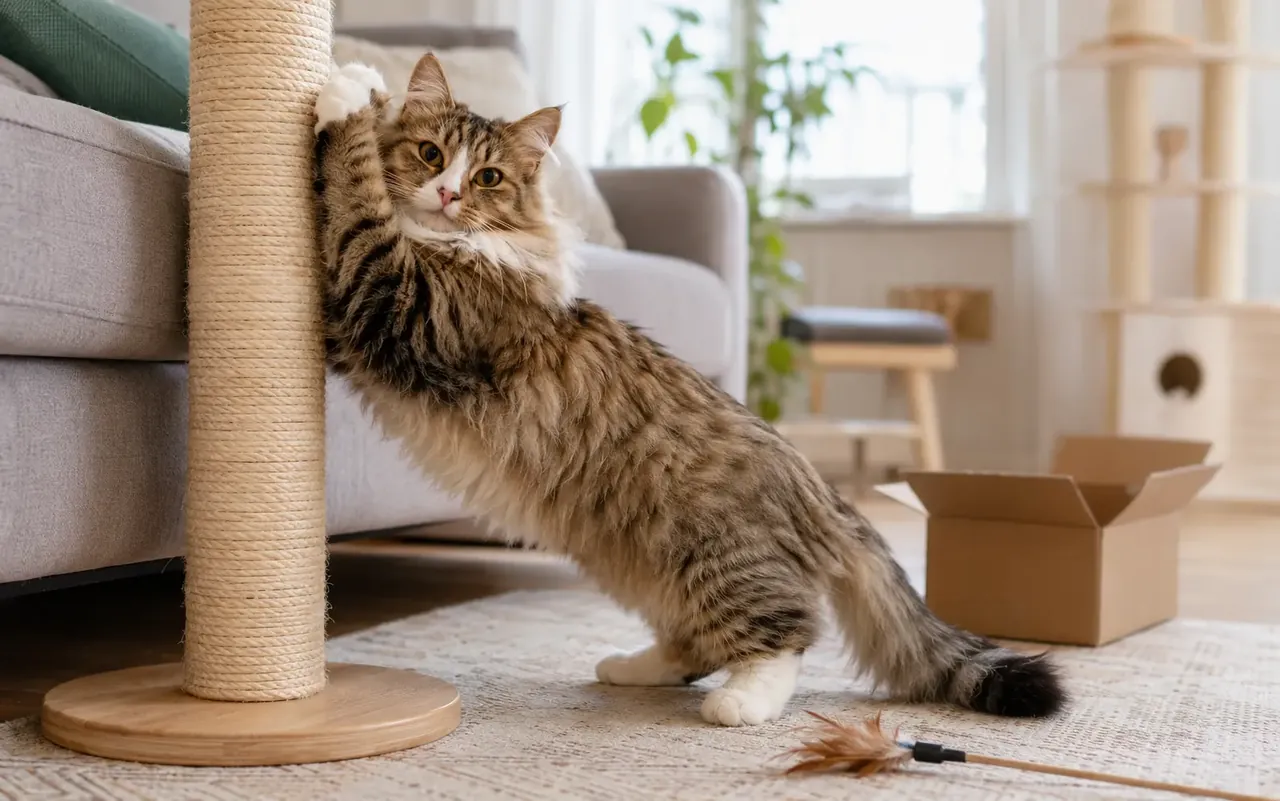 Topic illustration selected for this guide. Some learning images may be AI-assisted.
Why cats scratch—and how to save the sofa — the quick answer
✓ Place scratchers where the cat already wants to scratch
✓ Offer both vertical and horizontal options
✓ Reward the right surface without punishing mistakes
Scratching stretches muscles, maintains claws and leaves visual and scent signals. It is normal cat behavior, not revenge.
Location matters
A beautiful scratcher in an unused corner may lose to the sofa. Try placing one beside sleeping areas, entrances or existing scratch marks.
Make it satisfying
A vertical post should be sturdy and tall enough for a full stretch. Some cats strongly prefer cardboard pads on the floor.
Redirect kindly
Protect the furniture temporarily, add an attractive alternative nearby and reward investigation or use. Punishment can add stress without teaching a replacement.
Match the furniture your cat selected
Notice whether the cat scratches vertically or horizontally and which texture they choose. Provide a sturdy post tall enough for a full stretch or a stable horizontal pad directly beside the current target. A beautiful post hidden in another room will rarely compete with the sofa corner on a social route.
Make the preferred choice rewarding
Use play, treats or catnip when appropriate around the new scratcher and reward voluntary use. Protect the old surface temporarily while the new habit becomes reliable, then move the scratcher only a few centimetres at a time if needed. Nail trimming may reduce damage but does not remove the need to scratch.
Your quick checklist
Your progress is saved on this device.
Three simple things you can do
You do not have to change everything today. Pick one step that feels realistic, try it and see how your cat responds.
- 1Measure where and how the cat currently scratches.
- 2Place a sturdy matching surface directly beside that location.
- 3Reward use and gradually move the scratcher only after a habit forms.
Common mistakes
×Choosing a post too short or unstable for a full stretch.
×Hiding the scratcher in a room the cat rarely uses.
×Punishing scratching without providing a satisfying alternative.
Questions cat people ask
Why does my cat scratch after waking?+
Scratching combines stretching, claw maintenance and scent marking, making it a natural part of waking routines.
Do nail trims stop furniture scratching?+
They may reduce damage but do not remove the behavioral need. Suitable scratching surfaces are still essential.
Still looking for the right answer?
Search the full EverYes Cats encyclopedia with your own words — a symptom, food, behaviour, breed or everyday question.
Checked, dated and transparent
- Prepared by
- EverYes Cats editorial team
- Last updated
- 8 August 2026
- Source checked
- 8 August 2026
- Primary reference
- AAHA/AAFP Feline Life Stage Guidelines ↗
We begin with the named reference, rewrite the information in plain language and add practical cat-parent steps. Urgent health statements are checked against veterinary sources. This guide has not been individually reviewed by a veterinarian unless explicitly stated. It provides education, not diagnosis or treatment.
Spotted something unclear or outdated? Tell us so we can review it.
Your answer helps us improve the cat encyclopedia.
A multi-cat home needs duplicated resources in separate locations, not one large shared station. Spread food, water, litter, scratching, height and hiding so one cat cannot quietly control everything.