What to do when your cat hates being brushed
A cat that resists brushing may fear the tool, dislike restraint or experience pulling and pain. Stop forcing the session, rule out skin or mobility problems and rebuild cooperation from a single comfortable touch.
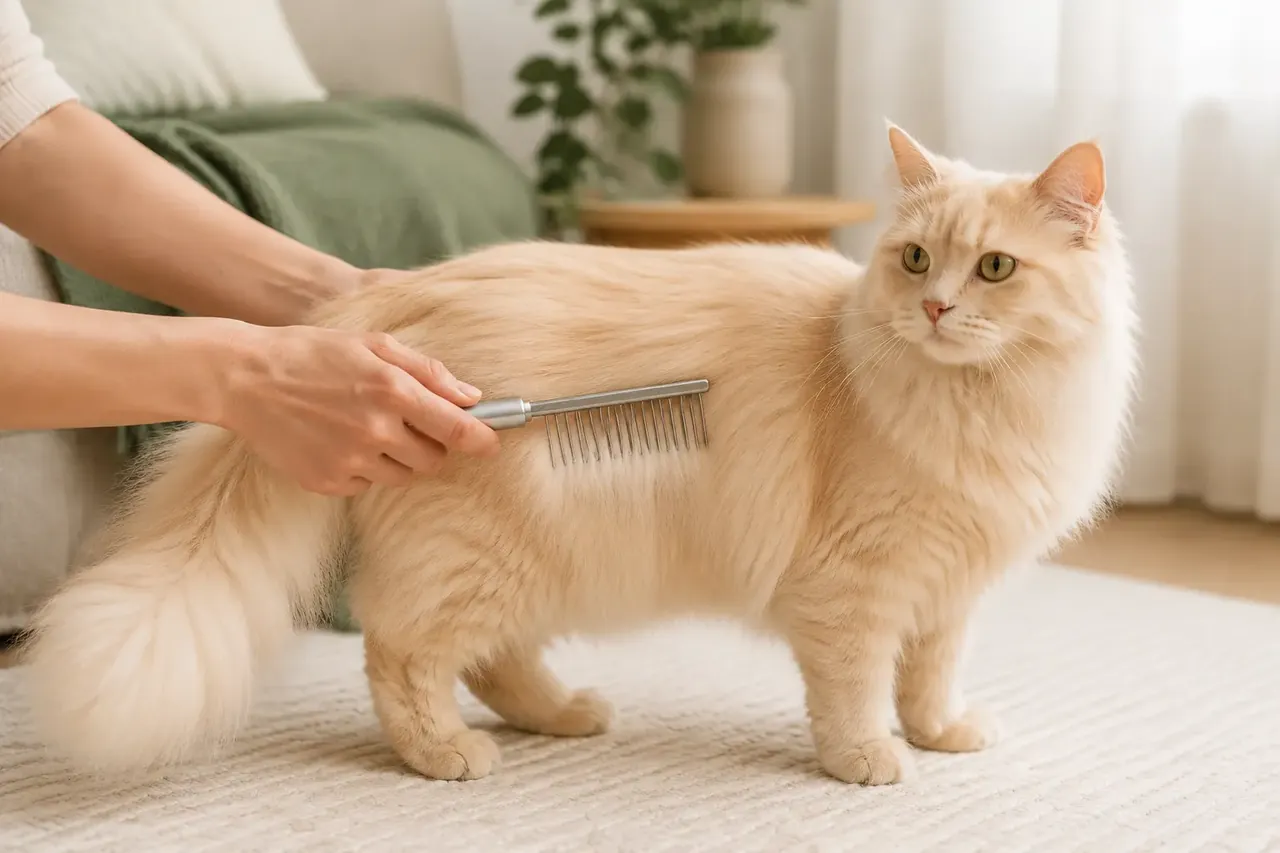
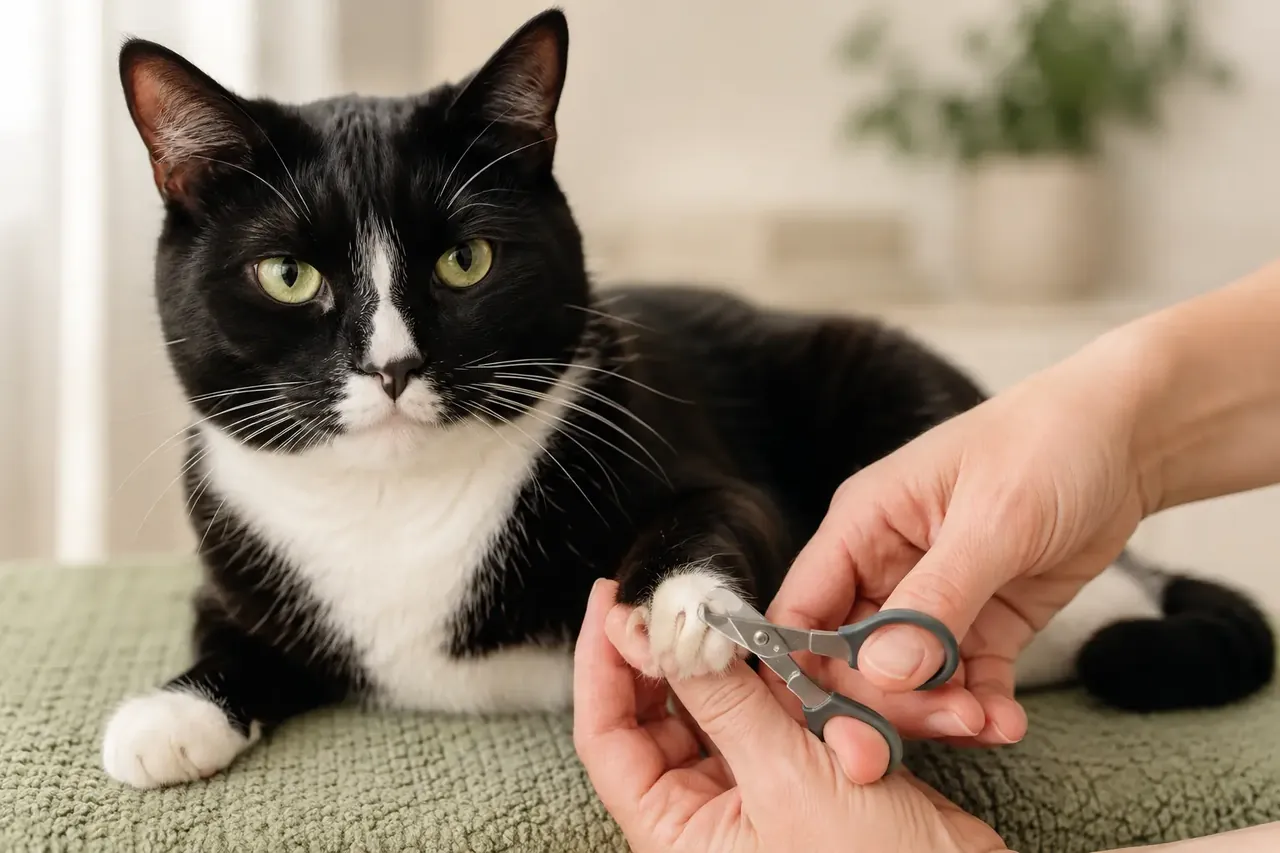 Topic illustration selected for this guide. Some learning images may be AI-assisted.
What to do when your cat hates being brushed — the quick answer
✓ Begin with the brush at a distance, high-value rewards and a place where the cat can leave.
✓ Reward looking, sniffing and one comfortable stroke before ending the session successfully.
✓ Have pain, arthritis, skin disease and hidden mats checked when touch tolerance changes.
Resistance often reflects fear, pulling, static, sensitive skin, pain or sessions that last too long. This guide shows how to rebuild grooming through choice, tiny steps and better tools, what equipment helps, how to protect trust and when routine care should become professional care.
Identify the first difficult moment
Note whether tension begins when the tool appears, touches a body area, catches the coat or continues too long. Watch ears, tail, pupils, skin movement and attempts to leave. Reactions focused on one location can indicate pain rather than a general dislike of grooming.
Remove physical causes first
Inspect visually for mats, wounds, redness, fleas and tender joints without prolonged restraint. Use a smooth gentle tool suited to the coat and a non-slip surface. Do not brush through a tight mat or assume the cat must learn to tolerate painful pulling.
Rebuild in tiny steps
Show the tool at a comfortable distance, reward calm behaviour and put it away. Progress to one touch with the back of the brush, then one gentle stroke on an accepted area. End while the cat remains relaxed and let departure always be possible.
Avoid punishment and restraint
Do not scruff, pin, chase, spray water or continue until the planned area is finished. Forced grooming can teach stronger avoidance and defensive biting. Ask a qualified professional about cooperative handling when essential coat care cannot be completed safely.
When to contact a veterinarian
A new reaction, touch sensitivity, reduced jumping, poor self-grooming, skin change or rapid matting needs veterinary assessment. Bites and scratches need appropriate human wound care; severe pain, collapse or breathing difficulty is urgent.
Your quick checklist
Loading saved progress…
Three simple things you can do
You do not have to change everything today. Pick one step that feels realistic, try it and see how your cat responds.
- 1Observe your cat’s individual baseline.
- 2Make one gentle change at a time.
- 3Ask a qualified professional when health or safety is involved.
Common mistakes
×Waiting for a dramatic symptom instead of noticing smaller changes from the cat’s normal routine.
×Changing several things at once, making it difficult to learn what actually helped.
×Treating general guidance as a substitute for advice from a veterinarian who knows the individual cat.
Questions cat people ask
Does every cat follow the same rule?+
No. Age, health, history, temperament and environment all change what works for an individual.
When should I seek professional help?+
Seek veterinary advice for sudden, persistent or concerning changes and urgent help for breathing difficulty, collapse, seizures, poisoning or urinary obstruction signs.
Still looking for the right answer?
Search the full EverYes Cats encyclopedia with your own words — a symptom, food, behaviour, breed or everyday question.
Checked, dated and transparent
- Prepared by
- EverYes Cats editorial team
- Last updated
- Source checked
- Primary reference
- Cornell Feline Health Center: Feline Skin Diseases ↗
We begin with the named reference, rewrite the information in plain language and add practical cat-parent steps. Urgent health statements are checked against veterinary sources. This guide has not been individually reviewed by a veterinarian unless explicitly stated. It provides education, not diagnosis or treatment.
How we choose and use sources →
Spotted something unclear or outdated? Tell us so we can review it.
Loading your saved choice…
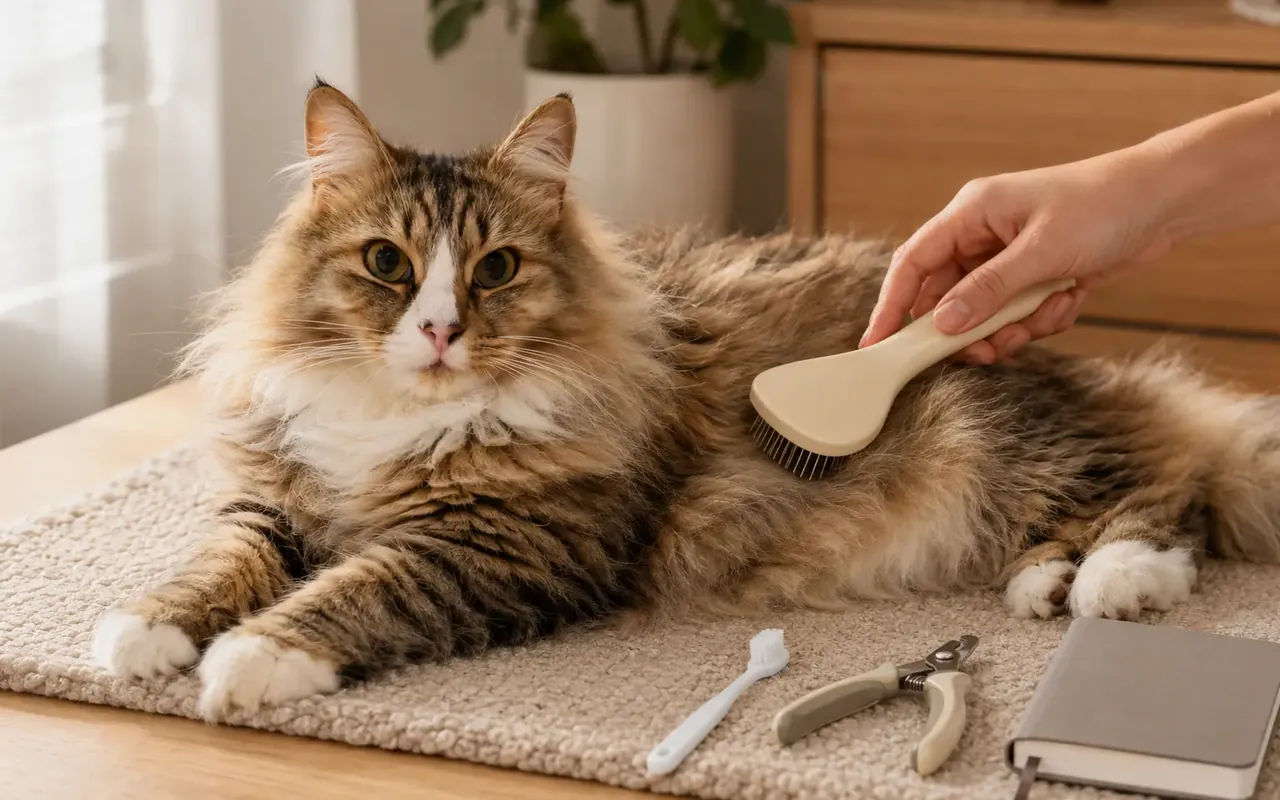
Prevent mats by checking high-friction areas frequently and removing tiny tangles before they tighten. Gentle combing, mobility support and professional help are safer than pulling, scissors or waiting for a large felted area.
 02
 03
 04
 05