How to prepare for your cat's veterinary appointment
Better notes, safer travel and less stressful answers at the clinic.
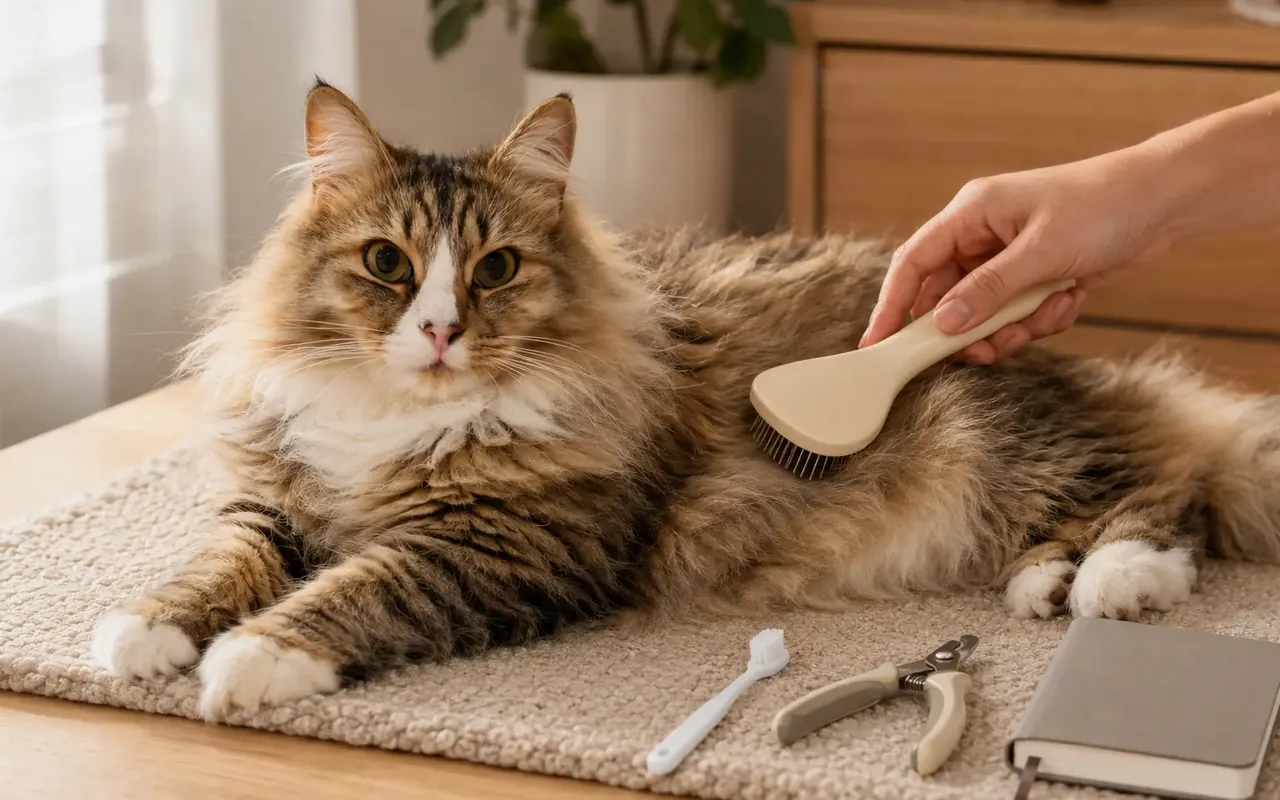 Topic illustration selected for this guide. Some learning images may be AI-assisted.
How to prepare for your cat's veterinary appointment — the quick answer
✓ Write the main concern and timeline
✓ Bring medication and diet details
✓ Use videos for intermittent signs
✓ Ask before fasting or changing medication
A good appointment begins before the carrier closes. A short timeline, medication list, videos and accurate observations help the veterinary team use limited consultation time well.
Create a one-page history
List when the change began, how often it occurs, what makes it better or worse, appetite, thirst, weight, urine, stool and activity.
Capture useful evidence
Film coughing, limping, unusual breathing or litter-box posture without delaying urgent care. Photograph vomit, stool or eye changes when relevant.
Prepare transport
Leave the carrier out beforehand, add familiar bedding and cover it lightly during travel. Secure it with a seat belt and keep the car quiet and cool.
Leave with a plan
Ask what the leading possibilities are, what each test will answer, how medication should be given, which warning signs matter and when follow-up is due.
Your quick checklist
Your progress is saved on this device.
Three simple things you can do
You do not have to change everything today. Pick one step that feels realistic, try it and see how your cat responds.
- 1Write a short timeline of symptoms, appetite, thirst, litter use, medication and behaviour.
- 2Bring clear videos or photos and a list of every supplement and dose.
- 3Keep the carrier out beforehand and ask the clinic early about severe travel fear.
Common mistakes
×Relying on memory for dates, doses and frequency.
×Giving calming medication not prescribed for that cat and visit.
×Waiting until arrival to mention that handling or travel is extremely difficult.
Questions cat people ask
What information should I bring to a cat's vet appointment?+
Bring a symptom timeline, medication and supplement list, diet details, relevant records and videos of signs that may not appear in the clinic.
Should my cat fast before the veterinarian?+
Only if the clinic gives specific instructions. Kittens, diabetic cats and other patients may have special needs, so ask rather than guessing.
Still looking for the right answer?
Search the full EverYes Cats encyclopedia with your own words — a symptom, food, behaviour, breed or everyday question.
Checked, dated and transparent
- Prepared by
- EverYes Cats editorial team
- Last updated
- 7 August 2026
- Source checked
- 7 August 2026
- Primary reference
- AAHA/AAFP Feline Life Stage Guidelines ↗
We begin with the named reference, rewrite the information in plain language and add practical cat-parent steps. Urgent health statements are checked against veterinary sources. This guide has not been individually reviewed by a veterinarian unless explicitly stated. It provides education, not diagnosis or treatment.
Spotted something unclear or outdated? Tell us so we can review it.
Your answer helps us improve the cat encyclopedia.
Trim only the clear hooked tip of a cat’s claw in bright light. Teach paw handling in tiny rewarded steps, stop before restraint becomes a fight and ask for a demonstration when the quick is hard to see.