Why do cats get mats behind their front legs?
Friction, fine coat, moisture and difficult reach make the armpit area prone to tight mats. The skin is thin and mobile, so never pull hard or cut close with scissors.
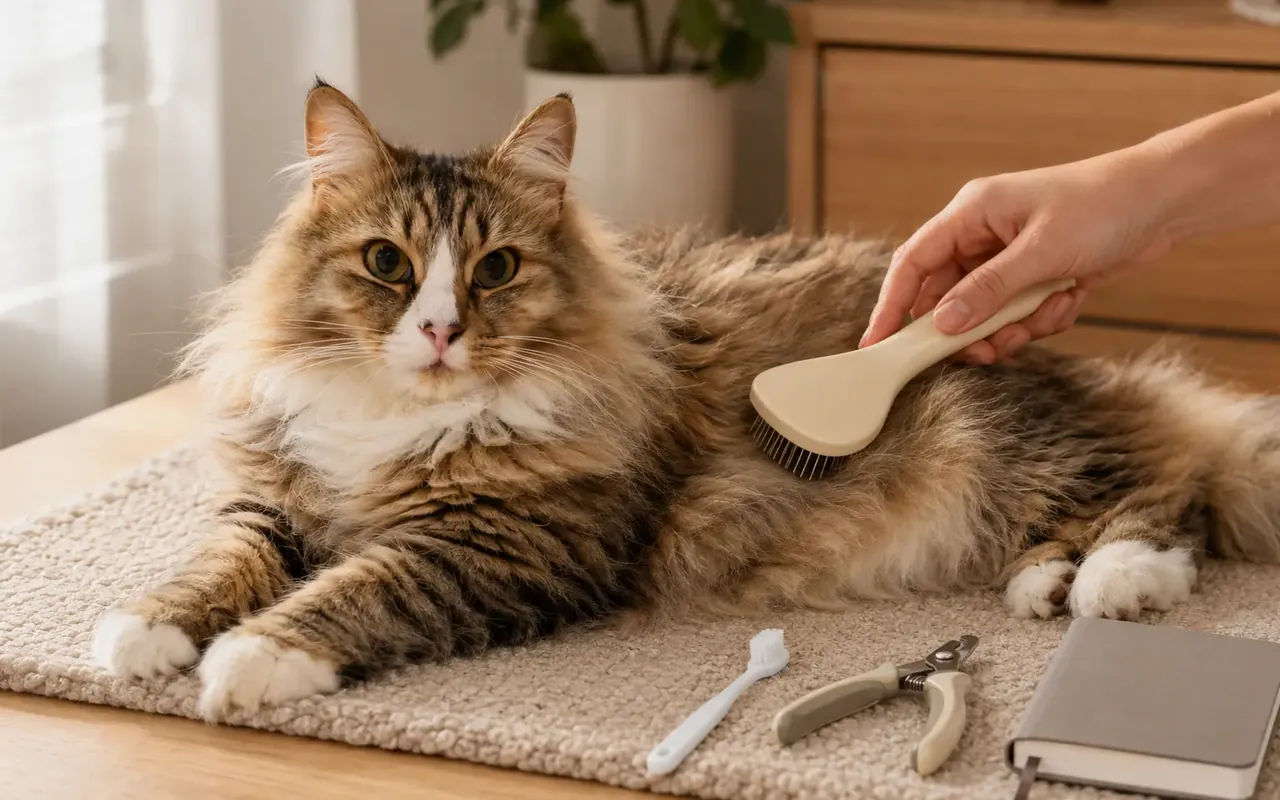
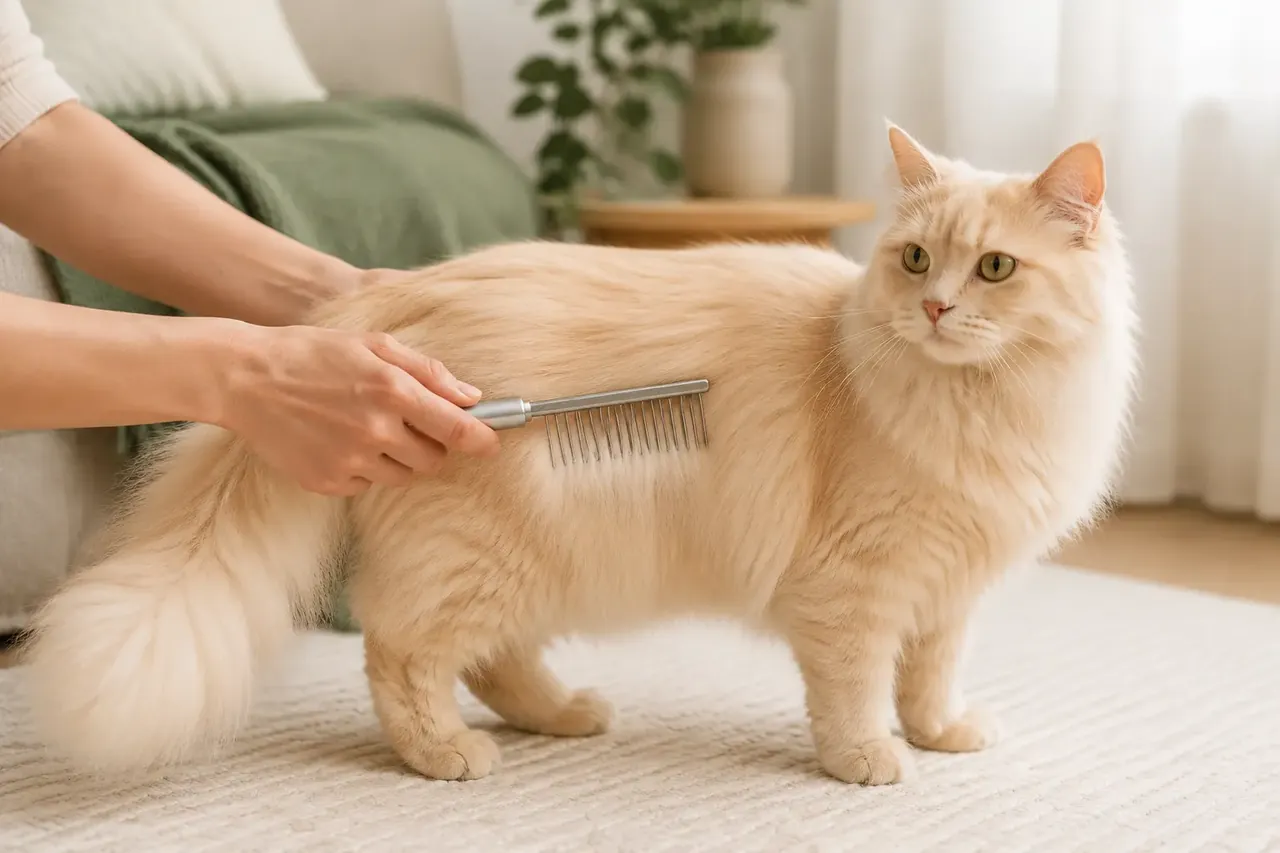 Topic illustration selected for this guide. Some learning images may be AI-assisted.
Why do cats get mats behind their front legs — the quick answer
✓ Friction, fine coat texture, moisture and difficult reach make the armpit area prone to tangles.
✓ Observe: Check daily for small tangles without pulling sensitive skin.
✓ Try this: Use gentle frequent combing and ask a professional to remove tight mats safely.
Friction, fine coat texture, moisture and difficult reach make the armpit area prone to tangles. The useful question is not only what the moment resembles, but whether it fits this cat’s normal pattern. Context, frequency, recovery and accompanying changes make the interpretation safer and more accurate.
Check without stretching the leg
Let the cat stand or lie naturally and part the coat gently with fingers. Stop for tension or pain. Check redness, odour, moisture and wounds without forcing the leg outward.
Handle only tiny loose tangles
Use a coat-appropriate comb at the outer edge while supporting loose fur near the skin. Work for seconds, then pause. A tight mat attached to skin is not a home detangling project.
Avoid scissors and bathing
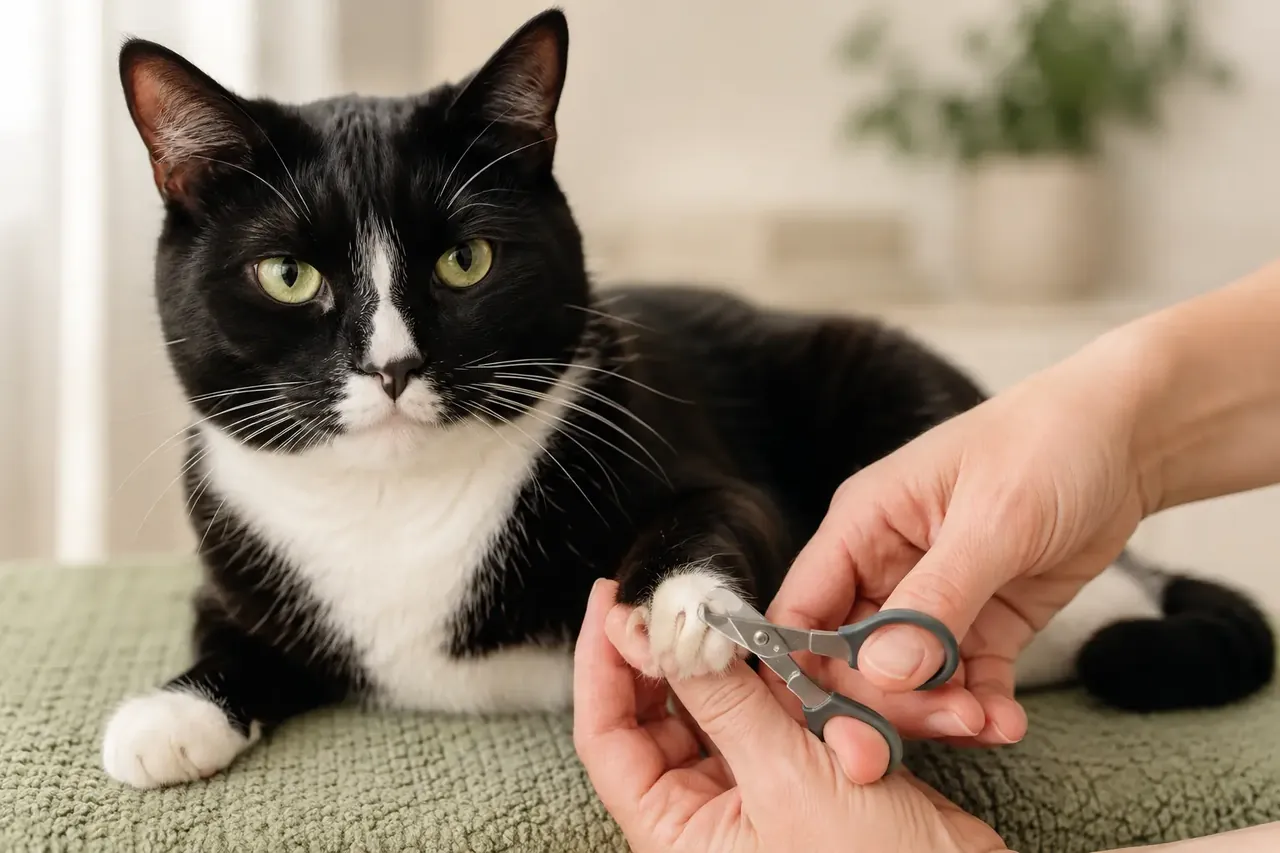
Cat skin can lift into a mat and be cut easily. Do not use scissors, yank with a dematting tool or wet a tight mat, which may contract. A veterinarian or qualified cat groomer can remove it safely.
Prevent recurrence and check health
Use brief frequent grooming before tangles tighten and keep harnesses dry and well fitted. Recurrent mats, reduced self-grooming, stiffness, obesity or skin disease deserves veterinary assessment.
Your quick checklist
Loading saved progress…
Three simple things you can do
You do not have to change everything today. Pick one step that feels realistic, try it and see how your cat responds.
- 1Observe your cat’s individual baseline.
- 2Make one gentle change at a time.
- 3Ask a qualified professional when health or safety is involved.
Common mistakes
×Waiting for a dramatic symptom instead of noticing smaller changes from the cat’s normal routine.
×Changing several things at once, making it difficult to learn what actually helped.
×Treating general guidance as a substitute for advice from a veterinarian who knows the individual cat.
Questions cat people ask
Does every cat follow the same rule?+
No. Age, health, history, temperament and environment all change what works for an individual.
When should I seek professional help?+
Seek veterinary advice for sudden, persistent or concerning changes and urgent help for breathing difficulty, collapse, seizures, poisoning or urinary obstruction signs.
Still looking for the right answer?
Search the full EverYes Cats encyclopedia with your own words — a symptom, food, behaviour, breed or everyday question.
Checked, dated and transparent
- Prepared by
- EverYes Cats editorial team
- Last updated
- Source checked
- Primary reference
- Cats Protection: Grooming Your Cat ↗
We begin with the named reference, rewrite the information in plain language and add practical cat-parent steps. Urgent health statements are checked against veterinary sources. This guide has not been individually reviewed by a veterinarian unless explicitly stated. It provides education, not diagnosis or treatment.
How we choose and use sources →
Spotted something unclear or outdated? Tell us so we can review it.
Loading your saved choice…
Cats can usually walk and play gently after eating, but vigorous chasing, twisting and jumping immediately after a large meal may trigger discomfort, regurgitation or vomiting in some cats.
 02
 03
 04
 05