Why does my cat hate being brushed along the back?
A cat may resist back brushing because the tool pulls, static builds, the skin is overstimulated or the area hurts. Stop before resistance and rebuild with one gentle rewarded stroke at a time.
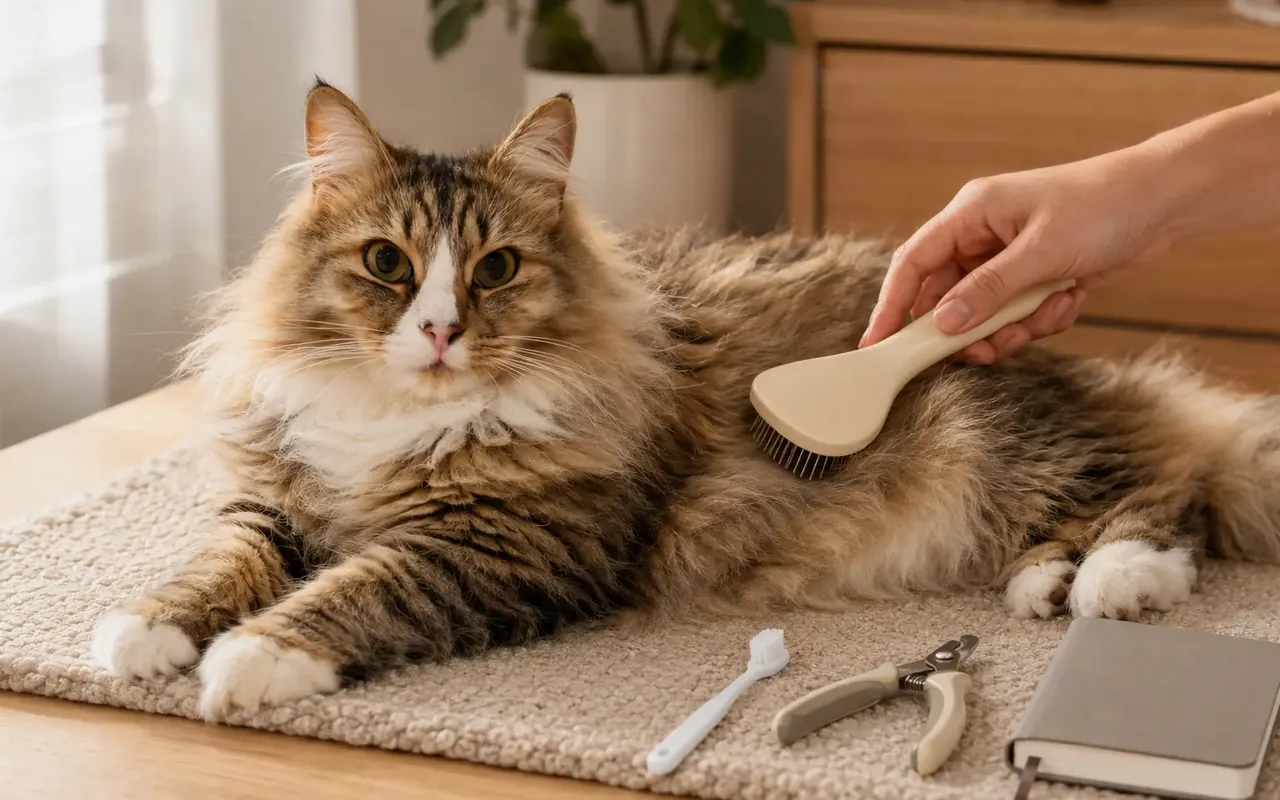 Topic illustration selected for this guide. Some learning images may be AI-assisted.
Why does my cat hate being brushed along the back — the quick answer
✓ Tool sensation, static, tangles, overstimulation or pain can make brushing uncomfortable
✓ Stop before resistance, test a softer suitable tool and build one-stroke reward sessions.
✓ Pain, skin rippling, dandruff, mats or a sudden reaction needs veterinary assessment.
Tool sensation, static, tangles, overstimulation or pain can make brushing uncomfortable. A previously accepted brush becoming unwelcome is important information.
The short answer
Tool sensation, static, tangles, overstimulation or pain can make brushing uncomfortable. A previously accepted brush becoming unwelcome is important information.
What to observe first
Compare the moment with your cat’s usual pattern. Note timing, frequency, body language, appetite, litter-box use, mobility and any recent household change.
Why the setting matters
A previously accepted brush becoming unwelcome is important information. One isolated detail rarely explains behaviour or health on its own, so look at the whole cat and the immediate environment.
What you can do
Stop before resistance, test a softer suitable tool and build one-stroke reward sessions.
A gentle way to test it
Make one small safe adjustment and give the cat time and choice. Avoid punishment, forced handling and several changes at once, because they make the response harder to understand.
When to contact a veterinarian
Pain, skin rippling, dandruff, mats or a sudden reaction needs veterinary assessment.
Prepare useful information
Write down when it began and how often it occurs. A short video, clear photo, food record or litter record can help a veterinary professional assess a pattern that may not appear during the appointment.
Rule out a painful grooming problem
With the cat relaxed, look without forcing for tight mats, dandruff, redness, scabs, bald areas, fleas or a reaction to light touch. Do not cut mats with scissors because folded skin is easy to injure. Pain, skin change or a new reaction needs veterinary or professional grooming help.
DEEPER GUIDE1 more detailed sectionsOpen +
Reintroduce the brush below threshold
Let the cat inspect a soft suitable tool, reward calmness, then make one light stroke in a tolerated area and stop. Increase only when the cat remains loose and voluntarily stays. Keep sessions short, control static with room humidity and avoid holding the cat in place.
Your quick checklist
Your progress is saved on this device.
Three simple things you can do
You do not have to change everything today. Pick one step that feels realistic, try it and see how your cat responds.
- 1Use a softer tool for one stroke over an accepted area, then reward and stop.
- 2Avoid pressing over the spine, hips and any mats.
- 3Arrange assessment when back sensitivity is new or worsening.
Common mistakes
×Holding the cat down to finish the back.
×Dragging a tool through tangles.
×Assuming every reaction is behavioural.
Questions cat people ask
Why does my cat hate being brushed on the back?+
Tool pressure, static, skin sensitivity, mats, arthritis or spinal and hip discomfort may make that area unpleasant.
How can I groom a sensitive back?+
First rule out pain, then use very brief low-pressure strokes with an accepted tool and allow the cat to leave after each repetition.
Still looking for the right answer?
Search the full EverYes Cats encyclopedia with your own words — a symptom, food, behaviour, breed or everyday question.
Checked, dated and transparent
- Prepared by
- EverYes Cats editorial team
- Last updated
- 13 August 2026
- Source checked
- 13 August 2026
- Primary reference
- International Cat Care ↗
We begin with the named reference, rewrite the information in plain language and add practical cat-parent steps. Urgent health statements are checked against veterinary sources. This guide has not been individually reviewed by a veterinarian unless explicitly stated. It provides education, not diagnosis or treatment.
Spotted something unclear or outdated? Tell us so we can review it.
Your answer helps us improve the cat encyclopedia.
Indoor light and temperature can blur seasonal shedding patterns, while warm dry air loosens coat. Learn what to check, what to change safely and when professional help matters.