How many litter boxes does a cat need?
Start with one litter box per cat plus one extra, then spread them across separate, quiet locations. Several trays in one row do not give a blocked or worried cat a genuine alternative.
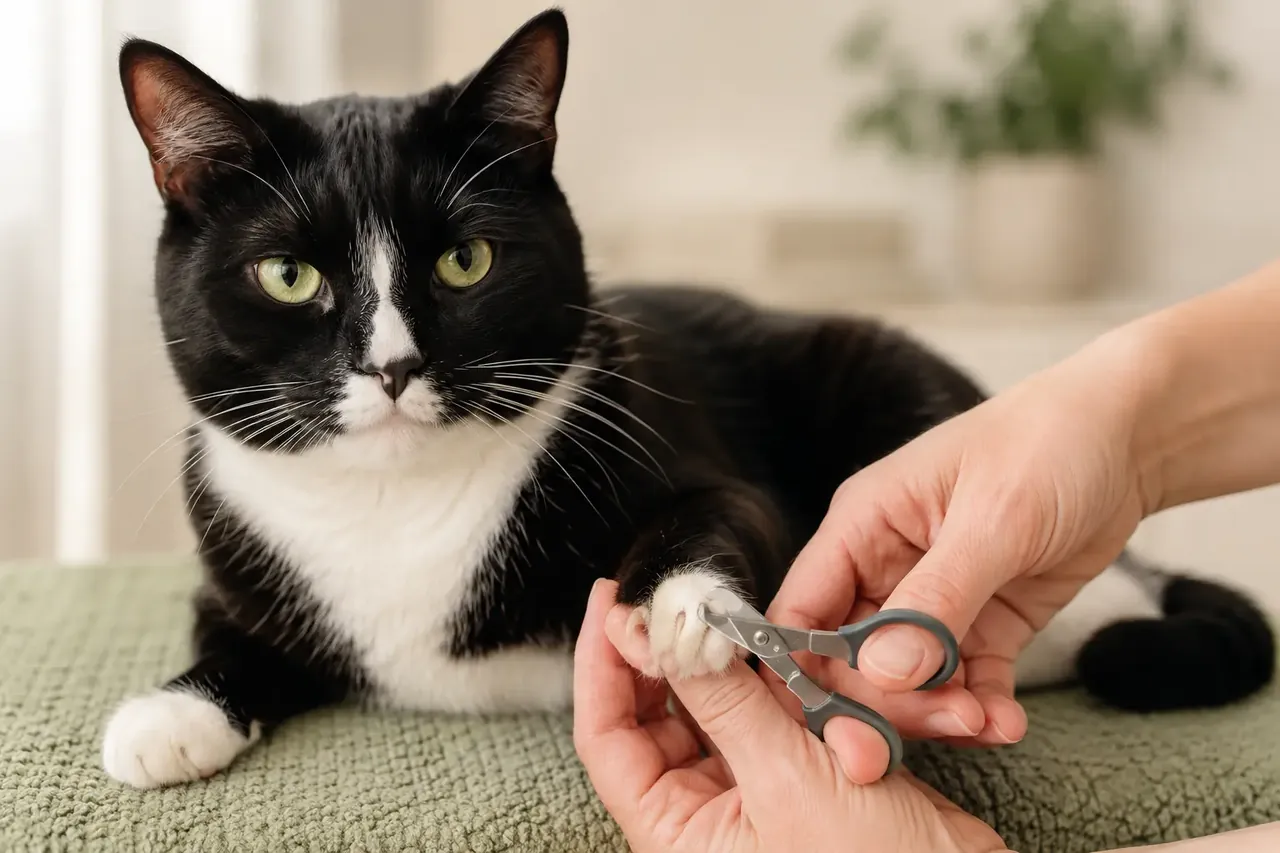 Topic illustration selected for this guide. Some learning images may be AI-assisted.
How many litter boxes does a cat need — the quick answer
✓ Start with one box per cat plus one extra
✓ Boxes in a row may count as one location
✓ Large uncovered boxes suit many cats
✓ Sudden avoidance needs a health check
One box per cat plus one extra is a useful starting point, but number alone is not enough. Boxes need to be in separate, safe, accessible locations to function as real choices.
Count locations, not furniture
Three trays side by side offer little protection if another cat blocks the room. Spread options across the home and, when relevant, across different floors.
Choose safe access
Avoid noisy appliances, trapped corners and busy feeding areas. A cat should be able to see an approach and leave without passing a rival.
Fit the cat
The tray should be large enough to turn and dig comfortably. Seniors and cats with pain may need a low entry while still benefiting from high sides elsewhere.
Maintain without perfume
Scoop at least daily, wash with mild unscented products and avoid sudden litter changes. Strong fragrance can be aversive.
Test access from the cat’s point of view
Walk each route at the times your cats normally toilet. Check closed doors, stairs, appliances, narrow hallways and places where another cat can stare or wait. A useful box has a calm approach and an exit that cannot easily be controlled by a housemate.
Adjust the formula for the individual
The one-per-cat-plus-one rule is a starting point, not a maximum. Kittens, seniors, cats with pain and homes with several levels may need additional low-entry options. Sudden avoidance, straining, blood or repeated visits needs veterinary assessment rather than another tray alone.
Your quick checklist
Your progress is saved on this device.
Three simple things you can do
You do not have to change everything today. Pick one step that feels realistic, try it and see how your cat responds.
- 1Begin with one litter box per cat plus one extra, placed in genuinely separate locations.
- 2Choose large accessible boxes with quiet approaches and more than one escape route where possible.
- 3Scoop at least daily and address any sudden avoidance with a veterinary check.
Common mistakes
×Counting several boxes in one row as separate resource locations.
×Placing every box in a noisy laundry room or trapped corner.
×Using strong fragrance, tiny trays or abrupt litter changes to solve avoidance.
Questions cat people ask
Do two cats really need three litter boxes?+
One per cat plus one extra is a useful starting point, but distribution matters more than the arithmetic alone. Separate locations reduce blocking and offer meaningful choice.
Where should litter boxes be placed?+
Choose quiet, accessible places away from food and noisy appliances, with visibility and a safe exit. Seniors or painful cats may also need low-entry options on each level.
Still looking for the right answer?
Search the full EverYes Cats encyclopedia with your own words — a symptom, food, behaviour, breed or everyday question.
Checked, dated and transparent
- Prepared by
- EverYes Cats editorial team
- Last updated
- 13 August 2026
- Source checked
- 13 August 2026
- Primary reference
- FelineVMA Healthy Feline Environment ↗
We begin with the named reference, rewrite the information in plain language and add practical cat-parent steps. Urgent health statements are checked against veterinary sources. This guide has not been individually reviewed by a veterinarian unless explicitly stated. It provides education, not diagnosis or treatment.
Spotted something unclear or outdated? Tell us so we can review it.
Your answer helps us improve the cat encyclopedia.
Some healthy cats simply do not cover stool. A change can also reflect a small or dirty box, disliked litter, social pressure, pain or urgency.