How to trim cat claws without a wrestling match
Trim only the clear hooked tip of a cat’s claw in bright light. Teach paw handling in tiny rewarded steps, stop before restraint becomes a fight and ask for a demonstration when the quick is hard to see.
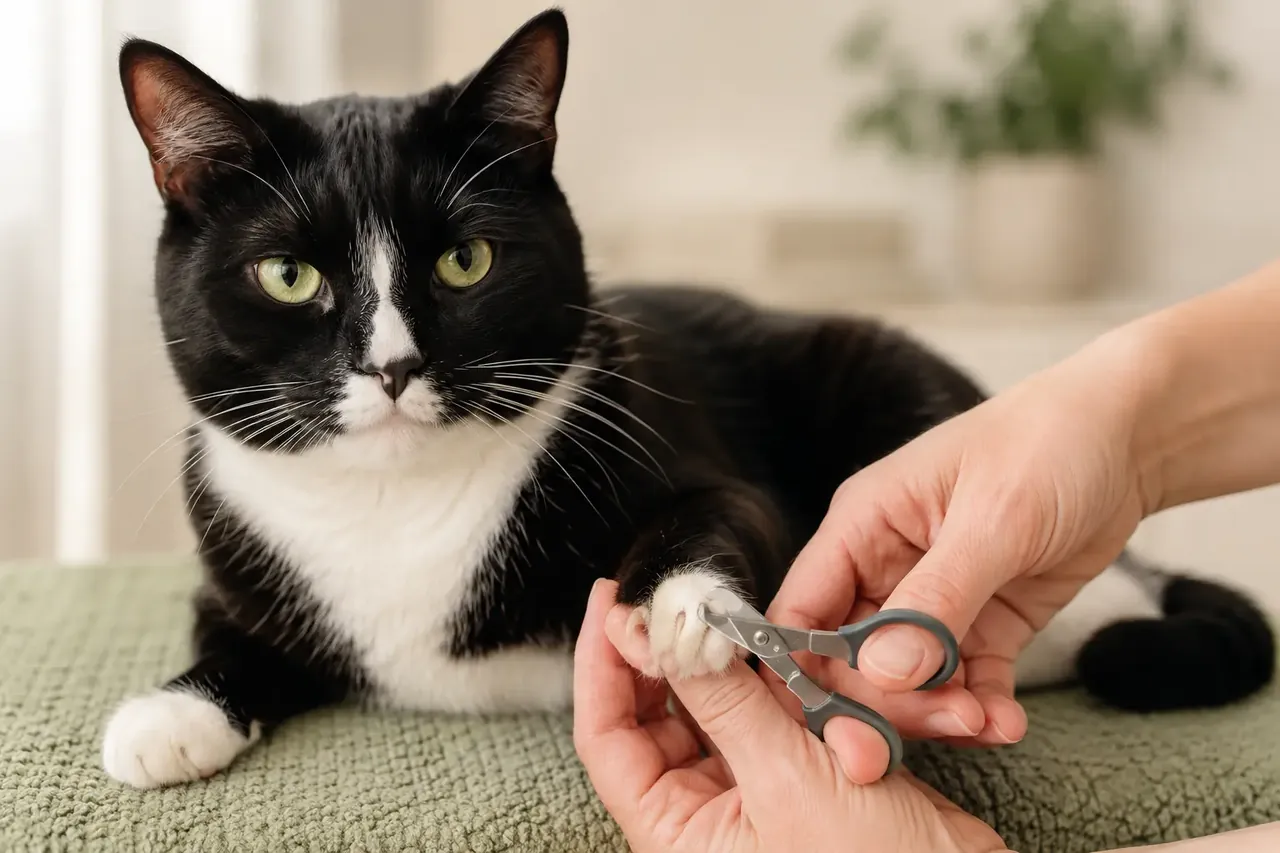 Topic illustration selected for this guide. Some learning images may be AI-assisted.
How to trim cat claws without a wrestling match — the quick answer
✓ Trim only the clear hooked tip
✓ One claw can be a successful session
✓ Provide scratchers even when trimming
✓ Painful or overgrown claws need professional help
Not every cat needs every claw trimmed at once. The best goal is calm handling and safe maintenance, especially for seniors whose claws may thicken or catch.
Claw trimming in three calm steps
The goal is not to finish every claw. Build comfort one tiny success at a time.
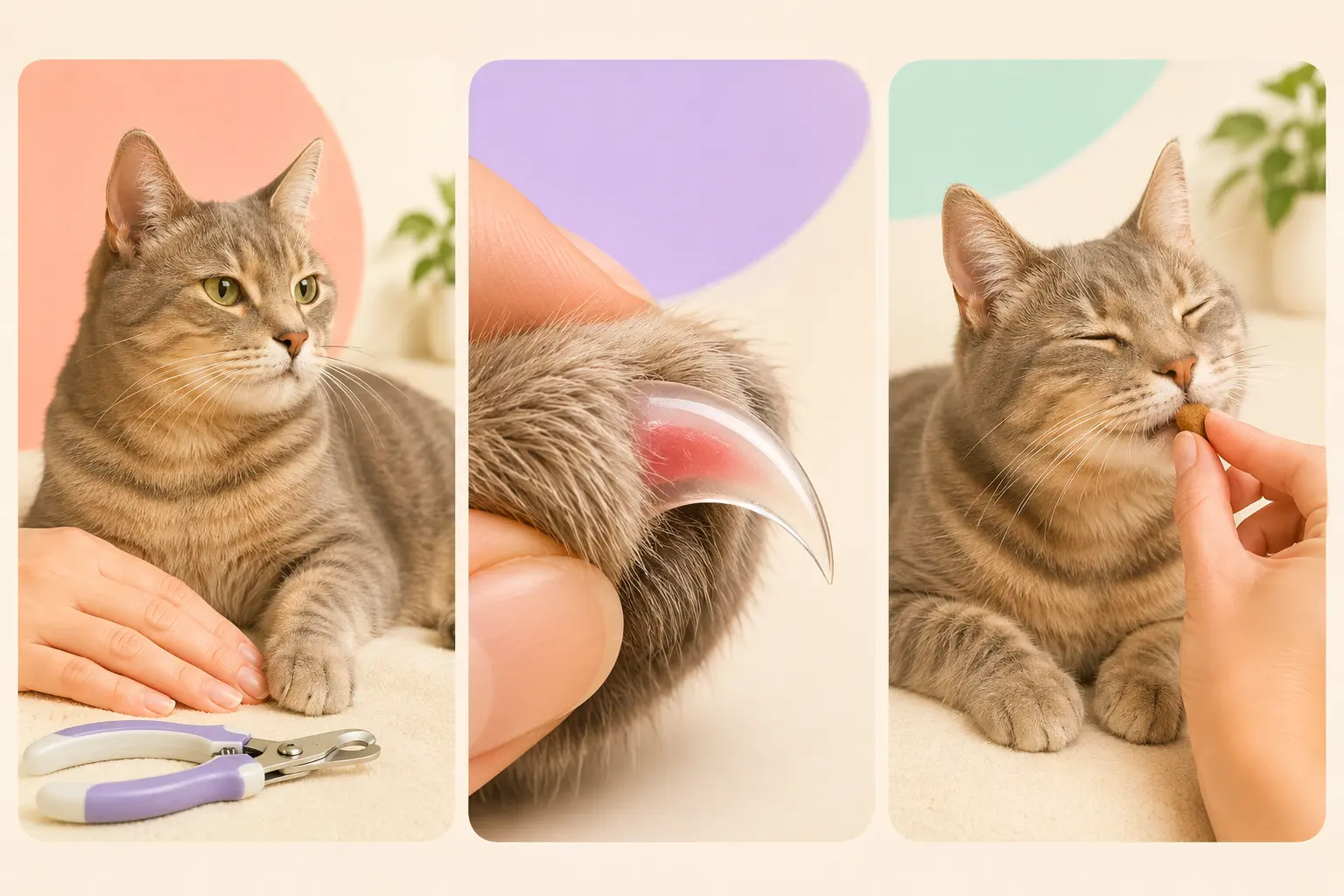
- 1Prepare
Let your cat inspect the clippers and practise one-second paw touches when relaxed.
- 2Find the tip
Press gently to extend one claw and trim only the clear hooked end, well away from the pink quick.
- 3Reward and stop
Reward immediately. One successful claw is enough for an early session.
Train the touch first
While the cat is relaxed, touch the shoulder, slide toward the paw, reward and stop. Later press one toe gently to extend a claw.
See the safe zone
In a light claw, the pink quick contains blood vessels and nerves. Remove only the sharp transparent tip with cat nail clippers; take less when uncertain.
Use micro-sessions
Trim one claw, reward and release. Never continue because the equipment is ready if the cat is becoming tense.
Know when to delegate
Embedded claws, bleeding, swelling, limping, very thick nails or a cat that panics requires veterinary or experienced professional help. Do not risk injury.
Prepare before touching a paw
Choose sharp pet claw clippers, good light, a non-slip surface and rewards the cat values. Practise touching one paw, pressing one toe and showing the clippers on separate calm occasions before attempting a cut.
Have a plan if a claw bleeds
The pink quick contains nerves and blood vessels. If it is nicked, stay calm and use veterinary-approved first-aid guidance; contact a clinic if bleeding does not stop promptly or the cat is distressed. Split, thick, ingrown or painful claws need professional assessment.
Your quick checklist
Your progress is saved on this device.
Three simple things you can do
You do not have to change everything today. Pick one step that feels realistic, try it and see how your cat responds.
- 1Teach one-second paw touches and gentle toe pressure during relaxed moments.
- 2In bright light, trim only the clear hooked tip with sharp pet clippers.
- 3Treat one or two claws as a successful session and stop before restraint becomes a struggle.
Common mistakes
×Cutting toward the pink quick or guessing in poor light.
×Holding the cat down to finish every claw at once.
×Using blunt clippers that crush or split the claw.
Questions cat people ask
How often should a cat's claws be trimmed?+
It varies with age, activity, scratching and claw growth. Check them regularly and trim only when the sharp tip becomes long or catches; seniors may need closer monitoring.
What should I do if I cut the quick?+
Stay calm and apply gentle pressure with clean gauze. Use a veterinarian-recommended styptic product if available and call the clinic if bleeding does not stop promptly or the cat is distressed.
Still looking for the right answer?
Search the full EverYes Cats encyclopedia with your own words — a symptom, food, behaviour, breed or everyday question.
Checked, dated and transparent
- Prepared by
- EverYes Cats editorial team
- Last updated
- 13 August 2026
- Source checked
- 13 August 2026
- Primary reference
- FelineVMA Claw Friendly Toolkit ↗
We begin with the named reference, rewrite the information in plain language and add practical cat-parent steps. Urgent health statements are checked against veterinary sources. This guide has not been individually reviewed by a veterinarian unless explicitly stated. It provides education, not diagnosis or treatment.
Spotted something unclear or outdated? Tell us so we can review it.
Your answer helps us improve the cat encyclopedia.
How dental disease can hide behind a normal appetite.