Set up resources for a multi-cat home
A multi-cat home needs duplicated resources in separate locations, not one large shared station. Spread food, water, litter, scratching, height and hiding so one cat cannot quietly control everything.
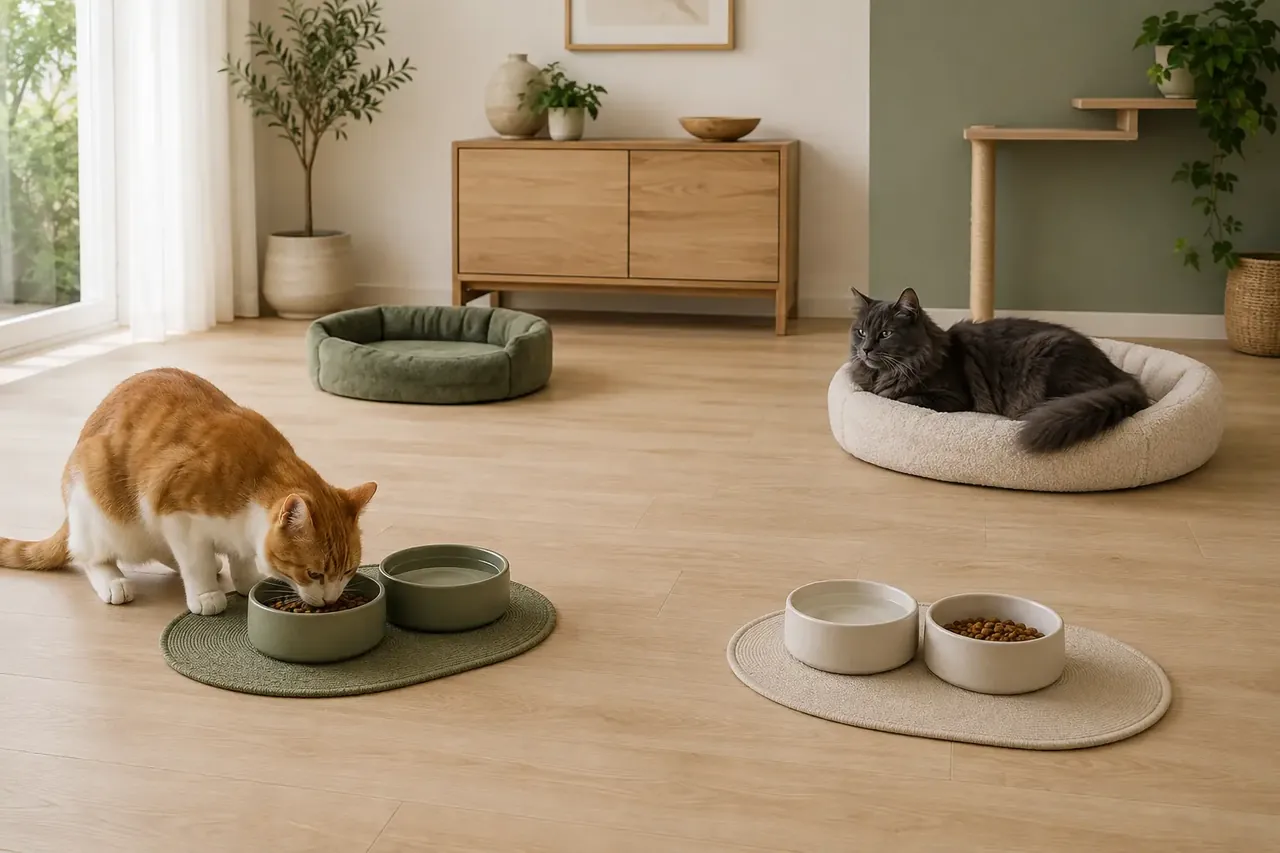 Topic illustration selected for this guide. Some learning images may be AI-assisted.
Set up resources for a multi-cat home — the quick answer
✓ Separate key resources instead of grouping everything
✓ Provide multiple routes and resting heights
✓ Watch for quiet blocking, not only obvious fights
Cats can share a home without wanting to share every bowl, bed or doorway. Spreading important resources helps each cat move through the home without conflict.
Create more than one station
Place food, water, litter, scratching and resting options in different areas so one cat cannot control access to everything.
Use vertical space
Shelves, sturdy furniture and cat trees add routes and resting places without requiring a larger floor plan.
Notice subtle pressure
Staring, doorway blocking and waiting until another cat leaves can signal tension. Adjust placement before conflict becomes louder.
Map quiet competition room by room
Watch doorways, stairs, hallways and the routes to food, water and litter. Staring, following, waiting, turning back or using a resource only after another cat leaves can reveal pressure without an obvious fight.
Create genuine alternatives
Place resources far enough apart that the same cat cannot guard them from one position. Include vertical and floor-level routes, more than one comfortable resting area and one litter box per cat plus one extra as a starting point. Sudden conflict also needs a health check.
Your quick checklist
Your progress is saved on this device.
Three simple things you can do
You do not have to change everything today. Pick one step that feels realistic, try it and see how your cat responds.
- 1Map where each cat eats, drinks, toilets, scratches, hides and rests.
- 2Spread duplicate resources across separate rooms and sightlines rather than creating one crowded station.
- 3Add vertical routes and more than one exit from important areas.
Common mistakes
×Counting bowls or litter trays placed side by side as independent choices.
×Looking only for fights while missing staring, doorway blocking and waiting.
×Expecting every cat to share favourite beds, food stations or narrow routes.
Questions cat people ask
How many resources do two cats need?+
There is no single number for every resource, but each cat needs meaningful choice. For litter boxes, one per cat plus one extra in separate locations is a useful starting point.
What are signs of resource guarding between cats?+
One cat may stare, block a doorway, chase after litter use or make the other wait to eat, drink or enter a room even without obvious fighting.
Still looking for the right answer?
Search the full EverYes Cats encyclopedia with your own words — a symptom, food, behaviour, breed or everyday question.
Checked, dated and transparent
- Prepared by
- EverYes Cats editorial team
- Last updated
- 13 August 2026
- Source checked
- 13 August 2026
- Primary reference
- AAHA/AAFP Feline Life Stage Guidelines ↗
We begin with the named reference, rewrite the information in plain language and add practical cat-parent steps. Urgent health statements are checked against veterinary sources. This guide has not been individually reviewed by a veterinarian unless explicitly stated. It provides education, not diagnosis or treatment.
Spotted something unclear or outdated? Tell us so we can review it.
Your answer helps us improve the cat encyclopedia.
Place litter boxes in separate quiet areas with easy approach and escape routes. Avoid noisy appliances, dead ends and locations another cat can block; add accessible trays wherever stairs or mobility create a barrier.