A cleaner feeding station for cats
A hygienic feeding station separates clean food and water from litter, chemicals and spoiled residue. Use washable surfaces, individual portions and a routine that makes appetite changes easy to notice.
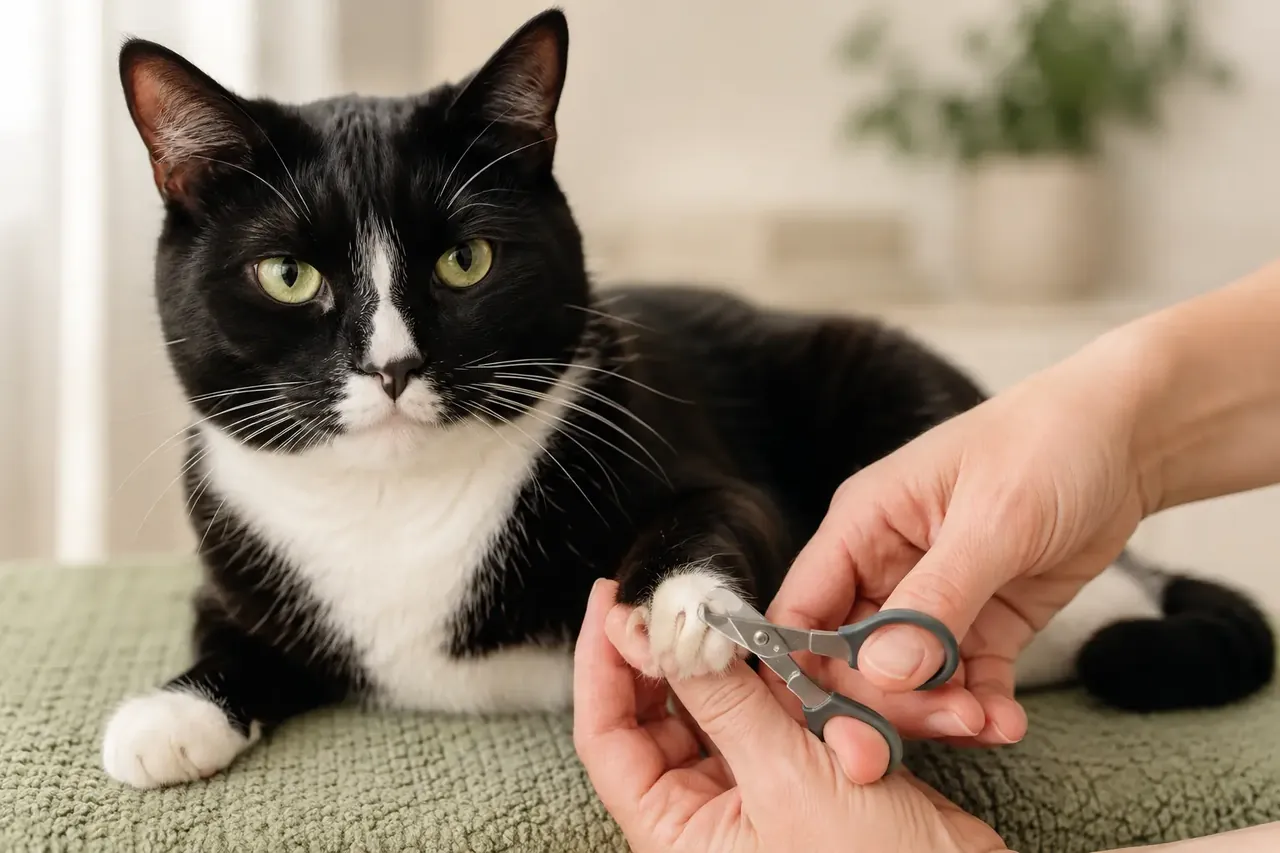
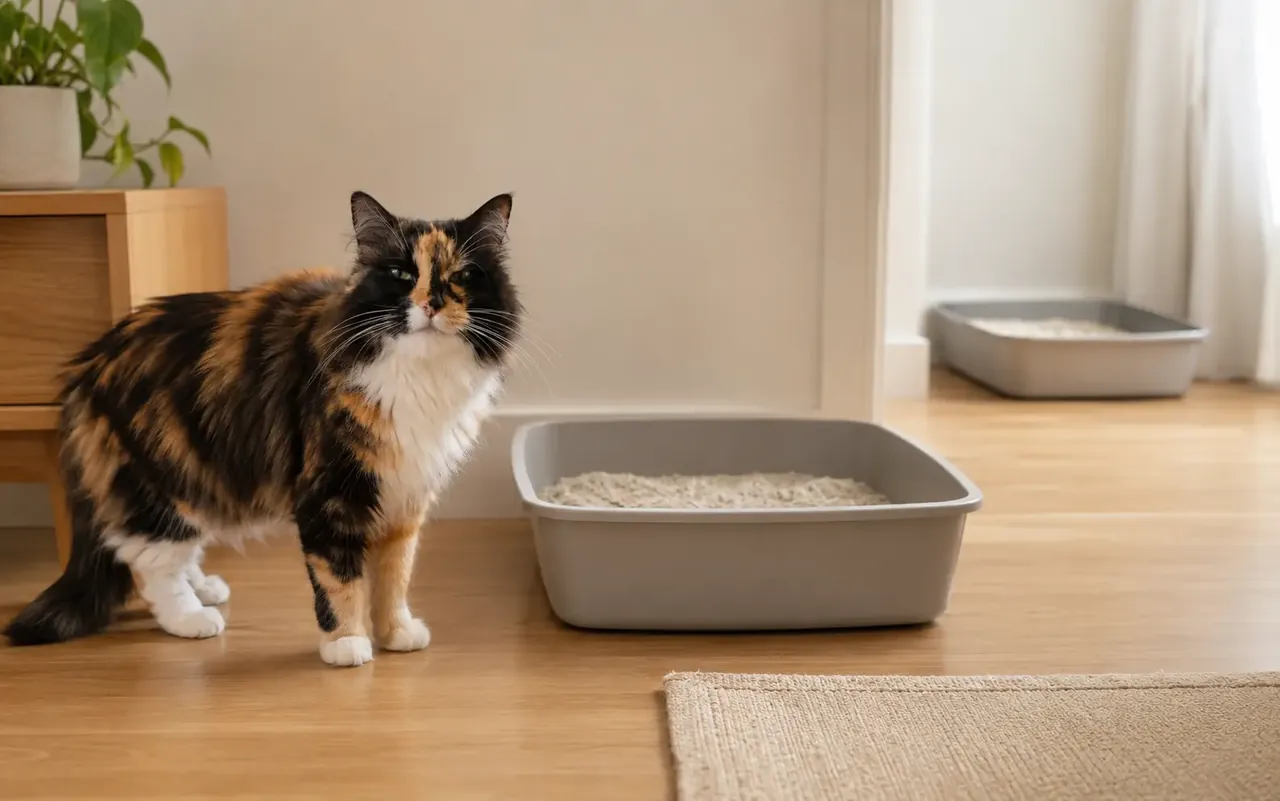 Topic illustration selected for this guide. Some learning images may be AI-assisted.
A cleaner feeding station for cats — the quick answer
✓ Choose a quiet station, washable mat and stable shallow bowls with room between cats.
✓ Remove leftovers promptly, wipe spills and measure portions rather than topping up endlessly.
✓ Reduced appetite, guarding, vomiting or weight change deserves attention.
Location and cleanliness affect comfort, freshness and your ability to notice intake changes. This guide shows how to separate food, water and litter while making daily cleaning easy, what equipment helps, how to protect trust and when routine care should become professional care.
Choose a calm washable location
Place bowls away from litter boxes, cleaning products, bins, cooking heat and heavy foot traffic. The cat should be able to approach and leave without another animal blocking the route. Use a washable non-slip mat only if the cat crosses it comfortably.
Separate food, water and individual cats
Many cats drink more readily when water is offered away from food. In multi-cat homes, provide more than one station so each cat can eat without staring, crowding or guarding. Separate meals when portions, medications or appetite need monitoring.
Clean the complete area
Wash bowls, mats and scoops on an appropriate schedule and wipe food splashes before they dry. Inspect walls, edges and floors for hidden crumbs, ants and moisture. Use mild unscented products, keep the cat away during cleaning and rinse food-contact surfaces thoroughly.
Control time and temperature
Serve portions the cat can finish, refrigerate opened food according to its label and discard perishable leftovers before they spoil. Do not repeatedly warm and cool the same food or leave raw diets at room temperature. Clean hands and utensils reduce cross-contamination.
Use hygiene to improve observation
Record how much each cat eats rather than estimating from a shared dish. Sudden appetite loss, drooling, vomiting, diarrhoea, weight change or conflict at the station needs attention. Contact a veterinarian promptly when meaningful intake is reduced.
Your quick checklist
Loading saved progress…
Three simple things you can do
You do not have to change everything today. Pick one step that feels realistic, try it and see how your cat responds.
- 1Observe your cat’s individual baseline.
- 2Make one gentle change at a time.
- 3Ask a qualified professional when health or safety is involved.
Common mistakes
×Waiting for a dramatic symptom instead of noticing smaller changes from the cat’s normal routine.
×Changing several things at once, making it difficult to learn what actually helped.
×Treating general guidance as a substitute for advice from a veterinarian who knows the individual cat.
Questions cat people ask
Does every cat follow the same rule?+
No. Age, health, history, temperament and environment all change what works for an individual.
When should I seek professional help?+
Seek veterinary advice for sudden, persistent or concerning changes and urgent help for breathing difficulty, collapse, seizures, poisoning or urinary obstruction signs.
Still looking for the right answer?
Search the full EverYes Cats encyclopedia with your own words — a symptom, food, behaviour, breed or everyday question.
Checked, dated and transparent
- Prepared by
- EverYes Cats editorial team
- Last updated
- Source checked
- Primary reference
- FelineVMA: How to Feed a Cat ↗
We begin with the named reference, rewrite the information in plain language and add practical cat-parent steps. Urgent health statements are checked against veterinary sources. This guide has not been individually reviewed by a veterinarian unless explicitly stated. It provides education, not diagnosis or treatment.
How we choose and use sources →
Spotted something unclear or outdated? Tell us so we can review it.
Loading your saved choice…
Clean cat toys according to their material and retire anything with loose parts, damaged seams, exposed batteries or contamination that cannot be removed. Washing should not leave fragrance or moisture trapped inside.
 01
 02
 03
 04