Can cats drink milk?
Most adult cats do not need milk, and many digest lactose poorly. Fresh water should be the everyday drink; cow's milk is not suitable nutrition for kittens.
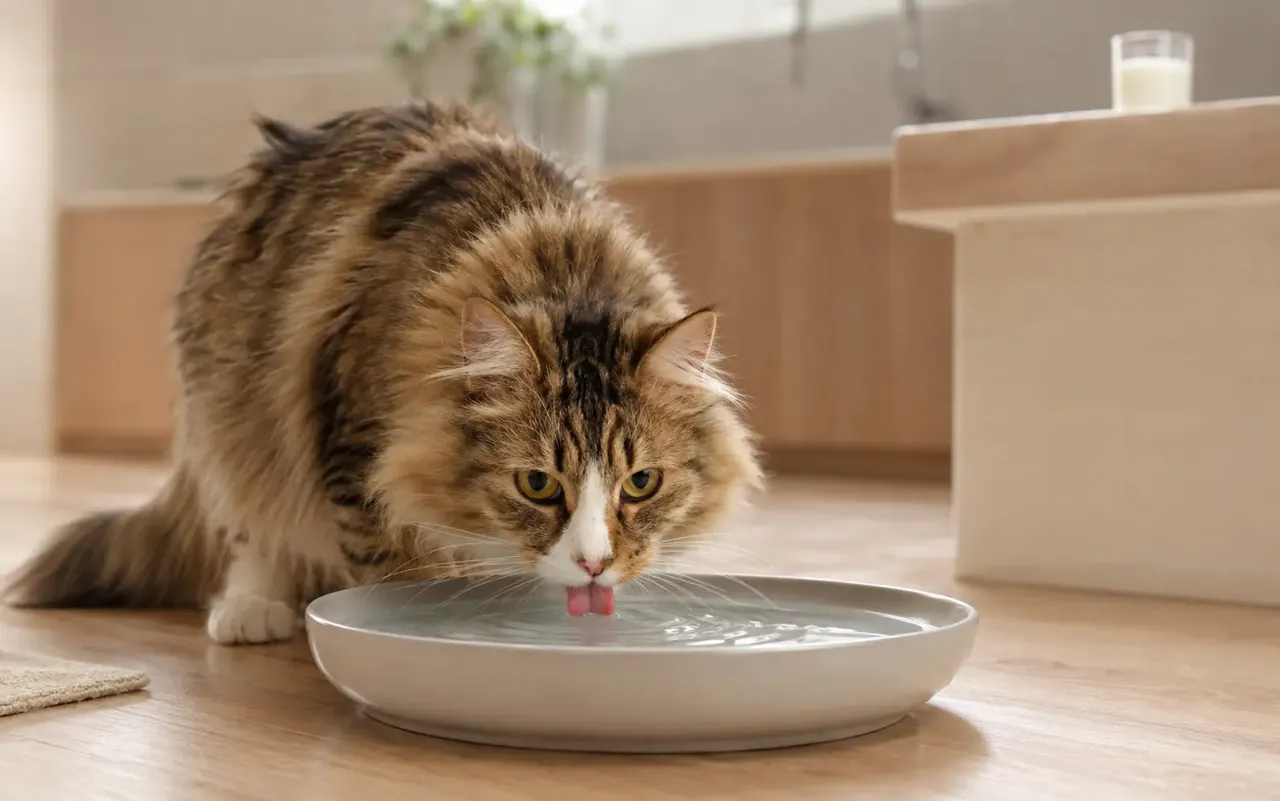 Topic illustration selected for this guide. Some learning images may be AI-assisted.
Can cats drink milk — the quick answer
✓ Water is the best everyday drink
✓ Many adult cats cannot digest lactose well
✓ Lactose-free cat milk is still a treat, not a meal
Cats and milk are shown together everywhere, so it is easy to assume milk is a good treat. For many adult cats it is not. They may struggle to digest lactose, and the extra calories can add up quickly.
Keep water first and milk truly optional
Many adult cats digest lactose poorly. Fresh water should remain available at all times, while any cat-specific milk counts as a small occasional treat.
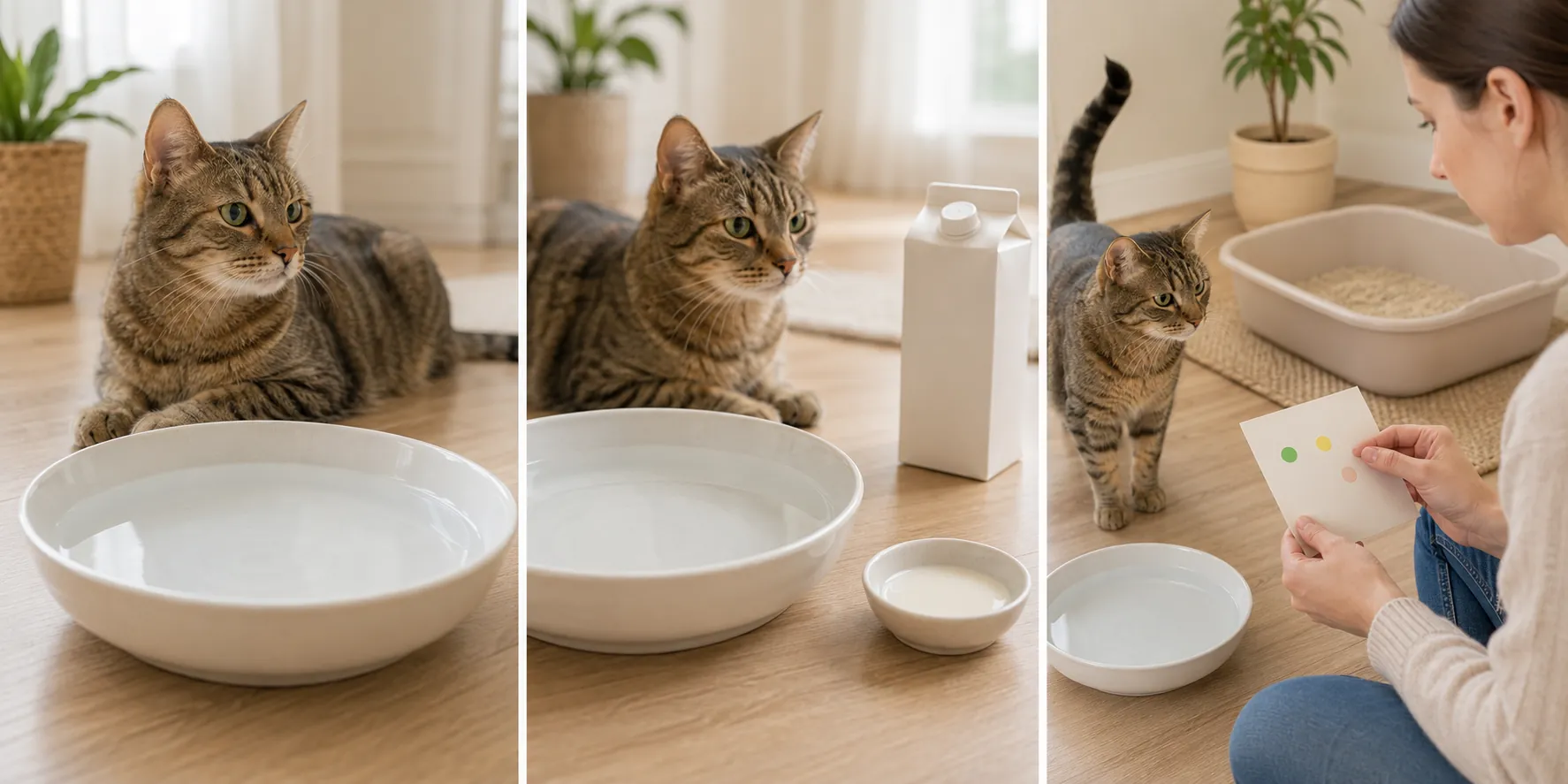
- 1Make fresh water the everyday drink
Offer clean water in comfortable bowls and never replace or restrict it because milk or another liquid treat is available.
- 2If offered, use a very small cat-milk portion
Choose a cat-specific low-lactose product only as an occasional measured treat; ordinary cow’s milk is unnecessary and is not kitten nutrition.
- 3Watch digestion and total calories
Stop after the small portion and monitor for gas, discomfort, vomiting or diarrhoea while keeping water and the normal complete diet unchanged.
What can happen after milk
A cat that cannot digest lactose may get gas, stomach discomfort or diarrhea. The reaction is not always immediate, so the connection can be easy to miss.
What about special cat milk?
Cat milk products usually contain less lactose, but they still contain calories. Offer only a small amount and count it as a treat.
The simple choice
Keep fresh water available in clean bowls. If your cat suddenly drinks much more or less than usual, contact a veterinarian rather than trying to fix it with milk.
Why the familiar saucer is misleading
The image of a cat drinking milk is culturally familiar, but adult cats may have limited lactase and develop gas, discomfort or diarrhoea. Milk also adds calories that can quietly displace complete food. Lactose-free milk removes one concern but still is not needed for hydration or nutrition.
Kittens need the right kind of milk
A nursing kitten needs the mother or a properly formulated kitten milk replacer—not cow's milk, plant drink or a homemade mixture. Orphaned, weak, cold or poorly feeding kittens need urgent guidance from a veterinarian or experienced rescue because age, warmth, feeding position and frequency all matter.
Your quick checklist
Your progress is saved on this device.
Three simple things you can do
You do not have to change everything today. Pick one step that feels realistic, try it and see how your cat responds.
- 1Use fresh water as the everyday drink.
- 2If you offer cat milk, keep the portion small and occasional.
- 3Watch for diarrhea or stomach discomfort after any new treat.
Common mistakes
×Giving cow's milk because cats are shown drinking it in films.
×Replacing water or complete food with a milk product.
×Ignoring the calories in liquid treats.
Questions cat people ask
Can kittens drink cow's milk?+
Young kittens need their mother's milk or a proper kitten milk replacer, not ordinary cow's milk. Ask a veterinarian or rescue for urgent feeding advice.
Is lactose-free human milk safe?+
It removes one concern but is still not needed and may add calories. Water and a complete diet remain the simple everyday choice.
Still looking for the right answer?
Search the full EverYes Cats encyclopedia with your own words — a symptom, food, behaviour, breed or everyday question.
Checked, dated and transparent
- Prepared by
- EverYes Cats editorial team
- Last updated
- 8 August 2026
- Source checked
- 8 August 2026
- Primary reference
- WSAVA Global Nutrition Guidelines ↗
We begin with the named reference, rewrite the information in plain language and add practical cat-parent steps. Urgent health statements are checked against veterinary sources. This guide has not been individually reviewed by a veterinarian unless explicitly stated. It provides education, not diagnosis or treatment.
Spotted something unclear or outdated? Tell us so we can review it.
Your answer helps us improve the cat encyclopedia.
Plain tuna can be an occasional tiny treat for many healthy adult cats, but it is not a complete meal. Brine, oil, seasoning and a tuna-only habit create avoidable risks.