How to stop one cat stealing another cat’s food
Prevent food stealing through separate controlled access, not supervision or punishment. Each cat should be able to finish the correct measured meal without being watched, rushed or blocked.
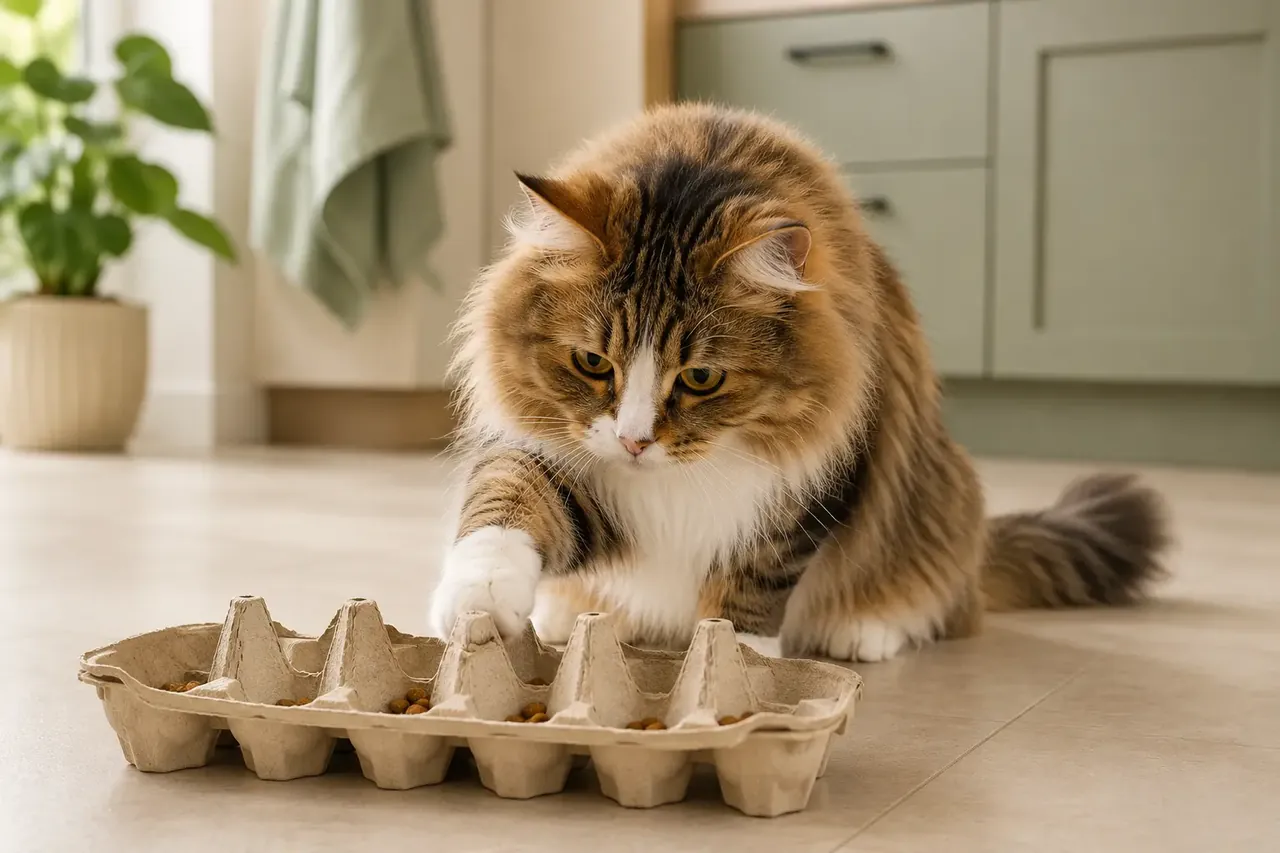 Topic illustration selected for this guide. Some learning images may be AI-assisted.
How to stop one cat stealing another cat’s food — the quick answer
✓ Separate access works better than guarding bowls or repeatedly moving the thief
✓ Feed in separate closed areas or use identity-controlled feeders and remove bowls after planned meals.
✓ Extreme hunger, weight change or food obsession that is new needs veterinary assessment.
Separate access works better than guarding bowls or repeatedly moving the thief. Different diets, eating speeds and confidence levels make shared feeding difficult.
The short answer
Separate access works better than guarding bowls or repeatedly moving the thief. Different diets, eating speeds and confidence levels make shared feeding difficult.
What to observe first
Compare the moment with your cat’s usual pattern. Note timing, frequency, body language, appetite, litter-box use, mobility and any recent household change.
Why the setting matters
Different diets, eating speeds and confidence levels make shared feeding difficult. One isolated detail rarely explains behaviour or health on its own, so look at the whole cat and the immediate environment.
What you can do
Feed in separate closed areas or use identity-controlled feeders and remove bowls after planned meals.
A gentle way to test it
Make one small safe adjustment and give the cat time and choice. Avoid punishment, forced handling and several changes at once, because they make the response harder to understand.
When to contact a veterinarian
Extreme hunger, weight change or food obsession that is new needs veterinary assessment.
Prepare useful information
Write down when it began and how often it occurs. A short video, clear photo, food record or litter record can help a veterinary professional assess a pattern that may not appear during the appointment.
Create feeding stations that cannot be shared
Feed cats in separate rooms with closed doors, at different heights only when mobility makes that safe, or use identity-controlled feeders. Place stations far enough apart that one cat cannot stare at or rush another, then remove leftovers after the planned meal.
DEEPER GUIDE1 more detailed sectionsOpen +
Check why stealing has intensified
Measure each cat's complete daily intake and track weight. A new increase in hunger, weight loss, thirst, vomiting or food obsession can accompany illness. Cats on prescription diets need especially reliable separation and veterinary guidance if either cat is not eating the intended amount.
Your quick checklist
Your progress is saved on this device.
Three simple things you can do
You do not have to change everything today. Pick one step that feels realistic, try it and see how your cat responds.
- 1Feed cats in separate locations with visual barriers.
- 2Measure each cat’s daily ration and supervise meals.
- 3Ask your veterinarian about weight or prescription-diet needs.
Common mistakes
×Punishing the food thief.
×Leaving special diets freely accessible.
×Assuming equal bowls mean equal intake.
Questions cat people ask
Why does my cat steal the other cat’s food?+
Novelty, speed, competition and learned opportunity can all make the other bowl attractive.
How can I stop food stealing?+
Separate rooms, timed meals or microchip feeders are more reliable than correction.
Still looking for the right answer?
Search the full EverYes Cats encyclopedia with your own words — a symptom, food, behaviour, breed or everyday question.
Checked, dated and transparent
- Prepared by
- EverYes Cats editorial team
- Last updated
- 13 August 2026
- Source checked
- 13 August 2026
- Primary reference
- AAHA/AAFP Feline Life Stage Guidelines ↗
We begin with the named reference, rewrite the information in plain language and add practical cat-parent steps. Urgent health statements are checked against veterinary sources. This guide has not been individually reviewed by a veterinarian unless explicitly stated. It provides education, not diagnosis or treatment.
Spotted something unclear or outdated? Tell us so we can review it.
Your answer helps us improve the cat encyclopedia.
The motion can resemble covering leftovers and often appears when a cat is finished or uncertain about the food. Learn what to observe, what to try safely and when to seek help.