Why Does My Cat Stare at Food Before Eating?
A brief pause before eating can be normal inspection, but repeated staring and hesitation may reflect nausea, mouth pain, swallowing difficulty or social pressure. Watch what happens next and measure actual intake.
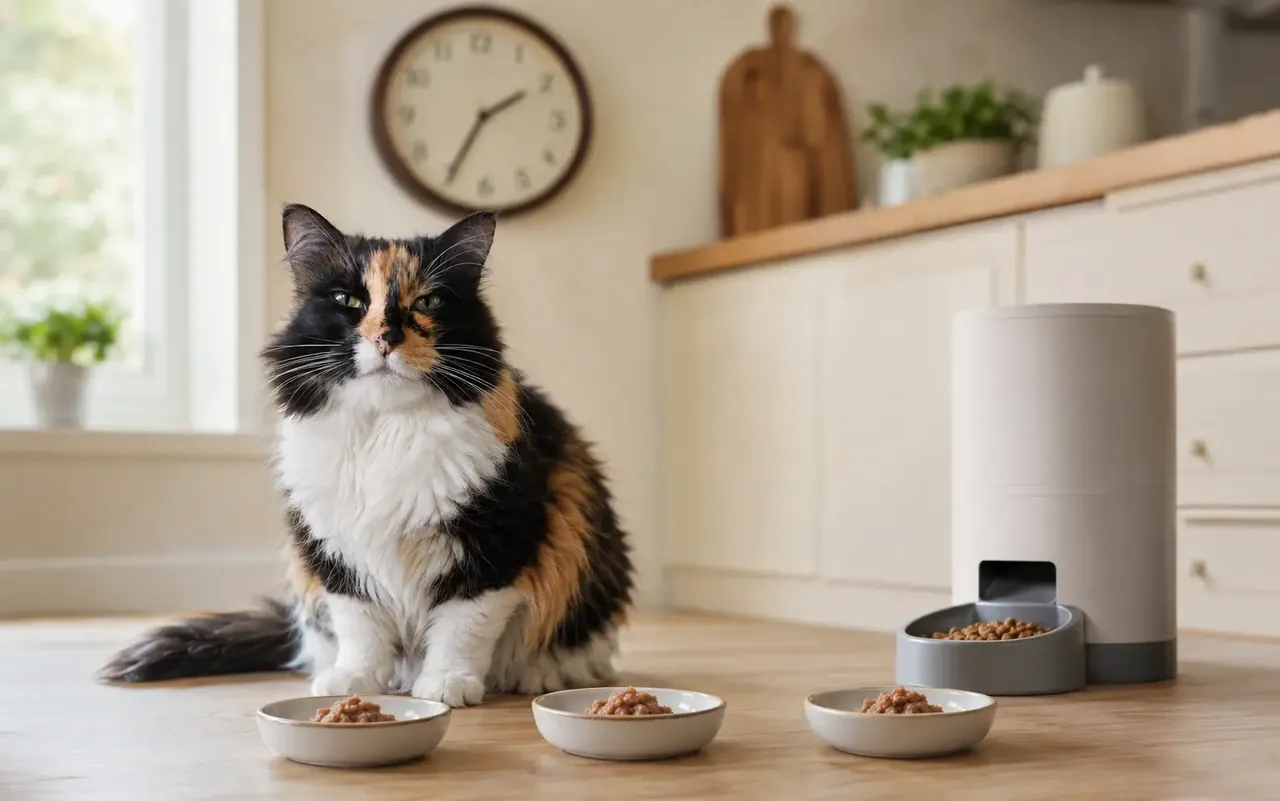
 Topic illustration selected for this guide. Some learning images may be AI-assisted.
Why Does My Cat Stare at Food Before Eating — the quick answer
✓ A short pause can be normal inspection, but repeated hesitation may reflect nausea or mouth discomfort.
✓ Serve familiar complete food fresh in a quiet protected station.
✓ Failure to eat, drooling, vomiting or weakness needs prompt veterinary care.
A short pause can be normal inspection, but repeated hesitation may reflect nausea or mouth discomfort. The full situation matters more than one isolated moment.
Read the entire approach
Note whether the cat sniffs, lip-licks, swallows, crouches, looks around or tries to eat and stops. Check breathing, posture and whether another pet watches from nearby. A calm pause followed by a normal meal differs from hungry approaches without successful eating.
Offer a familiar protected meal
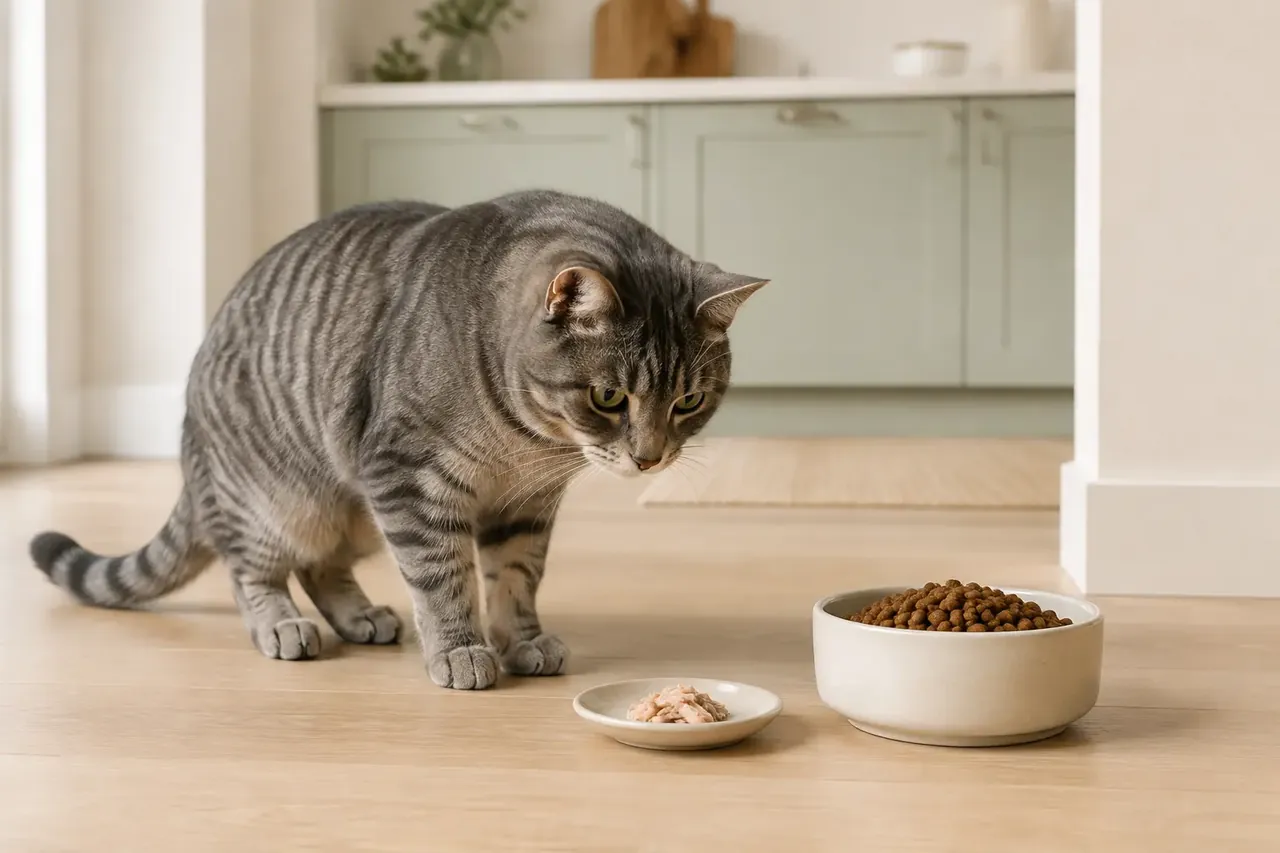
Serve the usual complete food fresh in a clean wide dish at a quiet station. Feed separately from other animals and keep an easy exit route. Avoid cycling through many foods in one sitting, which can complicate appetite assessment and create digestive upset.
Check mouth and nausea clues
Watch for drooling, bad breath, food dropping, one-sided chewing, pawing at the mouth, vomiting and hard swallowing without forcing the mouth open. Record whether wet food seems easier than dry, but do not make a major diet change without veterinary guidance.
Measure and record
Weigh or measure what is served and left, record meal duration and body weight and take a short safe video when the hesitation recurs. Note medication, recent food changes and the last normal meal. Do not delay care to obtain a perfect recording.
When to contact a veterinarian
Failure to eat, repeated hesitation, drooling, vomiting, weakness, weight loss or swallowing difficulty needs veterinary advice. A cat that stops eating, cannot swallow, has breathing difficulty or appears severely weak needs prompt or emergency care.
Your quick checklist
Loading saved progress…
Three simple things you can do
You do not have to change everything today. Pick one step that feels realistic, try it and see how your cat responds.
- 1Observe your cat’s individual baseline.
- 2Make one gentle change at a time.
- 3Ask a qualified professional when health or safety is involved.
Common mistakes
×Waiting for a dramatic symptom instead of noticing smaller changes from the cat’s normal routine.
×Changing several things at once, making it difficult to learn what actually helped.
×Treating general guidance as a substitute for advice from a veterinarian who knows the individual cat.
Questions cat people ask
Does every cat follow the same rule?+
No. Age, health, history, temperament and environment all change what works for an individual.
When should I seek professional help?+
Seek veterinary advice for sudden, persistent or concerning changes and urgent help for breathing difficulty, collapse, seizures, poisoning or urinary obstruction signs.
Still looking for the right answer?
Search the full EverYes Cats encyclopedia with your own words — a symptom, food, behaviour, breed or everyday question.
Checked, dated and transparent
- Prepared by
- EverYes Cats editorial team
- Last updated
- Source checked
- Primary reference
- FelineVMA: How to Feed a Cat ↗
We begin with the named reference, rewrite the information in plain language and add practical cat-parent steps. Urgent health statements are checked against veterinary sources. This guide has not been individually reviewed by a veterinarian unless explicitly stated. It provides education, not diagnosis or treatment.
How we choose and use sources →
Spotted something unclear or outdated? Tell us so we can review it.
Loading your saved choice…
Begging after a meal can be learned behaviour, a feeding-schedule issue or a sign the diet is not satisfying; a sudden increase in hunger also deserves medical attention.
 01
 02
 03