Preventing winter weight gain in indoor cats
Some cats move less in winter, but weight gain is not inevitable. Measure food, track weight and waist shape, and replace lost activity with indoor hunting games.
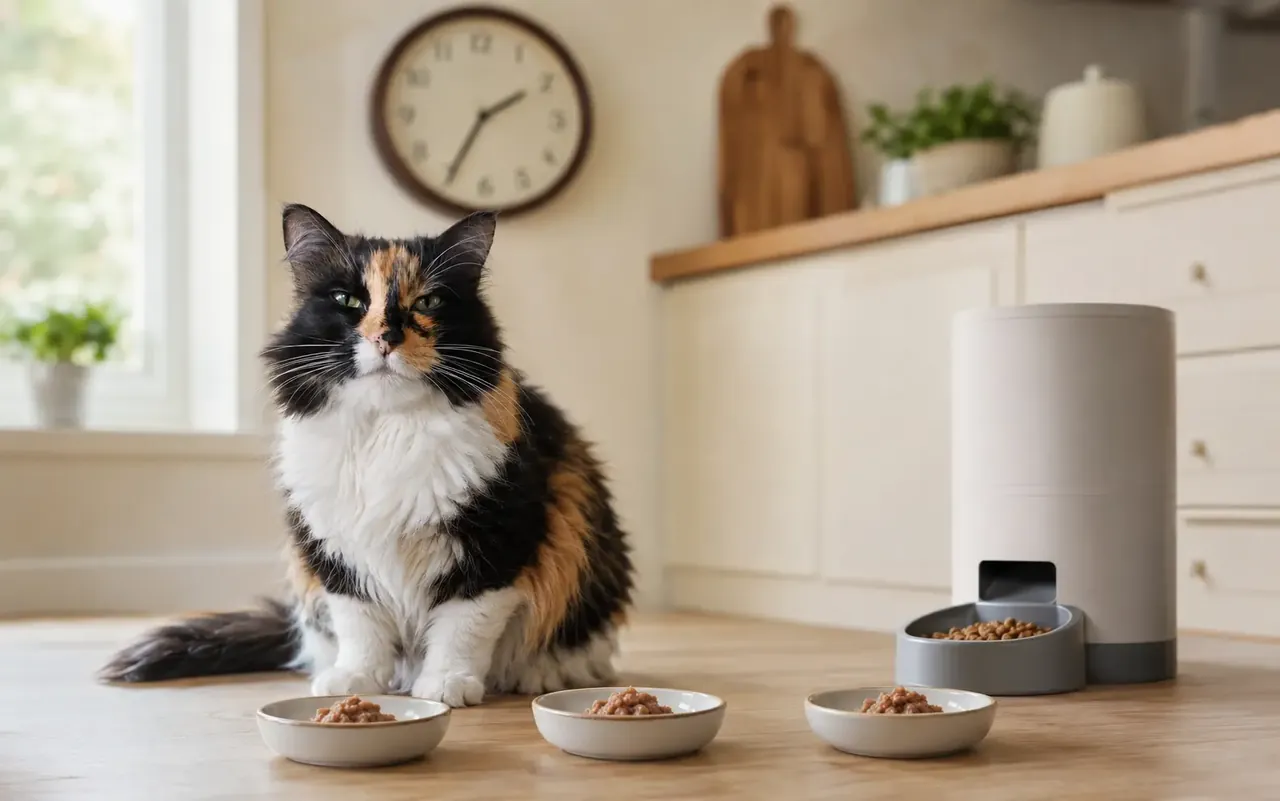 Topic illustration selected for this guide. Some learning images may be AI-assisted.
Preventing winter weight gain in indoor cats — the quick answer
✓ Small daily extras accumulate, and fluffy coats can hide gradual body-condition change.
✓ Measure food, schedule indoor hunting games and check weight and body condition regularly.
✓ Unexpected gain, abdominal swelling, breathing change or reduced activity needs veterinary advice.
Shorter days and reduced household activity can lower some cats’ movement without reducing calorie intake.
The short answer
Shorter days and reduced household activity can lower some cats’ movement without reducing calorie intake.
Why it may happen
Small daily extras accumulate, and fluffy coats can hide gradual body-condition change.
Read the whole situation
One behaviour rarely has one guaranteed meaning. Compare it with your cat’s age, health, posture, appetite, litter habits, environment and usual pattern before drawing a conclusion.
What to do now
Measure food, schedule indoor hunting games and check weight and body condition regularly.
What not to do
Avoid punishment, forced handling and sudden large changes. They can add fear while hiding the information that would help you understand the original cause.
When to contact a veterinarian
Unexpected gain, abdominal swelling, breathing change or reduced activity needs veterinary advice.
Keep a useful record
Write down when it started, how often it happens and what immediately precedes and follows it. Photos, weights or short videos can make a veterinary or behaviour consultation more productive.
What to check first
Use the same scale and compare body condition, not just fluffier winter coat. Note treats, stolen food, reduced outdoor time and whether another household member is feeding extra.
DEEPER GUIDE1 more detailed sectionsOpen +
What to do next
Measure the complete daily ration, keep treats within it and schedule several short play or puzzle-feeding sessions. Ask the veterinary team for an individual target rather than cutting food sharply. Rapid weight change, increased hunger or thirst, reduced mobility or breathing difficulty needs veterinary assessment.
Your quick checklist
Your progress is saved on this device.
Three simple things you can do
You do not have to change everything today. Pick one step that feels realistic, try it and see how your cat responds.
- 1Measure food and treats through less active months.
- 2Maintain short daily indoor play and climbing opportunities.
- 3Track weight and body condition monthly.
Common mistakes
×Reducing food drastically after one high reading.
×Assuming dense winter fur is fat.
×Ignoring pain that reduces activity.
Questions cat people ask
Do cats naturally gain weight in winter?+
Some become less active or eat more, but excess fat is not necessary protection for an indoor cat.
How can I tell fur from weight gain?+
Use hands to assess ribs and waist, and weigh on the same scale. Ask a veterinary professional to score body condition.
Still looking for the right answer?
Search the full EverYes Cats encyclopedia with your own words — a symptom, food, behaviour, breed or everyday question.
Checked, dated and transparent
- Prepared by
- EverYes Cats editorial team
- Last updated
- 14 August 2026
- Source checked
- 14 August 2026
- Primary reference
- AAHA/AAFP Feline Life Stage Guidelines ↗
We begin with the named reference, rewrite the information in plain language and add practical cat-parent steps. Urgent health statements are checked against veterinary sources. This guide has not been individually reviewed by a veterinarian unless explicitly stated. It provides education, not diagnosis or treatment.
Spotted something unclear or outdated? Tell us so we can review it.
Your answer helps us improve the cat encyclopedia.
A cat may reject a freshly washed bowl because of detergent scent, residue, a changed location or an unfamiliar material—not because the food suddenly changed.