How often should you feed a cat?
A good cat feeding schedule divides the correct daily amount into consistent meals. Meal number depends on age, health and household routine; kittens and some medical conditions need more frequent feeding.
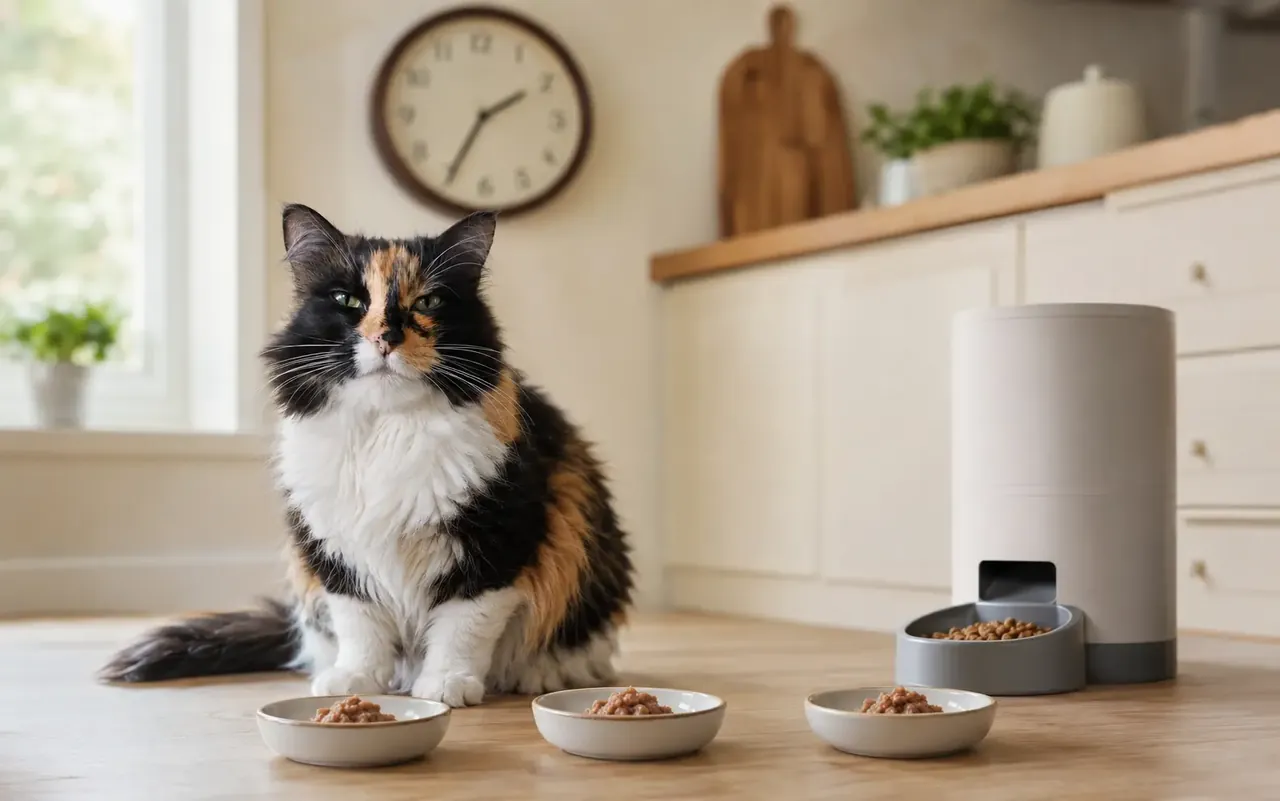 Topic illustration selected for this guide. Some learning images may be AI-assisted.
How often should you feed a cat — the quick answer
✓ Measure the whole day's food
✓ Kittens usually need more frequent meals
✓ An automatic feeder can help with early wake-ups
There is no magic number of meals for every cat. The best schedule is one that provides the right daily amount, fits the cat's health needs and can be followed consistently.
Start with the daily amount
Use the food label as a starting point, then adjust with your veterinarian for age, body condition and activity. Divide that amount between meals instead of filling the bowl whenever it looks empty.
Small meals can work well
Many cats enjoy several smaller meals. Puzzle feeders or timed feeders can spread food through the day without adding extra calories.
Watch the individual cat
A medical condition may require a special schedule. Sudden hunger, weight change or difficulty eating deserves veterinary advice.
Measure the day before choosing the times
Use the food label and veterinary advice as a starting point, weigh or measure the full daily ration and include treats. Divide that amount between meals so an automatic feeder or extra snack changes timing—not total calories.
Use the schedule to notice change
Record appetite, eating speed, vomiting and weight. Sudden hunger, food refusal, difficulty chewing, weight loss or a new need to eat constantly deserves veterinary assessment. Never leave a cat without eating while trying to enforce a new routine.
Your quick checklist
Your progress is saved on this device.
Three simple things you can do
You do not have to change everything today. Pick one step that feels realistic, try it and see how your cat responds.
- 1Measure the complete daily ration each morning.
- 2Divide it into meals that fit your routine.
- 3Track body weight and adjust with veterinary guidance.
Common mistakes
×Changing food suddenly when a gradual transition would be safer and easier to accept.
×Counting treats and extras as if they do not contribute calories or affect nutritional balance.
×Assuming one feeding plan is right for every age, body condition and health history.
Questions cat people ask
Is free feeding always bad?+
It can work for some cats, but it makes intake harder to measure and may not suit cats who overeat. Individual health and body condition matter.
Why does my cat wake me for food?+
The routine may have taught them that waking you works. Evening play and a timed early-morning feeder can help without adding extra food.
Still looking for the right answer?
Search the full EverYes Cats encyclopedia with your own words — a symptom, food, behaviour, breed or everyday question.
Checked, dated and transparent
- Prepared by
- EverYes Cats editorial team
- Last updated
- 13 August 2026
- Source checked
- 13 August 2026
- Primary reference
- WSAVA Global Nutrition Guidelines ↗
We begin with the named reference, rewrite the information in plain language and add practical cat-parent steps. Urgent health statements are checked against veterinary sources. This guide has not been individually reviewed by a veterinarian unless explicitly stated. It provides education, not diagnosis or treatment.
Spotted something unclear or outdated? Tell us so we can review it.
Your answer helps us improve the cat encyclopedia.
Pulling material over food may be an attempt to hide leftovers or respond to a strong smell. Learn what to observe, what to try safely and when to seek help.