Should cats in the same home eat separately?
Separate feeding lets each cat eat at a comfortable pace and makes appetite, portions and special diets measurable. Visual separation is often more useful than extra bowls side by side.
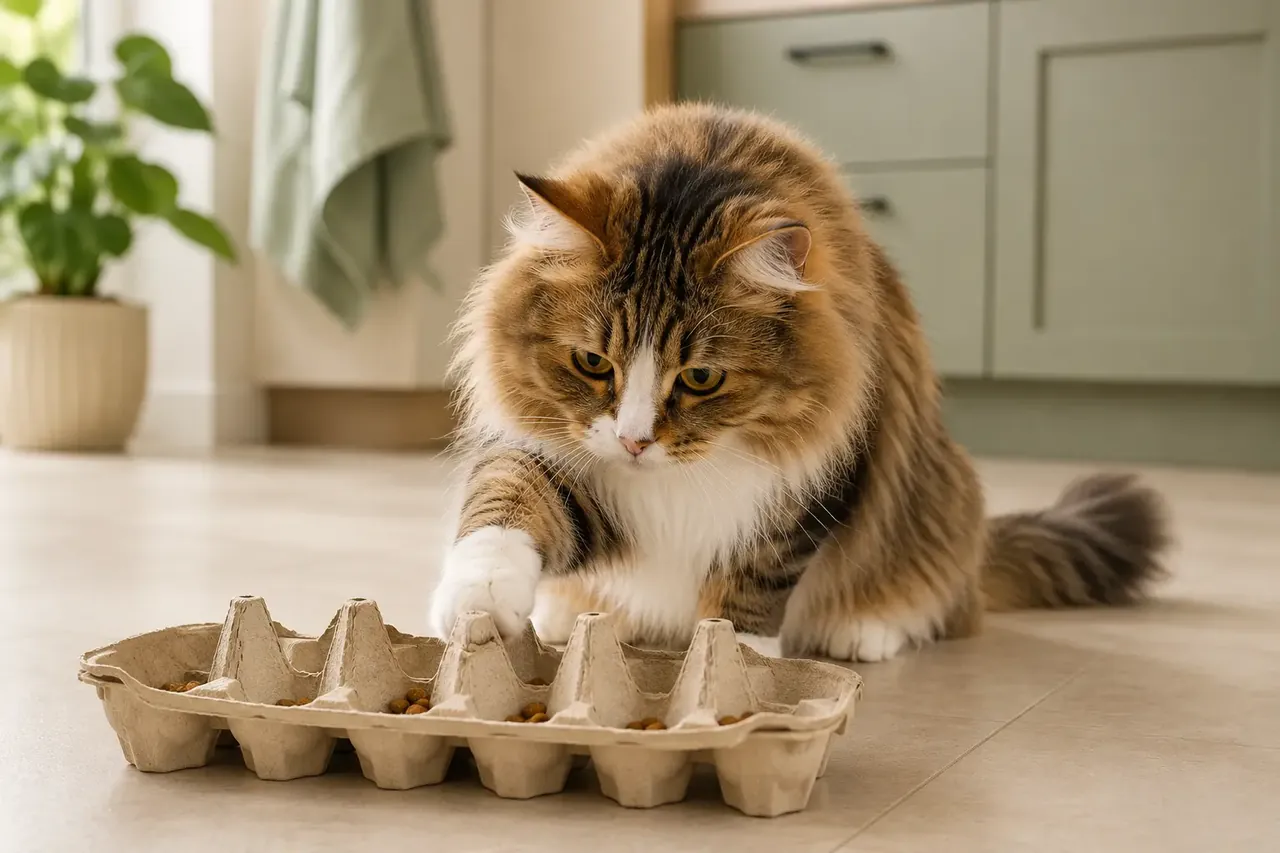 Topic illustration selected for this guide. Some learning images may be AI-assisted.
Should cats in the same home eat separately — the quick answer
✓ Individual portions, diets and eating speeds are difficult to monitor at one communal bowl.
✓ Feed in visually separate secure places and remove leftovers after the planned meal.
✓ Any cat eating less, losing weight or showing swallowing difficulty needs veterinary attention.
Cats may tolerate shared feeding while one still rushes, steals or quietly avoids the area.
The short answer
Cats may tolerate shared feeding while one still rushes, steals or quietly avoids the area.
Why it may happen
Individual portions, diets and eating speeds are difficult to monitor at one communal bowl.
Read the whole situation
One behaviour rarely has one guaranteed meaning. Compare it with your cat’s age, health, posture, appetite, litter habits, environment and usual pattern before drawing a conclusion.
What to do now
Feed in visually separate secure places and remove leftovers after the planned meal.
What not to do
Avoid punishment, forced handling and sudden large changes. They can add fear while hiding the information that would help you understand the original cause.
When to contact a veterinarian
Any cat eating less, losing weight or showing swallowing difficulty needs veterinary attention.
Keep a useful record
Write down when it started, how often it happens and what immediately precedes and follows it. Photos, weights or short videos can make a veterinary or behaviour consultation more productive.
Give each cat protected meal access
Use separate rooms, a closed door or identity-controlled feeders when appropriate. Keep stations out of each other’s sight and remove leftovers after the planned meal. Do not force cats to eat close together to make them bond.
DEEPER GUIDE1 more detailed sectionsOpen +
Use meals as a daily health check
Measure portions and note who finishes, leaves food, rushes or struggles to chew. Sudden stealing, extreme hunger, reduced intake, weight change, drooling or swallowing difficulty needs veterinary assessment rather than a feeding-layout fix alone.
Your quick checklist
Your progress is saved on this device.
Three simple things you can do
You do not have to change everything today. Pick one step that feels realistic, try it and see how your cat responds.
- 1Feed cats in different rooms or visually separated stations.
- 2Measure each meal and remove bowls when the eating period ends.
- 3Use microchip feeders when access cannot otherwise be controlled.
Common mistakes
×Assuming equal bowl levels mean equal intake.
×Placing separate bowls side by side.
×Letting one cat finish every leftover meal.
Questions cat people ask
Should cats in the same home eat separately?+
Separate feeding makes intake measurable, reduces pressure and allows different diets. It is especially helpful with speed, weight or medical differences.
What if one cat refuses to eat behind a closed door?+
Build separation gradually with distance or a visual barrier, then change one element at a time while preserving a calm routine.
Still looking for the right answer?
Search the full EverYes Cats encyclopedia with your own words — a symptom, food, behaviour, breed or everyday question.
Checked, dated and transparent
- Prepared by
- EverYes Cats editorial team
- Last updated
- 13 August 2026
- Source checked
- 13 August 2026
- Primary reference
- International Cat Care ↗
We begin with the named reference, rewrite the information in plain language and add practical cat-parent steps. Urgent health statements are checked against veterinary sources. This guide has not been individually reviewed by a veterinarian unless explicitly stated. It provides education, not diagnosis or treatment.
Spotted something unclear or outdated? Tell us so we can review it.
Your answer helps us improve the cat encyclopedia.
Fresh food restores aroma, temperature and moisture, while repeated topping can also become learned. Learn what to observe, what to try safely and when to seek help.