How should opened cat food be stored?
Cover and refrigerate opened wet cat food promptly, and keep dry food sealed in its original bag inside a clean container. Follow the label, use clean utensils and discard anything spoiled or contaminated.
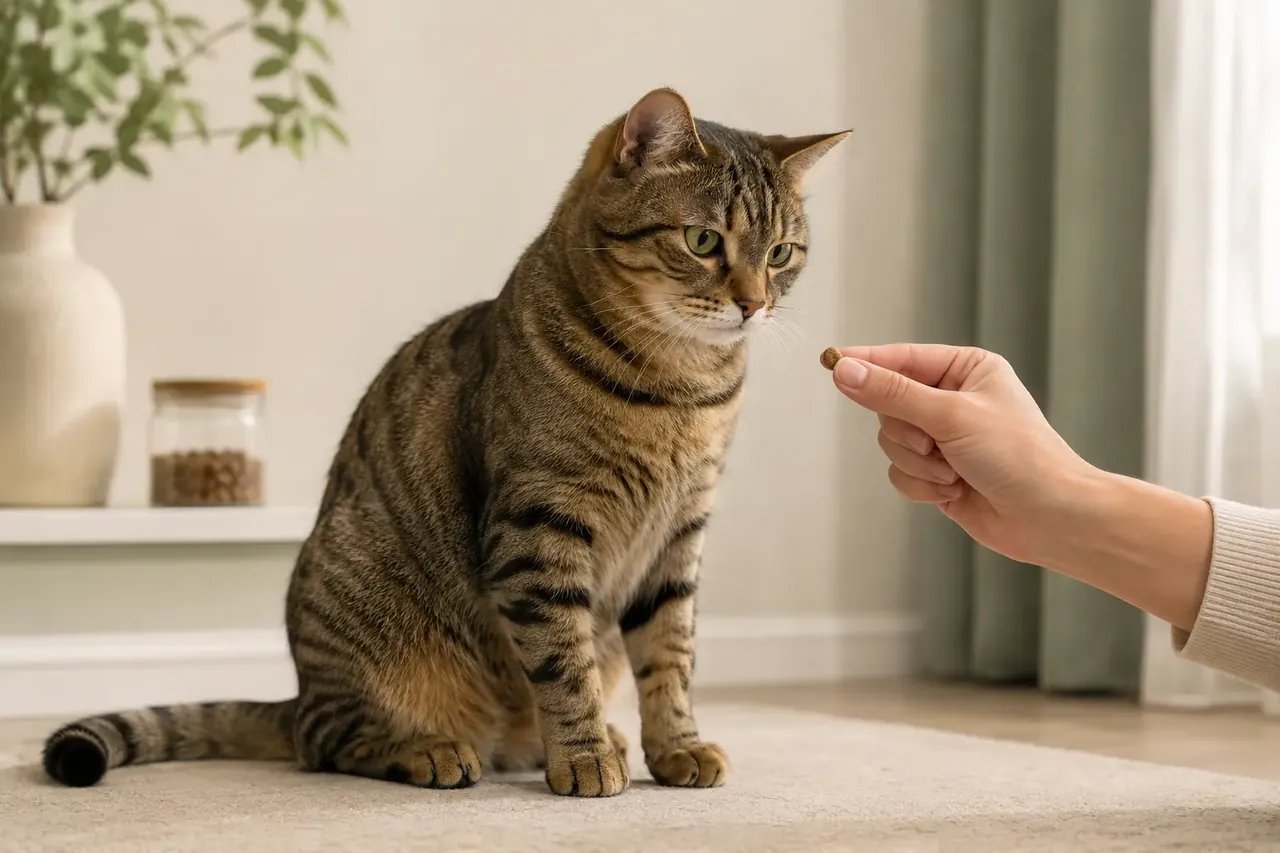 Topic illustration selected for this guide. Some learning images may be AI-assisted.
How should opened cat food be stored — the quick answer
✓ Safe storage protects flavour and reduces bacterial contamination
✓ Refrigerate covered wet food promptly, seal dry food in its original bag inside a container and wash utensils.
✓ Discard food with swelling, mould, unusual smell or contamination; illness after eating needs veterinary advice.
Safe storage protects flavour and reduces bacterial contamination. Wet and dry foods have different storage needs and the manufacturer's label should guide timing.
The short answer
Safe storage protects flavour and reduces bacterial contamination. Wet and dry foods have different storage needs and the manufacturer's label should guide timing.
What to observe first
Compare the moment with your cat’s usual pattern. Note timing, frequency, body language, appetite, litter-box use, mobility and any recent household change.
Why the setting matters
Wet and dry foods have different storage needs and the manufacturer's label should guide timing. One isolated detail rarely explains behaviour or health on its own, so look at the whole cat and the immediate environment.
What you can do
Refrigerate covered wet food promptly, seal dry food in its original bag inside a container and wash utensils.
A gentle way to test it
Make one small safe adjustment and give the cat time and choice. Avoid punishment, forced handling and several changes at once, because they make the response harder to understand.
When to contact a veterinarian
Discard food with swelling, mould, unusual smell or contamination; illness after eating needs veterinary advice.
Prepare useful information
Write down when it began and how often it occurs. A short video, clear photo, food record or litter record can help a veterinary professional assess a pattern that may not appear during the appointment.
Store wet and dry food differently
Transfer an opened wet-food portion to a covered food-safe container or cover the can and refrigerate it promptly. Keep dry food in the original bag, tightly closed inside a pest-proof container, so the lot number and storage barrier are preserved. Avoid warm, damp cupboards.
DEEPER GUIDE1 more detailed sectionsOpen +
Serve safely after storage
Use clean hands and utensils, wash bowls between wet meals and serve only what the cat is likely to eat while fresh. Discard food with mould, swelling, an unusual smell, damaged packaging or prolonged room-temperature exposure. Contact a veterinarian if illness follows eating.
Your quick checklist
Your progress is saved on this device.
Three simple things you can do
You do not have to change everything today. Pick one step that feels realistic, try it and see how your cat responds.
- 1Follow the manufacturer's refrigeration and use-after-opening instructions.
- 2Date opened packages and use clean dry scoops and sealed containers.
- 3Discard food with unusual smell, texture, mould, swelling or damaged packaging.
Common mistakes
×Topping up a dirty storage bin with new kibble.
×Storing dry food in heat or direct sun.
×Relying on smell alone to prove food is safe.
Questions cat people ask
How long does cat food last after opening?+
It depends on the product, packaging and storage. The label is authoritative; wet food generally needs prompt refrigeration and dry food benefits from its original bag inside a sealed container.
Can I leave wet cat food out?+
Room temperature and contamination affect safety. Serve small portions, discard leftovers promptly according to manufacturer guidance and be more cautious in warm conditions.
Still looking for the right answer?
Search the full EverYes Cats encyclopedia with your own words — a symptom, food, behaviour, breed or everyday question.
Checked, dated and transparent
- Prepared by
- EverYes Cats editorial team
- Last updated
- 13 August 2026
- Source checked
- 13 August 2026
- Primary reference
- AAHA/AAFP Feline Life Stage Guidelines ↗
We begin with the named reference, rewrite the information in plain language and add practical cat-parent steps. Urgent health statements are checked against veterinary sources. This guide has not been individually reviewed by a veterinarian unless explicitly stated. It provides education, not diagnosis or treatment.
Spotted something unclear or outdated? Tell us so we can review it.
Your answer helps us improve the cat encyclopedia.
Warmer food releases more aroma and may resemble the temperature of fresh prey.