Why does my cat push the food bowl before eating?
The cat may be testing movement, repositioning the dish or reacting to noise and shape..
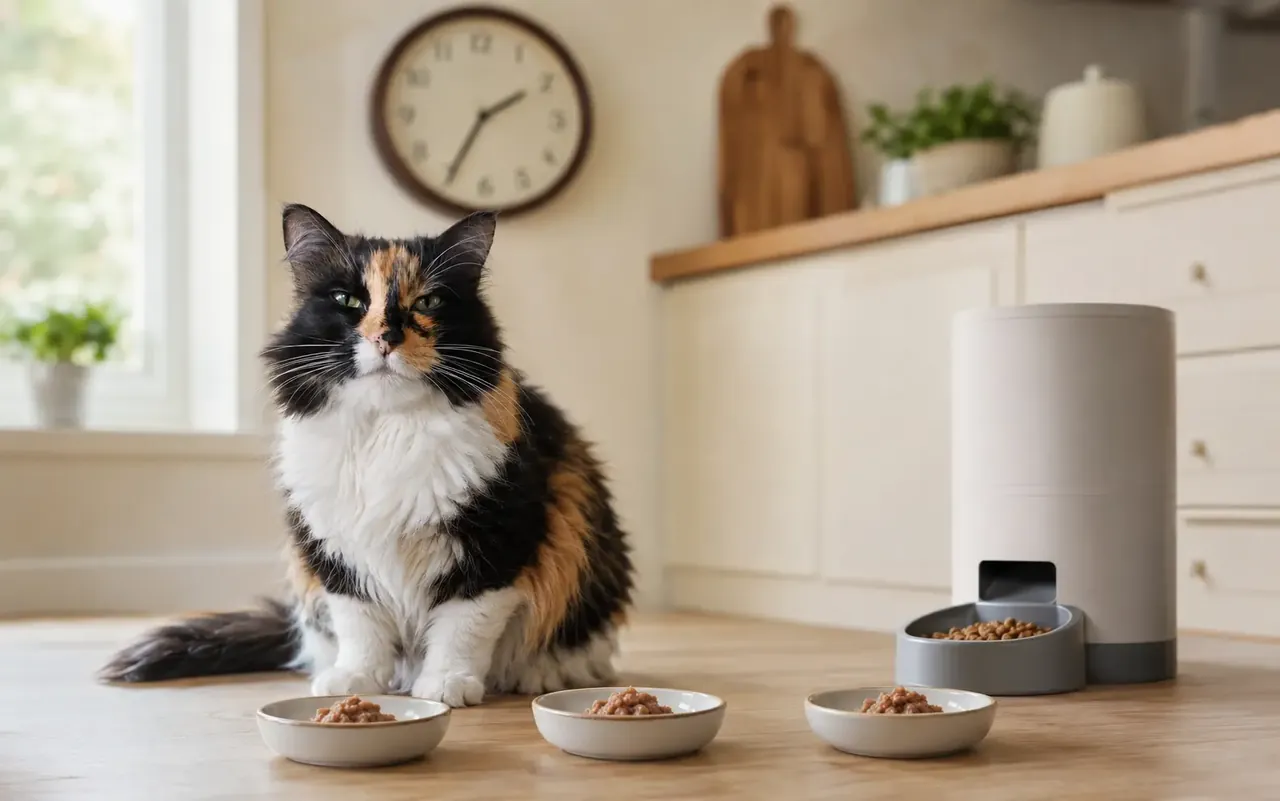 Topic illustration selected for this guide. Some learning images may be AI-assisted.
Why does my cat push the food bowl before eating — the quick answer
✓ The cat may be testing movement, repositioning the dish or reacting to noise and shape.
✓ Observe first: Watch for whisker contact, sliding, paw pain and signs of nausea or dental discomfort.
✓ Act safely: Use a nonslip mat and a wide stable shallow dish in a calm location.
The cat may be testing movement, repositioning the dish or reacting to noise and shape.. This guide helps you separate an ordinary individual habit from a change worth acting on. Read the whole cat, the timing and the wider pattern rather than relying on one isolated sign.
The short answer
The cat may be testing movement, repositioning the dish or reacting to noise and shape.. Context matters: age, health, environment and what happened immediately beforehand can change the meaning.
What to observe
Watch for whisker contact, sliding, paw pain and signs of nausea or dental discomfort. A short written note or video can reveal patterns that memory misses.
How to read the situation
A cat may push a bowl because it slides, rocks, makes collar noise or sits where the wall restricts access. Scraping around it can also resemble food-covering behaviour. Watch whether the cat then eats comfortably or repeatedly approaches without managing a meal.
What to do now
Place the same food in a stable wide shallow dish on a non-slip mat, leaving clear space around it. Keep the location and meal unchanged for several days so movement caused by the bowl can be separated from appetite or food preference.
What not to do
Do not hold the bowl against the cat's face, punish pawing or keep changing bowl, food and location together. Avoid heavy containers that can trap a paw or lightweight dishes that tip and spill when touched.
When to contact a veterinarian
Seek advice if pushing accompanies reduced intake, weight loss, drooling, food dropping, repeated lip licking, vomiting or apparent difficulty lowering the head. A cat that wants food but cannot eat comfortably needs prompt assessment.
What to record
Write down when it started, how often it happens, possible triggers, food and water intake, litter-box output and any other change. Bring clear photos or a short video when safe.
Three simple things you can do
You do not have to change everything today. Pick one step that feels realistic, try it and see how your cat responds.
- 1Observe your cat’s individual baseline.
- 2Make one gentle change at a time.
- 3Ask a qualified professional when health or safety is involved.
Common mistakes
×Waiting for a dramatic symptom instead of noticing smaller changes from the cat’s normal routine.
×Changing several things at once, making it difficult to learn what actually helped.
×Treating general guidance as a substitute for advice from a veterinarian who knows the individual cat.
Questions cat people ask
Does every cat follow the same rule?+
No. Age, health, history, temperament and environment all change what works for an individual.
When should I seek professional help?+
Seek veterinary advice for sudden, persistent or concerning changes and urgent help for breathing difficulty, collapse, seizures, poisoning or urinary obstruction signs.
Still looking for the right answer?
Search the full EverYes Cats encyclopedia with your own words — a symptom, food, behaviour, breed or everyday question.
Checked, dated and transparent
- Prepared by
- EverYes Cats editorial team
- Last updated
- 19 September 2026
- Source checked
- 19 September 2026
- Primary reference
- WSAVA Global Nutrition Guidelines ↗
We begin with the named reference, rewrite the information in plain language and add practical cat-parent steps. Urgent health statements are checked against veterinary sources. This guide has not been individually reviewed by a veterinarian unless explicitly stated. It provides education, not diagnosis or treatment.
How we choose and use sources →
Spotted something unclear or outdated? Tell us so we can review it.
Your answer helps us improve the cat encyclopedia.
Grooming, warmth and ordinary daily rhythm can be followed by a normal visit to water..