Why Does My Cat Try to Cover Food With a Towel?
Pulling a towel over food may be an attempt to hide leftovers or respond to smell, but loose fabric and threads should never enter the bowl. Remove the material and serve smaller measured meals.
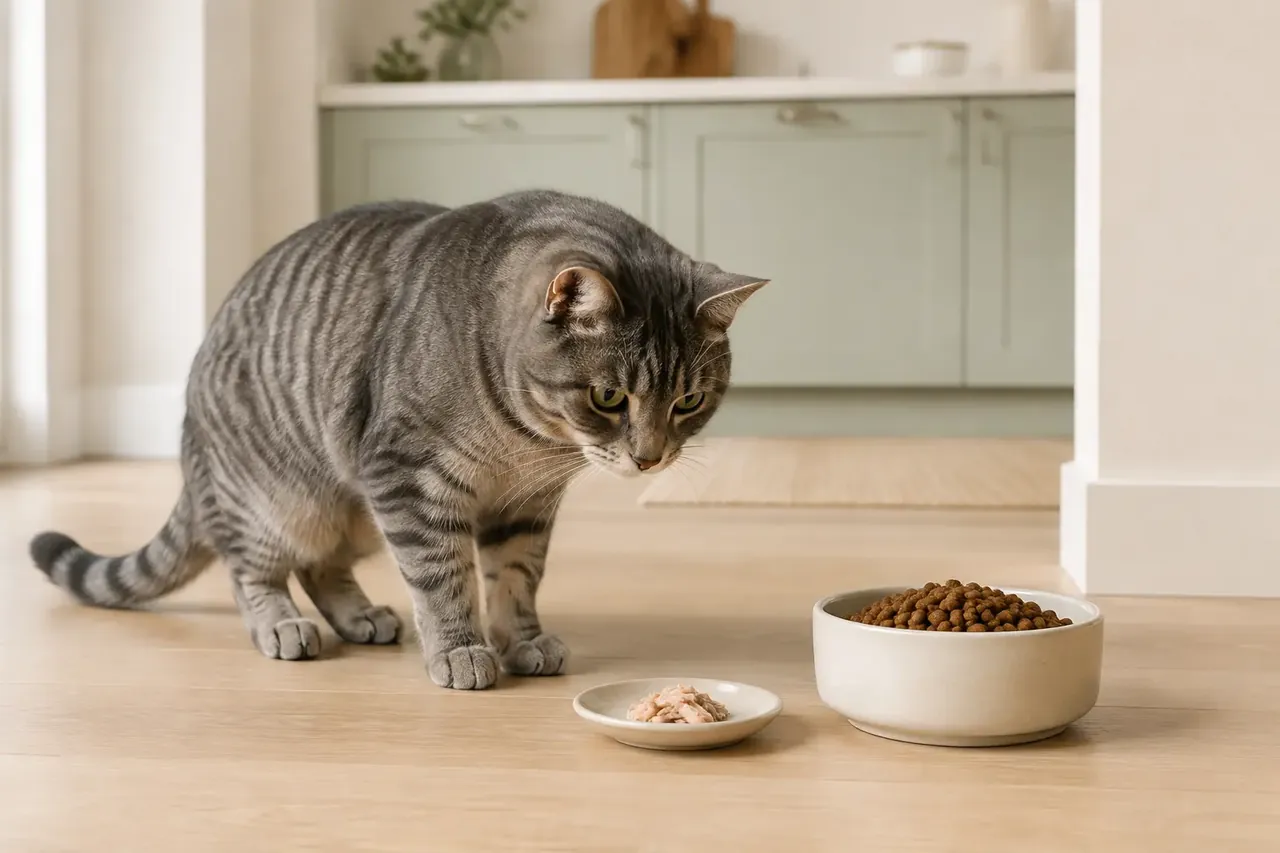
 Topic illustration selected for this guide. Some learning images may be AI-assisted.
Why Does My Cat Try to Cover Food With a Towel — the quick answer
✓ Pulling material over food may be an attempt to hide leftovers or respond to a strong smell.
✓ Remove loose fabric, serve measured portions and clear old wet food.
✓ Food refusal, fabric eating, vomiting or weakness needs prompt care.
Pulling material over food may be an attempt to hide leftovers or respond to a strong smell. The full situation matters more than one isolated moment.
Check the behaviour and the meal
Watch whether covering happens after a full meal, before tasting or when another animal approaches. Record how much was eaten, food freshness and whether the cat returns later. Covering after normal intake differs from repeatedly hiding food while eating too little.
Remove loose material
Move towels, paper, plastic and frayed mats away from the feeding area. Use a flat intact washable mat only when it stays outside the dish and cannot be chewed. Do not let a funny covering routine continue for a video when threads or contaminated fabric can be swallowed.
Serve a smaller fresh portion
Offer measured complete food in a clean shallow dish and refrigerate or discard leftovers according to the product instructions. Smaller scheduled meals can reduce exposed wet food without overfeeding. Never pile new food over an old portion simply because it was covered.
Reduce social and scent pressure
Feed cats in separate visual spaces, away from litter, rubbish and strong cleaning products. Keep the station quiet and let the cat leave freely. Do not punish pawing or repeatedly uncover the bowl while the cat watches, which can turn the interaction into a game.
When to contact a veterinarian
Seek prompt advice for reduced intake, vomiting, weakness, weight loss, mouth pain or swallowed fabric, thread or plastic. Do not pull material from the mouth or anus. A cat that stops eating or shows obstruction signs needs urgent assessment.
Your quick checklist
Loading saved progress…
Three simple things you can do
You do not have to change everything today. Pick one step that feels realistic, try it and see how your cat responds.
- 1Observe your cat’s individual baseline.
- 2Make one gentle change at a time.
- 3Ask a qualified professional when health or safety is involved.
Common mistakes
×Waiting for a dramatic symptom instead of noticing smaller changes from the cat’s normal routine.
×Changing several things at once, making it difficult to learn what actually helped.
×Treating general guidance as a substitute for advice from a veterinarian who knows the individual cat.
Questions cat people ask
Does every cat follow the same rule?+
No. Age, health, history, temperament and environment all change what works for an individual.
When should I seek professional help?+
Seek veterinary advice for sudden, persistent or concerning changes and urgent help for breathing difficulty, collapse, seizures, poisoning or urinary obstruction signs.
Still looking for the right answer?
Search the full EverYes Cats encyclopedia with your own words — a symptom, food, behaviour, breed or everyday question.
Checked, dated and transparent
- Prepared by
- EverYes Cats editorial team
- Last updated
- Source checked
- Primary reference
- FelineVMA: How to Feed a Cat ↗
We begin with the named reference, rewrite the information in plain language and add practical cat-parent steps. Urgent health statements are checked against veterinary sources. This guide has not been individually reviewed by a veterinarian unless explicitly stated. It provides education, not diagnosis or treatment.
How we choose and use sources →
Spotted something unclear or outdated? Tell us so we can review it.
Loading your saved choice…
A brief pause before eating can be normal inspection, but repeated staring and hesitation may reflect nausea, mouth pain, swallowing difficulty or social pressure. Watch what happens next and measure actual intake.
 01
 02
 03
 06