How to encourage a cat to drink more
Increase drinking opportunities with several fresh water stations, wide clean bowls and calm placement away from litter. A sudden increase or decrease in thirst still needs veterinary advice.
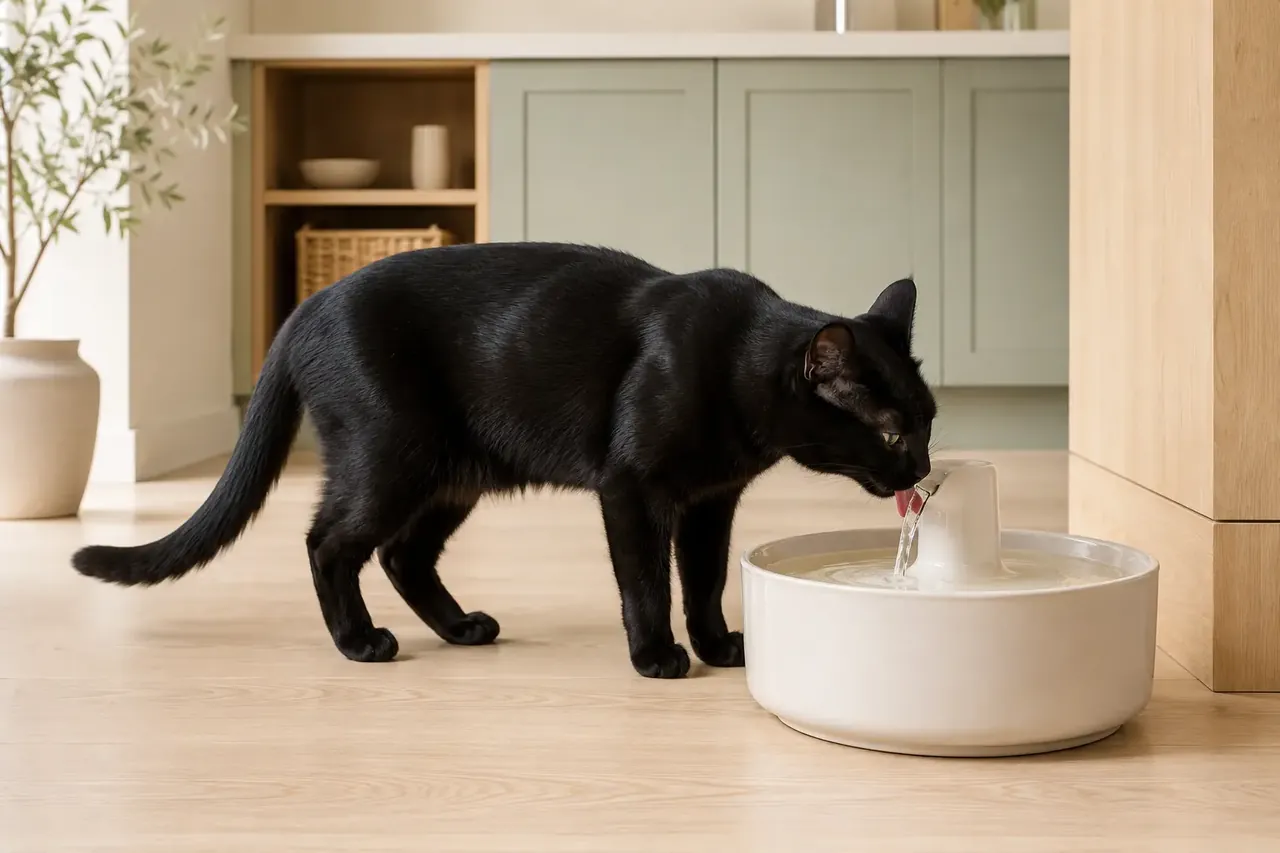 Topic illustration selected for this guide. Some learning images may be AI-assisted.
How to encourage a cat to drink more — the quick answer
✓ Place water away from litter and busy routes
✓ Try wide bowls in more than one location
✓ A sudden thirst change needs veterinary advice
Cats differ in how they prefer to drink. Offering several clean options can increase opportunity without forcing a single solution.
Improve the locations
Place water in calm, easy-to-reach areas and offer more than one station in larger or multi-cat homes.
Test the container
Some cats prefer ceramic or glass, a wide surface or moving water. Wash bowls regularly and refresh the water daily.
Watch the pattern
Drinking much more or less than usual can matter medically. Track the change and contact a veterinarian.
Run one preference test at a time
Offer two clean options in quiet locations and change only one feature—bowl material, width, water movement or placement. Keep the preferred option while testing the next. This shows what the cat chooses without removing familiar water.
Count total moisture, not bowl visits alone
Wet food contributes water, while fountains and multi-cat bowls make exact drinking difficult to measure. Note refills, urine-clump size, food type and thirst changes. Never restrict water to measure intake; contact a veterinarian for a clear new change.
Your quick checklist
Your progress is saved on this device.
Three simple things you can do
You do not have to change everything today. Pick one step that feels realistic, try it and see how your cat responds.
- 1Place several fresh water stations away from litter boxes and busy bottlenecks.
- 2Test wide ceramic or glass bowls and, if useful, a well-maintained fountain.
- 3Refresh water daily and track any clear change from the cat's normal intake.
Common mistakes
×Placing every bowl beside food, litter or a noisy appliance.
×Assuming a fountain will suit every cat or leaving it poorly cleaned.
×Treating sudden increased thirst as a preference instead of a possible health sign.
Questions cat people ask
Should a cat's water be next to its food?+
Some cats drink better when at least one water source is separated from food. Offer choices in calm, accessible locations and see what the individual uses.
When is increased drinking concerning?+
A clear or persistent increase—especially with more urination, weight loss, appetite change or vomiting—should be discussed with a veterinarian.
Still looking for the right answer?
Search the full EverYes Cats encyclopedia with your own words — a symptom, food, behaviour, breed or everyday question.
Checked, dated and transparent
- Prepared by
- EverYes Cats editorial team
- Last updated
- 13 August 2026
- Source checked
- 13 August 2026
- Primary reference
- WSAVA Global Nutrition Guidelines ↗
We begin with the named reference, rewrite the information in plain language and add practical cat-parent steps. Urgent health statements are checked against veterinary sources. This guide has not been individually reviewed by a veterinarian unless explicitly stated. It provides education, not diagnosis or treatment.
Spotted something unclear or outdated? Tell us so we can review it.
Your answer helps us improve the cat encyclopedia.
Plain tuna can be an occasional tiny treat for many healthy adult cats, but it is not a complete meal. Brine, oil, seasoning and a tuna-only habit create avoidable risks.