Can cats eat eggs?
Cats can eat a small amount of fully cooked, plain egg as an occasional treat. Raw egg, seasoning, added fat and large portions create unnecessary risks.
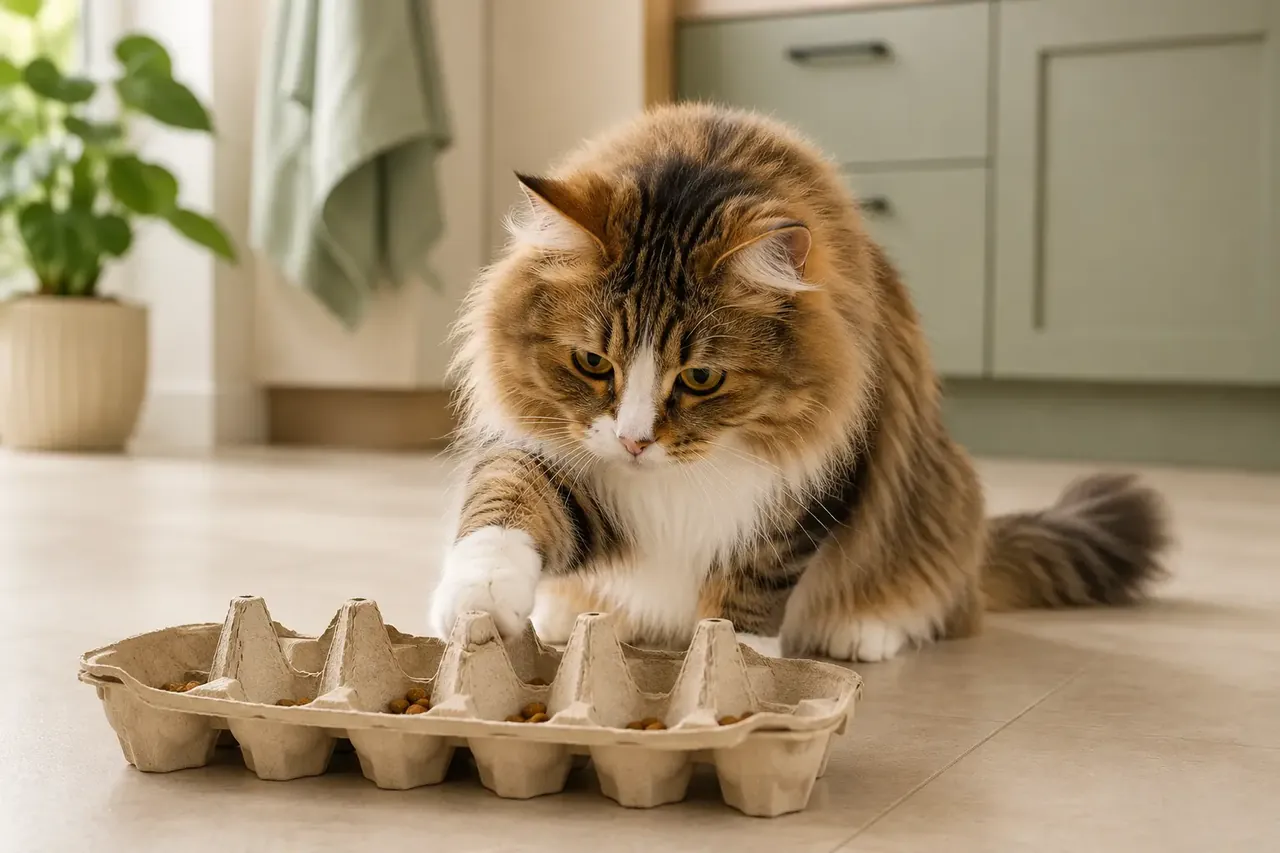 Topic illustration selected for this guide. Some learning images may be AI-assisted.
Cats can eat a small amount of fully cooked, plain egg as an occasional treat. Raw egg, seasoning, added fat and large portions create unnecessary risks.
Can cats eat eggs — the quick answer
✓ Fully cooked plain egg can be offered sparingly to many cats.
✓ Offer a teaspoon or less of plain cooked egg.
✓ A small cooked bite is usually low concern; seek advice after raw egg or ongoing vomiting or diarrhea.
Fully cooked plain egg can be offered sparingly to many cats. This practical guide explains portions, preparation, hidden ingredients and when to call a veterinarian.
The short answer
For many healthy adult cats, one or two small bites of fully cooked egg can be an occasional extra. Cook both white and yolk thoroughly and serve the cat's portion plain, without salt, butter, oil, milk, cheese, onion or garlic.
Why raw egg is not worth the risk
Raw or undercooked egg can carry bacteria that affect pets and people. Raw diets also create handling and cross-contamination concerns in the home. Cooking the egg removes the reason to take that avoidable risk.
Keep the portion small
Egg is rich for a small animal and is not nutritionally complete cat food. Count it with all treats and extras so it does not replace balanced meals or add excessive calories. A whole egg is far more than a taste for most cats.
Ask before offering it
Cats with food allergy concerns, pancreatitis history, weight-management plans or prescription diets need individual advice. Kittens should receive complete growth food rather than having essential meals displaced by treats.
If a reaction occurs
Stop offering egg and contact a veterinarian for repeated vomiting or diarrhoea, marked itching, facial swelling, weakness or breathing change. Bring the recipe or ingredient list when the egg came from a mixed dish.
Your quick checklist
Loading saved progress…
Three simple things you can do
You do not have to change everything today. Pick one step that feels realistic, try it and see how your cat responds.
- 1Observe your cat’s individual baseline.
- 2Make one gentle change at a time.
- 3Ask a qualified professional when health or safety is involved.
Common mistakes
×Waiting for a dramatic symptom instead of noticing smaller changes from the cat’s normal routine.
×Changing several things at once, making it difficult to learn what actually helped.
×Treating general guidance as a substitute for advice from a veterinarian who knows the individual cat.
Questions cat people ask
Does every cat follow the same rule?+
No. Age, health, history, temperament and environment all change what works for an individual.
When should I seek professional help?+
Seek veterinary advice for sudden, persistent or concerning changes and urgent help for breathing difficulty, collapse, seizures, poisoning or urinary obstruction signs.
Still looking for the right answer?
Search the full EverYes Cats encyclopedia with your own words — a symptom, food, behaviour, breed or everyday question.
Checked, dated and transparent
- Prepared by
- EverYes Cats editorial team
- Last updated
- Source checked
- Primary reference
- Cornell Feline Health Center: Feeding Your Cat ↗
We begin with the named reference, rewrite the information in plain language and add practical cat-parent steps. Urgent health statements are checked against veterinary sources. This guide has not been individually reviewed by a veterinarian unless explicitly stated. It provides education, not diagnosis or treatment.
How we choose and use sources →
Spotted something unclear or outdated? Tell us so we can review it.
Loading your saved choice…
Plain, thoroughly cooked lean beef can be a small occasional treat for many healthy cats, but it must be unseasoned and cannot replace complete cat food.
 03
 04