Can cats eat chicken?
Many healthy adult cats can have a few pieces of plain, fully cooked boneless chicken. It is an occasional extra—not a complete diet—and raw meat, bones, skin and seasoning create avoidable risks.
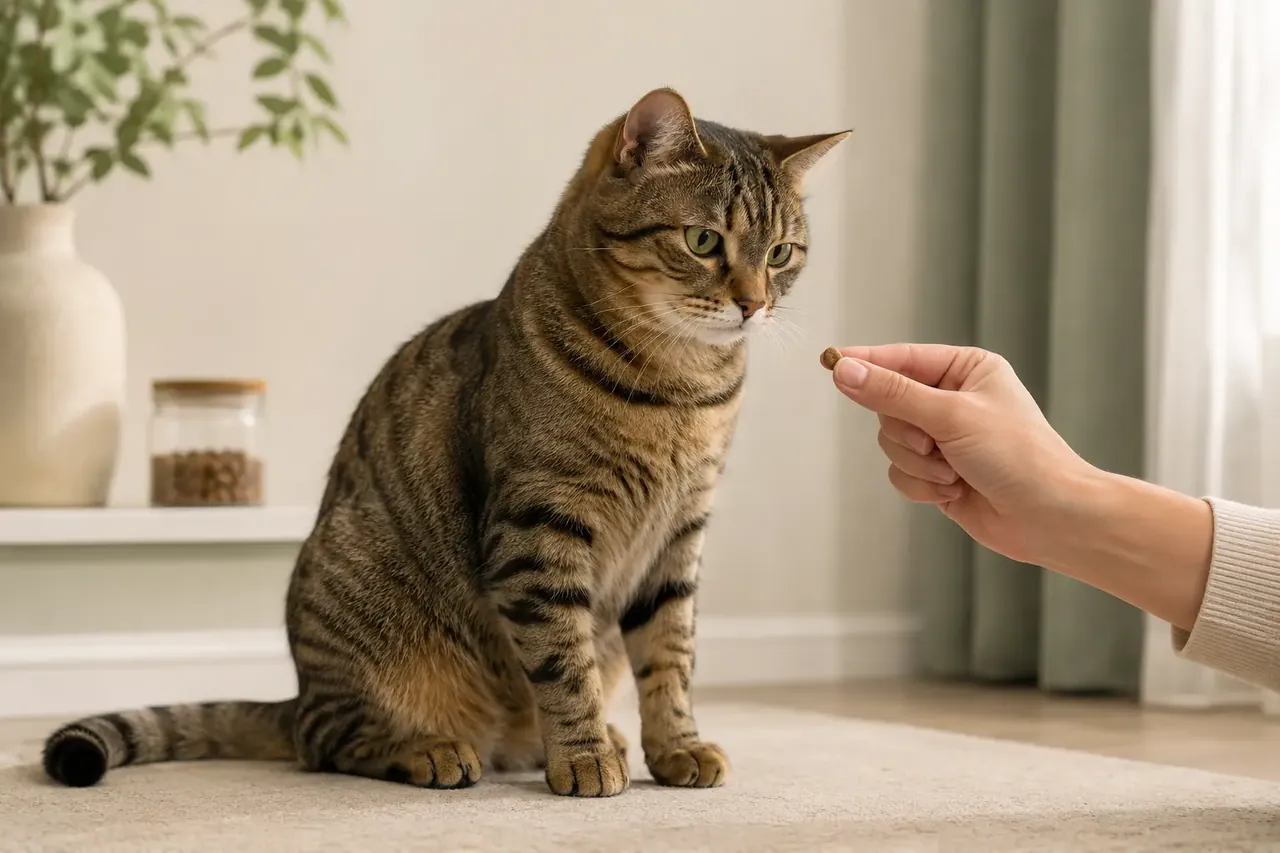 Topic illustration selected for this guide. Some learning images may be AI-assisted.
Many healthy adult cats can have a few pieces of plain, fully cooked boneless chicken. It is an occasional extra—not a complete diet—and raw meat, bones, skin and seasoning create avoidable risks.
Can cats eat chicken — the quick answer
✓ Plain, fully cooked chicken can be an occasional extra for many healthy cats, but it is not a complete diet by itself.
✓ Offer a few tiny boneless pieces, cooked through, cooled and unseasoned.
✓ A small plain bite is usually monitored at home; call a vet after bones, seasoning, repeated vomiting or distress.
Plain, fully cooked chicken can be an occasional extra for many healthy cats, but it is not a complete diet by itself. This practical guide explains portions, preparation, hidden ingredients and when to call a veterinarian.
The short answer
Yes, many healthy cats can have a little plain, fully cooked, boneless chicken as an occasional treat. Chicken alone is not a complete feline diet, and the answer changes when it is raw, seasoned, fatty, served with skin or attached to a bone.
The main risks
Cooked bones can splinter or obstruct, while raw chicken can carry harmful bacteria. Skin, fried coating and fatty scraps may cause digestive upset, and recipes containing onion, garlic, concentrated stock, gravy or heavy seasoning are unsuitable for cats. A cat with food allergy, pancreatitis, kidney disease or a prescription diet may need to avoid even plain chicken.
A safer way to serve it
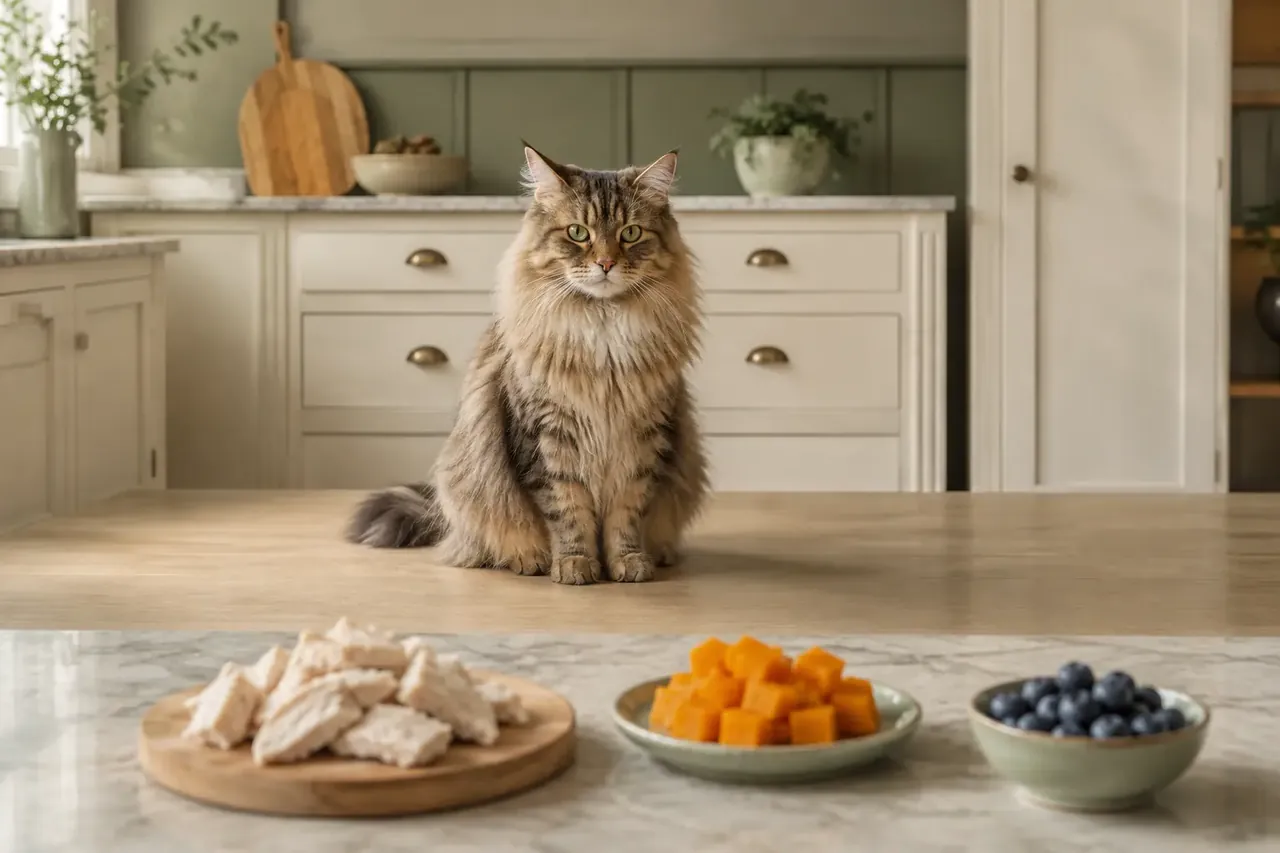
Cook a small skinless piece thoroughly without salt, oil, butter, sauce or seasoning. Remove every bone, let the meat cool, and shred or cut it into soft pieces smaller than a pea. Serve it in the bowl rather than encouraging the cat to steal from a plate or hot pan.
How much is a small amount?
For an average adult cat, a few pea-sized shreds are enough for a taste. Treats and human-food extras should remain only a small part of daily calories, with complete cat food providing the nutritional balance. Kittens have even less room for extras because every meal supports growth.
Read the whole recipe, not the headline ingredient
Plain chicken is very different from rotisserie chicken, nuggets, fried chicken, curry, soup, stuffing or chicken in gravy. Check for onion, garlic, salt, marinades, skewers, string, foil and bones before deciding what the cat actually ate.
If your cat already ate it
A tiny piece of plain cooked boneless chicken usually needs observation rather than panic. Remove the rest, identify every ingredient and estimate the amount. Contact a veterinarian promptly after raw chicken, bones, onion or garlic, a large fatty portion, an unknown recipe or any worrying sign; do not induce vomiting unless directly instructed.
When it is an emergency
Choking, breathing difficulty, repeated gagging or retching, collapse, severe weakness, a swollen painful abdomen, blood, or repeated vomiting requires urgent veterinary care. A swallowed cooked bone or skewer also deserves prompt professional advice even when the cat initially appears normal.
Special diets change the answer
A cat on a urinary, kidney, allergy, diabetes, weight-loss or gastrointestinal diet may need to avoid extras that seem harmless for another cat. Even a small treat can interfere with an elimination trial or add phosphorus, sodium, fat, carbohydrate or calories the plan is designed to control. Ask the veterinary team for approved rewards so every person in the home follows the same plan.
DEEPER GUIDE1 more detailed sectionsOpen +
Bottom line
Plain fully cooked boneless chicken can be a tiny occasional treat, not a homemade replacement for complete cat food. Keep it unseasoned, remove skin and bones, serve only a few small pieces and investigate the full recipe after an accidental helping.
Your quick checklist
Your progress is saved on this device.
Three simple things you can do
You do not have to change everything today. Pick one step that feels realistic, try it and see how your cat responds.
- 1Offer only a small piece of plain fully cooked boneless chicken.
- 2Remove skin, fat, bones, seasoning, onion, garlic and sauces.
- 3Keep chicken as an occasional treat unless it is part of a professionally balanced diet.
Common mistakes
×Giving cooked bones that can splinter.
×Feeding seasoned rotisserie chicken.
×Replacing complete cat food with plain chicken.
Questions cat people ask
Can cats eat cooked chicken?+
Many healthy cats can have a small amount of plain fully cooked boneless chicken, but it is not a complete diet by itself.
Can cats eat raw chicken?+
Raw chicken can carry harmful bacteria and does not provide a complete balanced diet alone. Discuss any raw feeding plan with a veterinarian.
Still looking for the right answer?
Search the full EverYes Cats encyclopedia with your own words — a symptom, food, behaviour, breed or everyday question.
Checked, dated and transparent
- Prepared by
- EverYes Cats editorial team
- Last updated
- Source checked
- Primary reference
- WSAVA: Global Nutrition Guidelines ↗
We begin with the named reference, rewrite the information in plain language and add practical cat-parent steps. Urgent health statements are checked against veterinary sources. This guide has not been individually reviewed by a veterinarian unless explicitly stated. It provides education, not diagnosis or treatment.
How we choose and use sources →
Spotted something unclear or outdated? Tell us so we can review it.
Your answer helps us improve the cat encyclopedia.
Plain, thoroughly cooked lean beef can be a small occasional treat for many healthy cats, but it must be unseasoned and cannot replace complete cat food.
 01
 03
 04