Why Does My Cat Only Eat From the Center of the Bowl?
Eating only from the centre can reflect where food is easiest to smell and pick up, but bowl depth, food distribution and mouth discomfort also matter. Test the same food on a wide shallow plate and measure total intake.
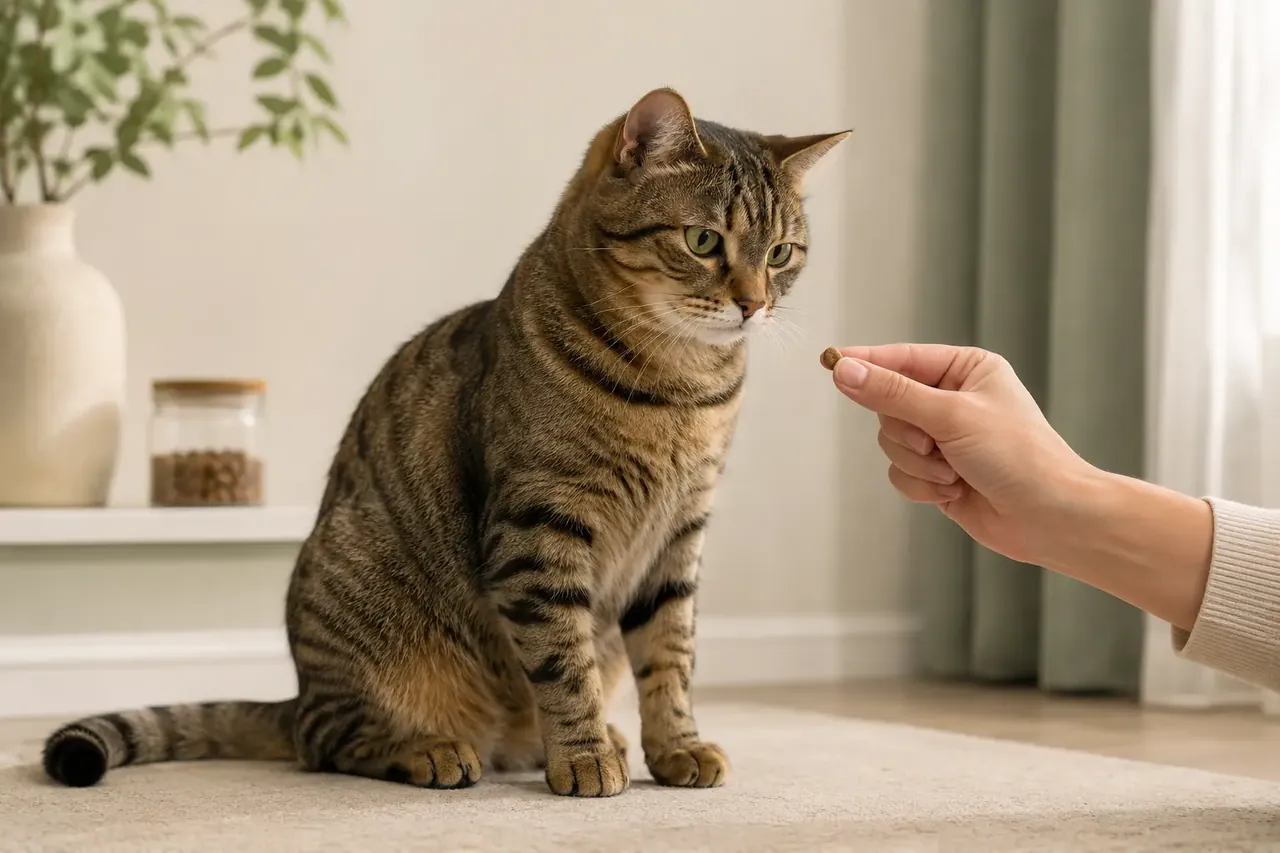 Topic illustration selected for this guide. Some learning images may be AI-assisted.
Why Does My Cat Only Eat From the Center of the Bowl — the quick answer
✓ Food shape, smell, moisture and bowl depth can change which part is easiest to eat.
✓ Try the same food on a clean wide shallow plate in a thin layer.
✓ One-sided chewing, drooling or reduced intake needs a dental check.
Food shape, smell, moisture and bowl depth can change which part is easiest to eat. The full situation matters more than one isolated moment.
Observe exactly what becomes difficult
Watch whether the cat stops when the centre is empty, pushes food without picking it up or chews differently on one side. Note food dropping, drooling, head tilt, lip licking and the amount eaten. Do not assume whisker contact is the only explanation.
Change only the serving surface
Spread the same familiar food in a thin layer on a clean wide shallow plate that does not slide. Keep portion, texture, location and timing unchanged so the comparison means something. Avoid deep corners and tall rims that make remaining food harder to reach.
Keep food fresh and visible
Stirring can restore smell and move food inward, but measure what remains rather than endlessly rearranging it. Serve appropriate small meals and follow storage instructions. A cat should not need a large overfilled dish to obtain the normal daily intake.
Check competition and posture
Feed separately from other pets and ensure stable footing. Watch neck position and whether the cat can approach without being observed or blocked. A bowl experiment should not distract from mobility, dental or appetite changes.
When to contact a veterinarian
One-sided chewing, dropping food, drooling, bad breath, pawing at the mouth, weight loss or reduced intake needs a veterinary dental and health check. Facial swelling, severe pain or inability to eat requires prompt care.
Your quick checklist
Loading saved progress…
Three simple things you can do
You do not have to change everything today. Pick one step that feels realistic, try it and see how your cat responds.
- 1Observe your cat’s individual baseline.
- 2Make one gentle change at a time.
- 3Ask a qualified professional when health or safety is involved.
Common mistakes
×Waiting for a dramatic symptom instead of noticing smaller changes from the cat’s normal routine.
×Changing several things at once, making it difficult to learn what actually helped.
×Treating general guidance as a substitute for advice from a veterinarian who knows the individual cat.
Questions cat people ask
Does every cat follow the same rule?+
No. Age, health, history, temperament and environment all change what works for an individual.
When should I seek professional help?+
Seek veterinary advice for sudden, persistent or concerning changes and urgent help for breathing difficulty, collapse, seizures, poisoning or urinary obstruction signs.
Still looking for the right answer?
Search the full EverYes Cats encyclopedia with your own words — a symptom, food, behaviour, breed or everyday question.
Checked, dated and transparent
- Prepared by
- EverYes Cats editorial team
- Last updated
- Source checked
- Primary reference
- FelineVMA: How to Feed a Cat ↗
We begin with the named reference, rewrite the information in plain language and add practical cat-parent steps. Urgent health statements are checked against veterinary sources. This guide has not been individually reviewed by a veterinarian unless explicitly stated. It provides education, not diagnosis or treatment.
How we choose and use sources →
Spotted something unclear or outdated? Tell us so we can review it.
Loading your saved choice…
One piece of food left behind is usually explained by bowl geometry, scent, fullness or chance rather than a special message. Track the whole measured meal and body weight; increasing leftovers or changed chewing matters far more than a single kibble.
 01
 03
 05