Feeding different diets in a multi-cat home
Practical ways to stop food stealing without creating mealtime stress.
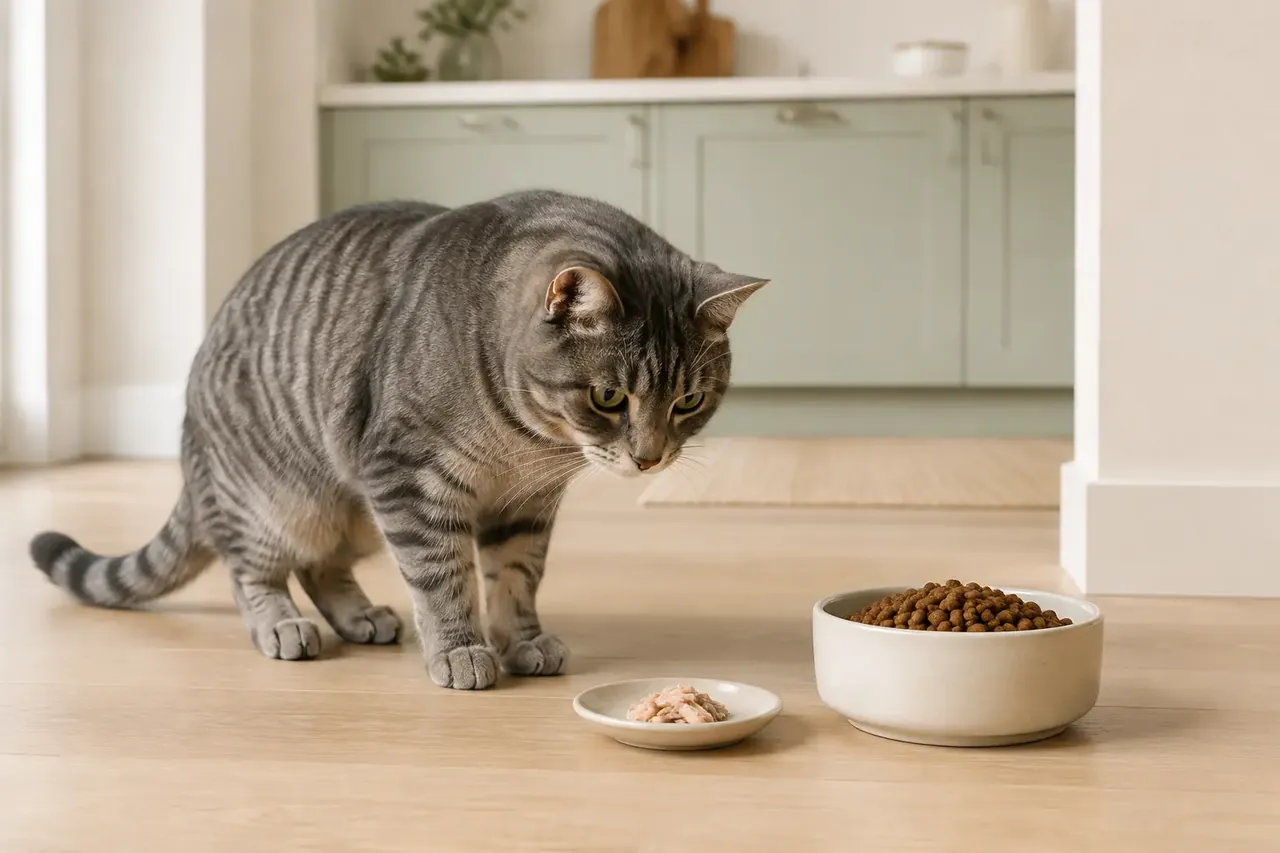 Topic illustration selected for this guide. Some learning images may be AI-assisted.
Feeding different diets in a multi-cat home — the quick answer
✓ Feed cats in separate protected stations
✓ Measure each cat's actual intake
✓ Microchip feeders can help but need training
✓ Sudden appetite change must not hide behind group feeding
Different ages, health conditions and calorie needs can make free feeding impossible. The goal is controlled access without turning every meal into a chase or conflict.
Map each cat's needs
Write down food, daily amount, medication requirements and body-condition goal for every cat. Confirm therapeutic diets with the prescribing clinic.
Build private stations
Use separate rooms, different heights only when mobility allows, or microchip feeders. Give enough distance that no cat must watch a competitor while eating.
Train the routine
Introduce doors and feeders gradually with treats or familiar food. Pick bowls up after a predictable window if scheduled meals are appropriate for the cats.
Audit intake
Weigh portions and check each cat's weight regularly. A shared empty bowl cannot tell you who ate too much and who ate nothing.
Your quick checklist
Your progress is saved on this device.
Three simple things you can do
You do not have to change everything today. Pick one step that feels realistic, try it and see how your cat responds.
- 1Feed cats in separate rooms or controlled stations and remove leftovers after the meal.
- 2Measure each cat's ration and record appetite changes individually.
- 3Use microchip feeders when useful, but still supervise adjustment and cleanliness.
Common mistakes
×Placing special and ordinary diets side by side.
×Assuming a few stolen bites never matter for allergy, urinary or weight plans.
×Free-feeding when individual intake must be known.
Questions cat people ask
How can I stop one cat eating the other's prescription food?+
Separate feeding behind closed doors is the simplest reliable method. Microchip feeders can help where timed room separation is impractical.
Can healthy cats eat veterinary food?+
It depends on the specific diet and cat. Ask the prescribing veterinarian rather than assuming it is suitable for everyone.
Still looking for the right answer?
Search the full EverYes Cats encyclopedia with your own words — a symptom, food, behaviour, breed or everyday question.
Checked, dated and transparent
- Prepared by
- EverYes Cats editorial team
- Last updated
- 7 August 2026
- Source checked
- 7 August 2026
- Primary reference
- FelineVMA Healthy Feline Environment ↗
We begin with the named reference, rewrite the information in plain language and add practical cat-parent steps. Urgent health statements are checked against veterinary sources. This guide has not been individually reviewed by a veterinarian unless explicitly stated. It provides education, not diagnosis or treatment.
Spotted something unclear or outdated? Tell us so we can review it.
Your answer helps us improve the cat encyclopedia.
Find the useful facts without getting lost in marketing language.