Foods cats should never eat
Onion, garlic, chocolate, caffeine, alcohol, grapes, raisins, xylitol and raw yeast dough are among the foods that should be kept away from cats. After a possible exposure, call before symptoms begin.
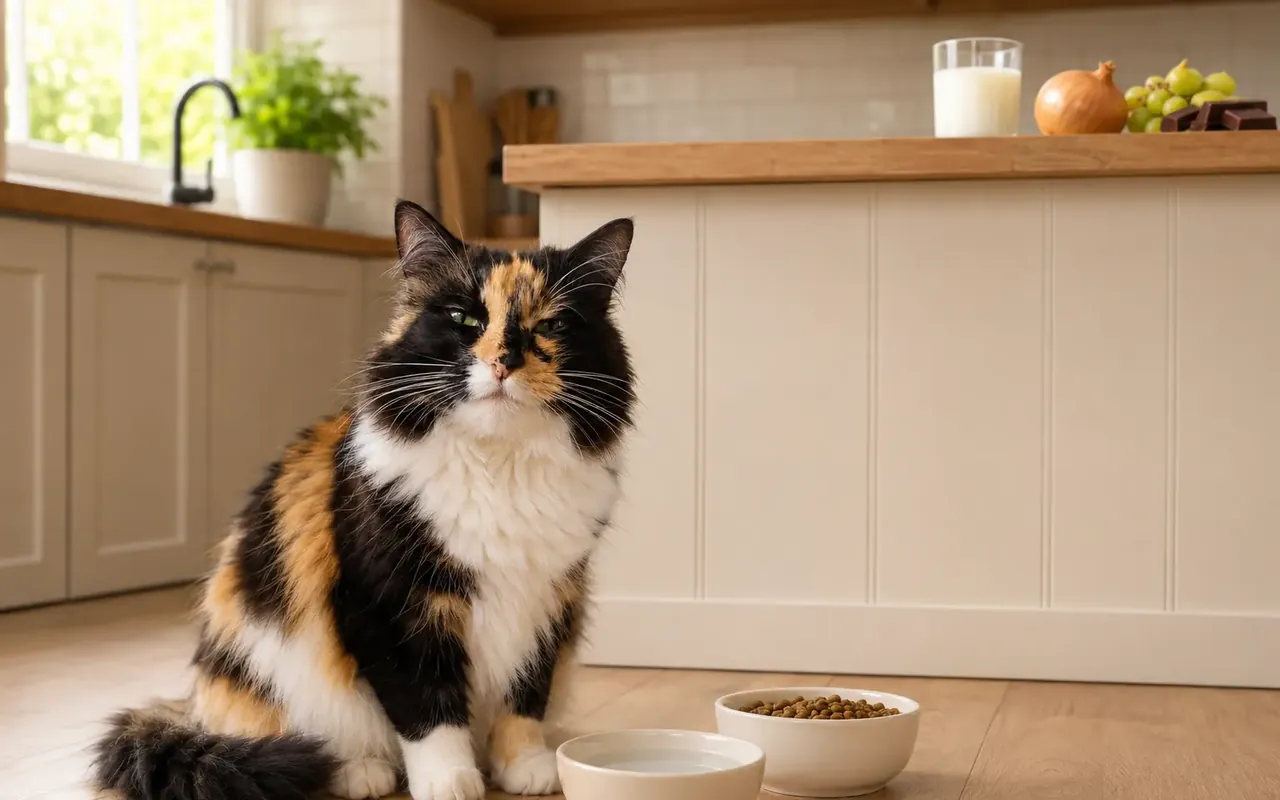 Topic illustration selected for this guide. Some learning images may be AI-assisted.
Foods cats should never eat — the quick answer
✓ Onion, garlic, chocolate, alcohol and grapes are unsafe
✓ Do not make a cat vomit unless a veterinarian tells you to
✓ Keep packaging when you call for help
A stolen crumb is not always an emergency, but some everyday foods can make cats seriously ill. Knowing the main risks helps you act quickly without panicking.
High-risk foods
Onion, garlic and related plants can damage red blood cells. Chocolate, caffeine, alcohol, grapes, raisins and products containing xylitol can also be dangerous. Raw dough can expand and produce alcohol.
What information to collect
Write down what your cat ate, how much may be missing, when it happened and your cat's weight. Keep the packet or photograph the ingredient list.
Call before symptoms appear
Do not wait for vomiting or weakness. Contact a veterinarian or animal poison service promptly, because early treatment can be important.
The ingredients that hide in ordinary food
Onion and garlic may appear fresh, cooked, dried or powdered in sauces, soups, baby food and seasoning. Chocolate and caffeine vary greatly in strength. Alcohol may be present in drinks, desserts and uncooked dough. Check the complete ingredient list instead of judging only the name on the front of the packet.
What to do after an accident
Remove access, keep the packaging and estimate the amount and time. Call a veterinarian or appropriate animal poison service with your cat's weight and current signs. Do not induce vomiting or give milk, oil, salt or another home remedy unless a veterinary professional directs you.
Your quick checklist
Your progress is saved on this device.
Three simple things you can do
You do not have to change everything today. Pick one step that feels realistic, try it and see how your cat responds.
- 1Store risky foods in closed cupboards or containers.
- 2Save your veterinary clinic's emergency number in your phone.
- 3Keep packaging and estimate the missing amount after an accident.
Common mistakes
×Waiting for symptoms before calling.
×Trying a home remedy or making the cat vomit.
×Assuming a tiny amount is safe without checking the exact food.
Questions cat people ask
What should I do if my cat ate something unsafe?+
Remove access, collect the packet and call a veterinarian promptly with the food, amount, time and your cat's weight. Do not induce vomiting unless instructed.
Are cooked onions safer than raw onions?+
No. Onion and garlic remain unsafe when cooked, dried or powdered, and powders can be concentrated.
Still looking for the right answer?
Search the full EverYes Cats encyclopedia with your own words — a symptom, food, behaviour, breed or everyday question.
Checked, dated and transparent
- Prepared by
- EverYes Cats editorial team
- Last updated
- 8 August 2026
- Source checked
- 8 August 2026
- Primary reference
- WSAVA Global Nutrition Guidelines ↗
We begin with the named reference, rewrite the information in plain language and add practical cat-parent steps. Urgent health statements are checked against veterinary sources. This guide has not been individually reviewed by a veterinarian unless explicitly stated. It provides education, not diagnosis or treatment.
Spotted something unclear or outdated? Tell us so we can review it.
Your answer helps us improve the cat encyclopedia.
Pulling material over food may be an attempt to hide leftovers or respond to a strong smell. Learn what to observe, what to try safely and when to seek help.