Wet food, dry food and hydration
Wet food usually contributes more water than dry food, but the best plan must also be complete, portioned and suitable for the individual cat. Never force a rapid switch that leads to food refusal.
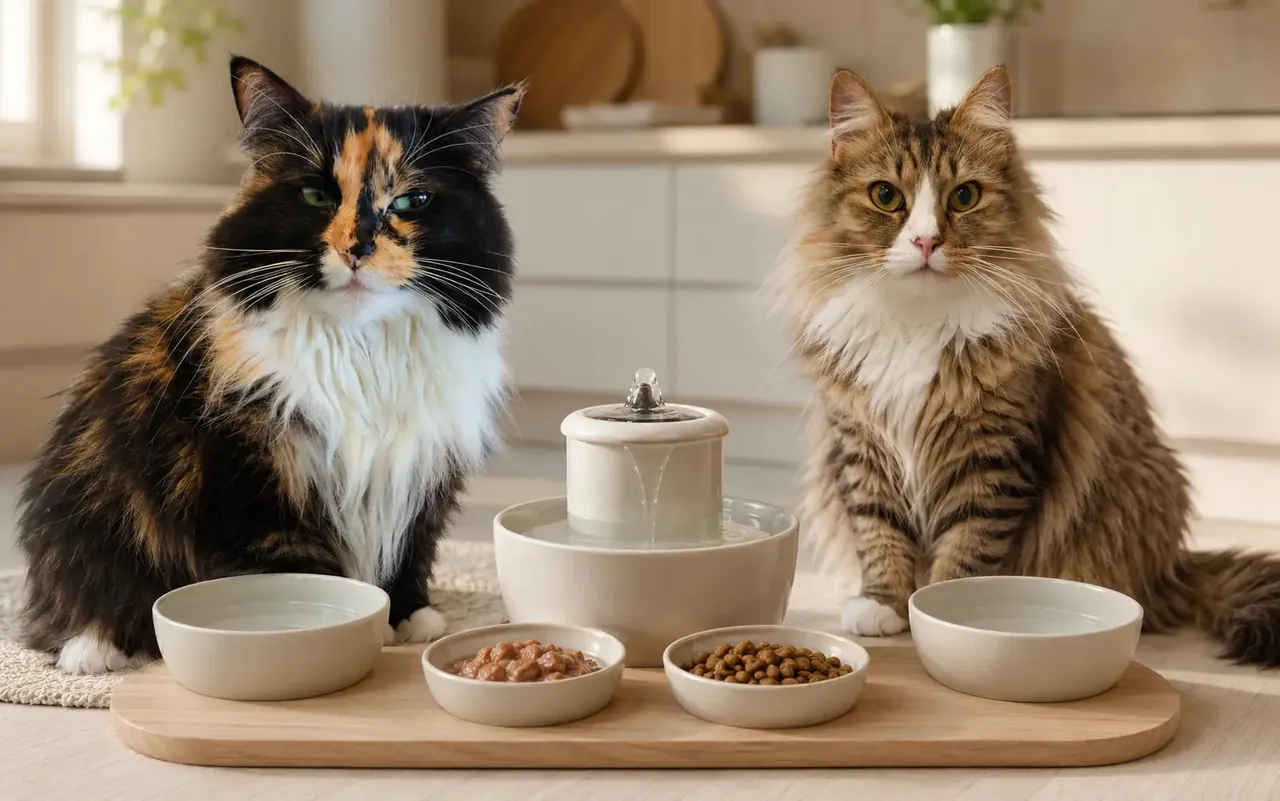 Topic illustration selected for this guide. Some learning images may be AI-assisted.
Wet food, dry food and hydration — the quick answer
✓ Wet food contributes meaningful moisture
✓ Portion size matters with every food format
✓ Diet changes should usually be gradual
There is no single feeding plan that suits every cat. Age, health, preferences, calorie needs and veterinary advice all matter.
Moisture in food
Wet food contains much more water than dry food and can support total fluid intake. Cats eating mostly dry food may drink more from bowls or fountains.
Complete and balanced
Check that the main diet is labeled complete for your cat's life stage. Treats and complementary foods should not replace a nutritionally complete diet.
Make changes gently
Sudden diet changes can cause digestive upset or food refusal. Transition gradually unless your veterinarian gives different instructions, and never let a cat go without eating while you wait for them to accept a new food.
Compare the whole diet, not one feature
Check whether the main food is labelled complete for the cat’s life stage, then consider calories, texture, dental needs, medical history, cost and what the cat reliably eats. Dry food does not automatically clean teeth, and wet food is not automatically appropriate for every prescription plan.
Measure hydration changes safely
Offer fresh water in several quiet places and note food type, bowl refills and urine-clump changes. Never restrict water to measure drinking. A clear increase or decrease in thirst or urine output deserves veterinary advice rather than a food change alone.
Your quick checklist
Your progress is saved on this device.
Three simple things you can do
You do not have to change everything today. Pick one step that feels realistic, try it and see how your cat responds.
- 1Measure portions rather than repeatedly topping up the bowl.
- 2Place water away from litter and experiment with bowl locations.
- 3Change diets gradually while monitoring eating, stool and body weight.
Common mistakes
×Changing food suddenly when a gradual transition would be safer and easier to accept.
×Counting treats and extras as if they do not contribute calories or affect nutritional balance.
×Assuming one feeding plan is right for every age, body condition and health history.
Questions cat people ask
Is wet food always better?+
Not automatically. Moisture is useful, but the complete diet, calories, health needs, dental plan and what the cat reliably eats all matter.
Does a fountain guarantee more drinking?+
No. Some cats prefer moving water, while others prefer a wide still bowl. Offer choices and keep every option clean.
Still looking for the right answer?
Search the full EverYes Cats encyclopedia with your own words — a symptom, food, behaviour, breed or everyday question.
Checked, dated and transparent
- Prepared by
- EverYes Cats editorial team
- Last updated
- 13 August 2026
- Source checked
- 13 August 2026
- Primary reference
- WSAVA Global Nutrition Guidelines ↗
We begin with the named reference, rewrite the information in plain language and add practical cat-parent steps. Urgent health statements are checked against veterinary sources. This guide has not been individually reviewed by a veterinarian unless explicitly stated. It provides education, not diagnosis or treatment.
Spotted something unclear or outdated? Tell us so we can review it.
Your answer helps us improve the cat encyclopedia.
Plain tuna can be an occasional tiny treat for many healthy adult cats, but it is not a complete meal. Brine, oil, seasoning and a tuna-only habit create avoidable risks.