Why does my cat eat differently when alone?
A cat may eat more comfortably alone because people, noise or another animal create pressure—or may prefer trusted company. Measure intake and provide a protected station before deciding what the cat needs.
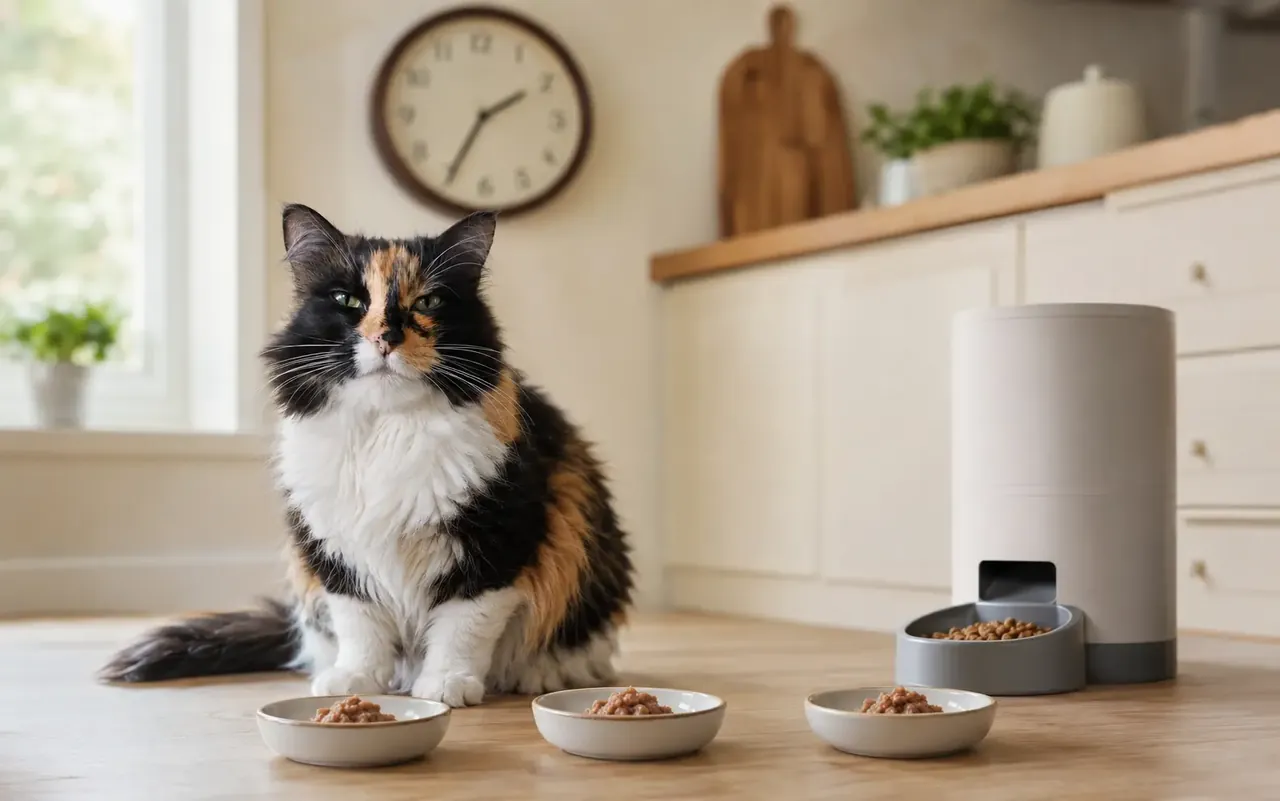 Topic illustration selected for this guide. Some learning images may be AI-assisted.
Why does my cat eat differently when alone — the quick answer
✓ Social pressure, noise and human presence can either inhibit or reassure an individual cat
✓ Offer a quiet protected station and compare measured intake rather than relying on impression.
✓ Any meaningful reduction in food intake, especially beyond a day, needs prompt veterinary advice.
Social pressure, noise and human presence can either inhibit or reassure an individual cat. A camera may reveal interruptions or guarding that are invisible while you stand nearby.
The short answer
Social pressure, noise and human presence can either inhibit or reassure an individual cat. A camera may reveal interruptions or guarding that are invisible while you stand nearby.
What to observe first
Compare the moment with your cat’s usual pattern. Note timing, frequency, body language, appetite, litter-box use, mobility and any recent household change.
Why the setting matters
A camera may reveal interruptions or guarding that are invisible while you stand nearby. One isolated detail rarely explains behaviour or health on its own, so look at the whole cat and the immediate environment.
What you can do
Offer a quiet protected station and compare measured intake rather than relying on impression.
A gentle way to test it
Make one small safe adjustment and give the cat time and choice. Avoid punishment, forced handling and several changes at once, because they make the response harder to understand.
When to contact a veterinarian
Any meaningful reduction in food intake, especially beyond a day, needs prompt veterinary advice.
Prepare useful information
Write down when it began and how often it occurs. A short video, clear photo, food record or litter record can help a veterinary professional assess a pattern that may not appear during the appointment.
Compare two calm feeding setups
Serve equal measured portions at the same time of day, first in a quiet protected place and then with a familiar person sitting passively at a distance. Keep bowl, food and timing consistent. A simple camera can reveal interruptions or guarding without changing the room.
DEEPER GUIDE1 more detailed sectionsOpen +
Protect meals in a multi-cat home
Feed cats behind separate closed doors or with identity-controlled feeders, and remove leftovers afterward. Track each cat's weight and daily ration. A meaningful reduction in food, weight loss, vomiting or sudden appetite change needs prompt veterinary advice.
Your quick checklist
Your progress is saved on this device.
Three simple things you can do
You do not have to change everything today. Pick one step that feels realistic, try it and see how your cat responds.
- 1Compare measured intake when the cat is alone and when people or pets are present.
- 2Feed in a quiet protected station with more than one exit.
- 3Use a camera briefly if needed without changing the environment.
Common mistakes
×Assuming the cat is being dramatic.
×Watching so closely that eating becomes pressured.
×Ignoring reduced total intake.
Questions cat people ask
Why does my cat eat more when alone?+
Privacy may reduce social pressure, noise or vigilance. Some cats instead eat more with a trusted person nearby because presence signals safety.
When is changed eating behaviour medical?+
Any meaningful reduction, weight loss, nausea signs, mouth pain or refusal lasting toward a day needs prompt veterinary advice; kittens and ill cats may need help sooner.
Still looking for the right answer?
Search the full EverYes Cats encyclopedia with your own words — a symptom, food, behaviour, breed or everyday question.
Checked, dated and transparent
- Prepared by
- EverYes Cats editorial team
- Last updated
- 13 August 2026
- Source checked
- 13 August 2026
- Primary reference
- International Cat Care ↗
We begin with the named reference, rewrite the information in plain language and add practical cat-parent steps. Urgent health statements are checked against veterinary sources. This guide has not been individually reviewed by a veterinarian unless explicitly stated. It provides education, not diagnosis or treatment.
Spotted something unclear or outdated? Tell us so we can review it.
Your answer helps us improve the cat encyclopedia.
A short pause can be normal inspection, but repeated hesitation may reflect nausea or mouth discomfort. Learn what to observe, what to try safely and when to seek help.