Can cats eat bacon?
Bacon is not a good cat treat because it is fatty, salty and often cured or seasoned. Choose a measured cat-specific reward instead.
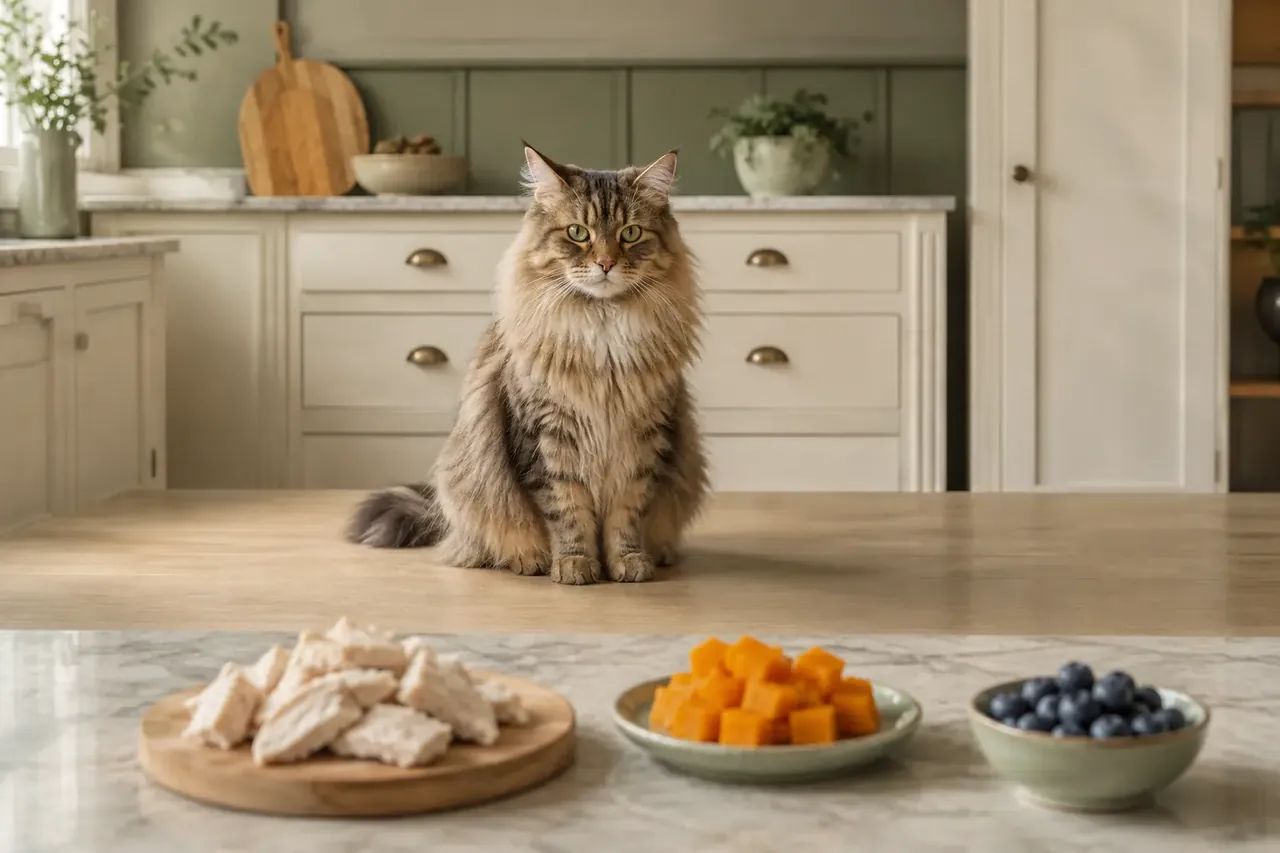 Topic illustration selected for this guide. Some learning images may be AI-assisted.
Bacon is not a good cat treat because it is fatty, salty and often cured or seasoned. Choose a measured cat-specific reward instead.
Can cats eat bacon — the quick answer
✓ Bacon is not a good cat treat, even though the smell may bring a cat running.
✓ Offer a piece of the cat’s usual food or a plain cooked-meat treat instead. Keep cooling pans and breakfast plates out of reach.
✓ Contact a veterinarian if a cat ate a large quantity, shows repeated digestive signs or has kidney, heart or pancreatic disease.
Bacon is not a good cat treat, even though the smell may bring a cat running. This guide separates the quick answer from the details that actually help at home, with no blame and no dramatic guessing.
The short answer
Bacon is not a good cat treat, even though the smell may bring a cat running. It combines high salt, concentrated fat and processing. A stolen crumb is different from deliberately feeding a strip, but neither adds useful balance to the diet. The useful question is not simply whether something can happen, but what is normal for this individual cat and what has changed. Age, health, routine and previous experience can all change the safest answer.
What you can do today
Choose a measured cat treat instead of bacon. If a healthy adult cat has already eaten one tiny plain cooked crumb, remove the rest, provide water and check the full recipe for onion, garlic, heavy seasoning or sweetener.
What to watch
Monitor for vomiting, diarrhoea, abdominal discomfort, unusual thirst, lethargy or refusal of the next meal. Fatty food can be especially unsuitable for cats with digestive disease, pancreatitis risk or a prescribed diet.
What not to do
Do not offer raw bacon, fatty trimmings, bacon grease or heavily cured and seasoned pieces. Do not use bacon routinely to hide medication unless the veterinarian has approved that specific food and amount for the individual cat.
When to contact a veterinarian
Seek advice after a large amount, an uncertain seasoned dish or symptoms such as repeated vomiting, marked pain, weakness or tremors. Keep the package or ingredient list and do not induce vomiting unless a professional instructs you.
A kind next step
Start with the simplest safe action from this guide and let your cat set the pace. Keep familiar food, water, litter and resting places available. Recheck the situation after the next normal routine point—a meal, nap, play session or litter visit—and compare it with your notes rather than memory alone.
What to check first
Even a small human portion is large for a cat. Grease, salt, onion or garlic seasoning and repeated extras can worsen digestive, weight or medical problems.
What to do next
Do not serve bacon routinely. If a healthy cat steals a tiny plain cooked piece, remove the rest, check ingredients and monitor; ask a veterinarian sooner for prescription-diet or relevant health needs. Repeated vomiting, abdominal pain, weakness, tremors or ingestion of seasoned bacon needs veterinary advice.
Your quick checklist
Your progress is saved on this device.
Safer next steps
Prevention and a calm response matter more than a home remedy. Use these steps to reduce risk and know who to call after an exposure.
- 1Choose a plain lean unprocessed meat instead when offering a reward.
- 2If a crumb is given, keep it extremely small and rare.
- 3Check with the veterinarian for heart, kidney, urinary or weight-related diets.
Common mistakes
×Using bacon as a daily high-value treat.
×Giving fatty rind or bacon grease.
×Assuming one strip is a small portion for a cat.
Questions cat people ask
Can cats eat bacon?+
Bacon is very salty, fatty and processed, so it is not a good cat treat. A tiny accidental taste is different from regular feeding.
Is turkey bacon safer for cats?+
It is still processed and often high in salt and additives. Plain cooked turkey is the better occasional option.
Still looking for the right answer?
Search the full EverYes Cats encyclopedia with your own words — a symptom, food, behaviour, breed or everyday question.
Checked, dated and transparent
- Prepared by
- EverYes Cats editorial team
- Last updated
- 19 September 2026
- Source checked
- 19 September 2026
- Primary reference
- FEDIAF Nutritional Guidelines ↗
We begin with the named reference, rewrite the information in plain language and add practical cat-parent steps. Urgent health statements are checked against veterinary sources. This guide has not been individually reviewed by a veterinarian unless explicitly stated. It provides education, not diagnosis or treatment.
How we choose and use sources →
Spotted something unclear or outdated? Tell us so we can review it.
Your answer helps us improve the cat encyclopedia.
Pulling material over food may be an attempt to hide leftovers or respond to a strong smell. Learn what to observe, what to try safely and when to seek help.