Can cats eat tuna?
Plain tuna can be an occasional tiny treat for many healthy adult cats, but it is not a complete meal. Brine, oil, seasoning and a tuna-only habit create avoidable risks.
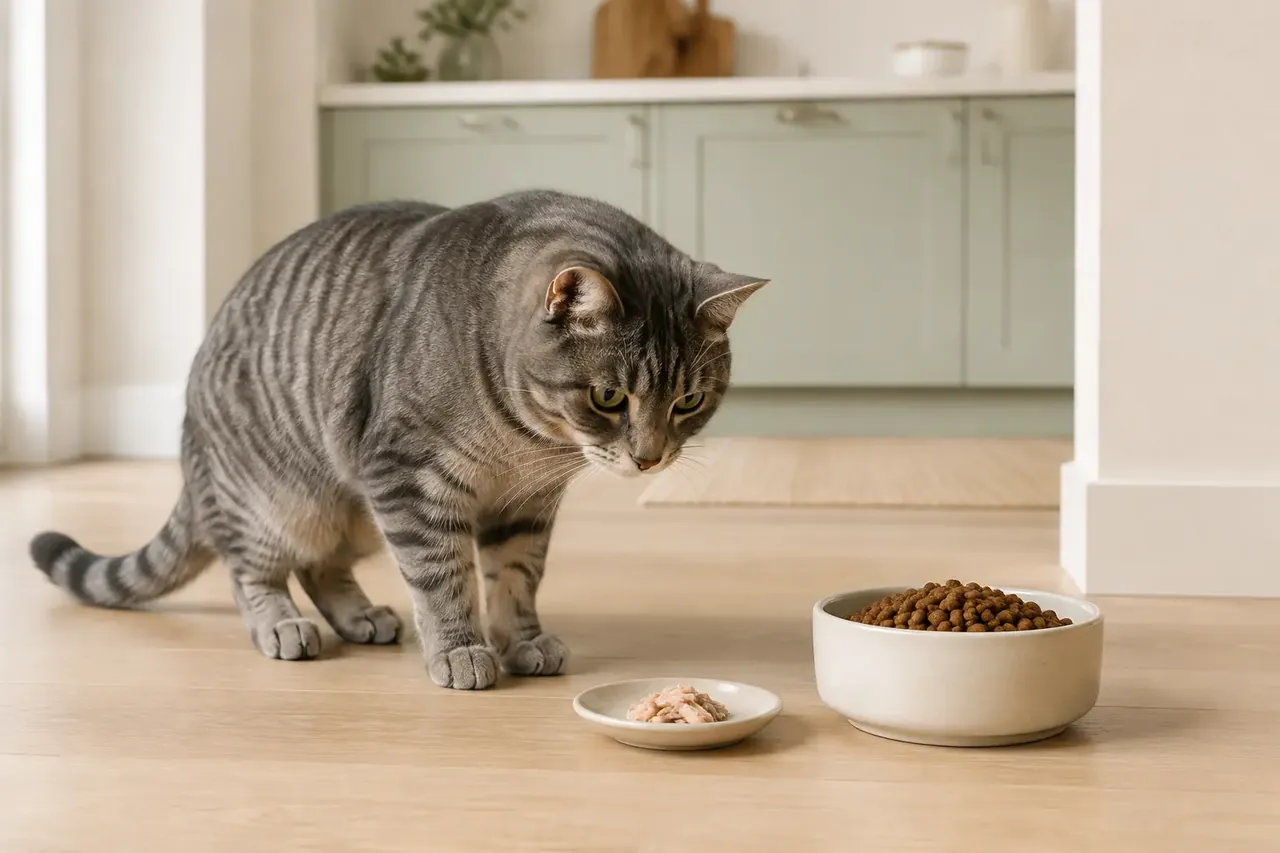 Topic illustration selected for this guide. Some learning images may be AI-assisted.
Can cats eat tuna — the quick answer
✓ Use plain tuna only as a small occasional treat
✓ Avoid seasoned, oily or brined versions
✓ A complete cat food should remain the main diet
Many cats love tuna, but tuna intended for people is not a complete and balanced cat food and should not replace the main diet.
Keep tuna plain, tiny and occasional
Human tuna is not a complete cat meal. If your healthy cat is offered a taste, check every added ingredient and keep the portion very small.
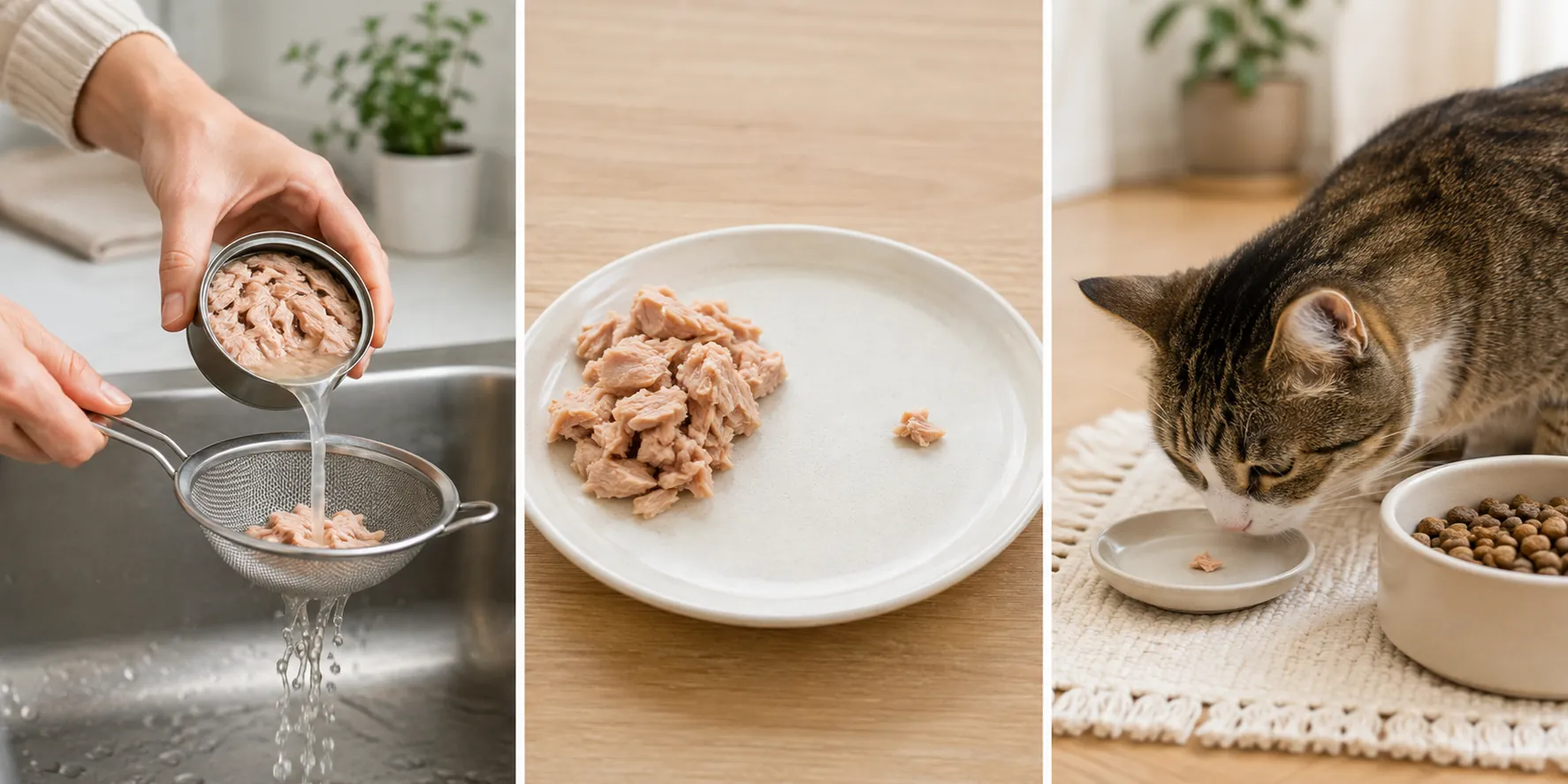
- 1Choose plain tuna and drain it
Use tuna in spring water without brine, oil, sauce, onion, garlic or seasoning, and ask first for cats on a medical or prescription diet.
- 2Separate one tiny flake
Prepare a teaspoon-sized taste rather than a serving and count it within the day’s treats and total calories.
- 3Keep complete food central
Let your cat choose whether to taste it, then return to complete cat food as the main diet and watch for vomiting, diarrhoea or other reaction.
Keep portions small
A small taste may be suitable for many healthy cats, but frequent extras can unbalance the diet and add calories.
Check what is added
Avoid onion, garlic, heavy salt, sauces and flavored products. If your cat has a medical diet, ask the veterinarian first.
Do not build a tuna-only habit
Cats need nutrients in proportions that ordinary canned tuna does not provide. Choose food labeled complete for the life stage.
Choose the least complicated tuna
If you offer tuna, choose a small flake of plain tuna in spring water. Drain it first. Skip tuna in brine, oil, sauces or seasoning, and never serve products containing onion or garlic. Cats with kidney, heart, urinary, allergy or prescription-diet needs should not be given tuna without asking their veterinary team.
Think in teaspoons, not tins
A taste is enough: the goal is flavour and reward, not a second meal. Treats and extras should stay a small part of the daily calories, while food labelled complete for the cat's life stage supplies the main nutrition. Frequent tuna can also teach a cat to hold out for a favourite food.
Your quick checklist
Your progress is saved on this device.
Three simple things you can do
You do not have to change everything today. Pick one step that feels realistic, try it and see how your cat responds.
- 1Use plain tuna only as a small occasional treat, not a complete meal.
- 2Choose tuna without brine, oil, onion, garlic, seasoning or sauces.
- 3Count the portion within the daily treat allowance and keep complete cat food central.
Common mistakes
×Feeding human tuna as a regular replacement for complete cat food.
×Offering salty brine, flavoured tins or tuna dishes with unsafe ingredients.
×Using tuna to mask medication without checking whether it affects dosing or appetite.
Questions cat people ask
Can cats eat canned tuna for humans?+
A tiny amount of plain tuna can be an occasional treat for many healthy cats, but it is not nutritionally complete and may contain too much salt or oil.
How much tuna can I give my cat?+
Keep it small and occasional within the general rule that treats stay under about ten percent of daily calories. Ask your veterinarian for cats with medical diets.
Still looking for the right answer?
Search the full EverYes Cats encyclopedia with your own words — a symptom, food, behaviour, breed or everyday question.
Checked, dated and transparent
- Prepared by
- EverYes Cats editorial team
- Last updated
- 8 August 2026
- Source checked
- 8 August 2026
- Primary reference
- WSAVA Global Nutrition Guidelines ↗
We begin with the named reference, rewrite the information in plain language and add practical cat-parent steps. Urgent health statements are checked against veterinary sources. This guide has not been individually reviewed by a veterinarian unless explicitly stated. It provides education, not diagnosis or treatment.
Spotted something unclear or outdated? Tell us so we can review it.
Your answer helps us improve the cat encyclopedia.
Most adult cats do not need milk, and many digest lactose poorly. Fresh water should be the everyday drink; cow's milk is not suitable nutrition for kittens.