Build better water stations
Better water stations are clean, quiet, easy to reach and spread across the home. Offer wide bowls or a well-maintained fountain without removing familiar water while you test preferences.
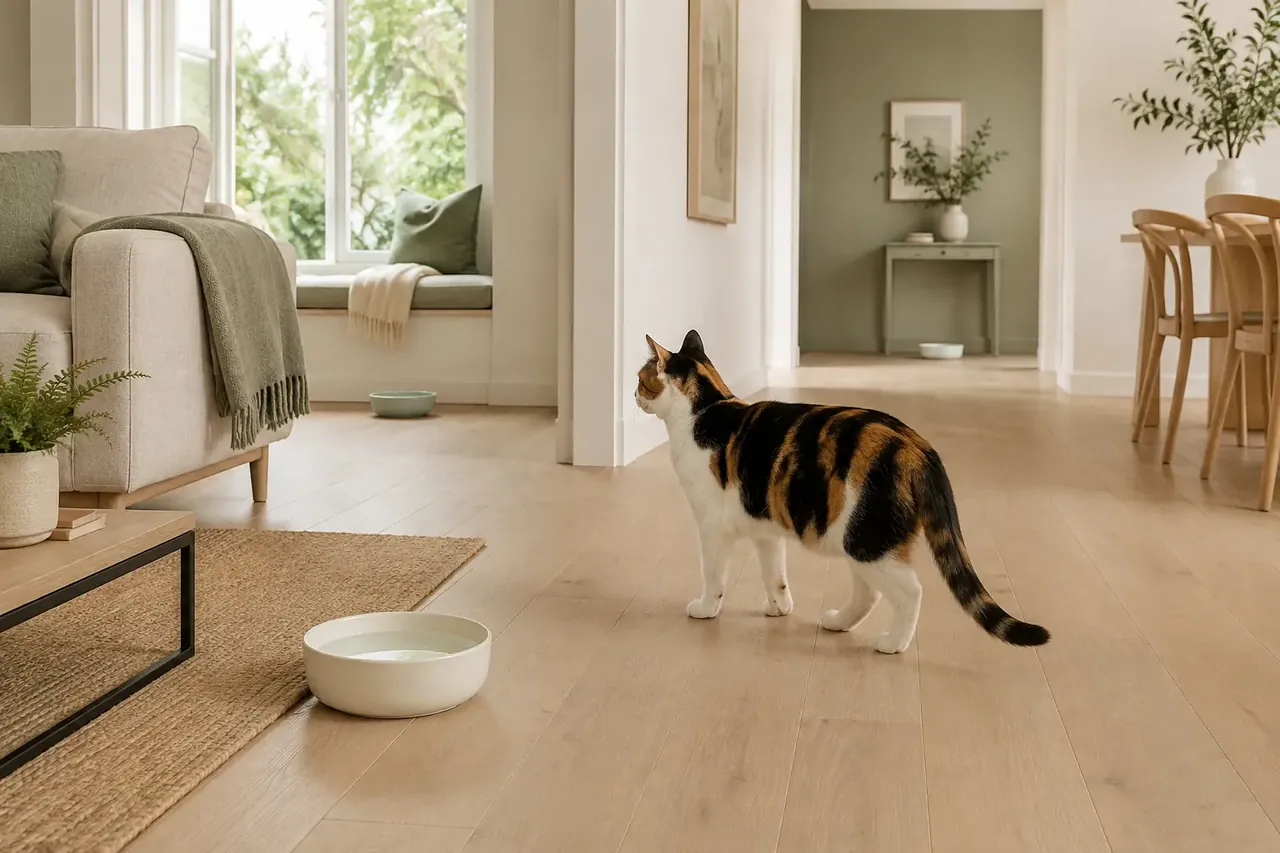 Topic illustration selected for this guide. Some learning images may be AI-assisted.
Build better water stations — the quick answer
✓ Offer water in several locations
✓ Keep bowls clean and filled
✓ Separate water from litter areas
Water stations work best when they are clean, calm and easy to use without passing another cat or a noisy appliance.
Build a better water station
Small changes to bowl shape, location and cleaning can make water easier to use.
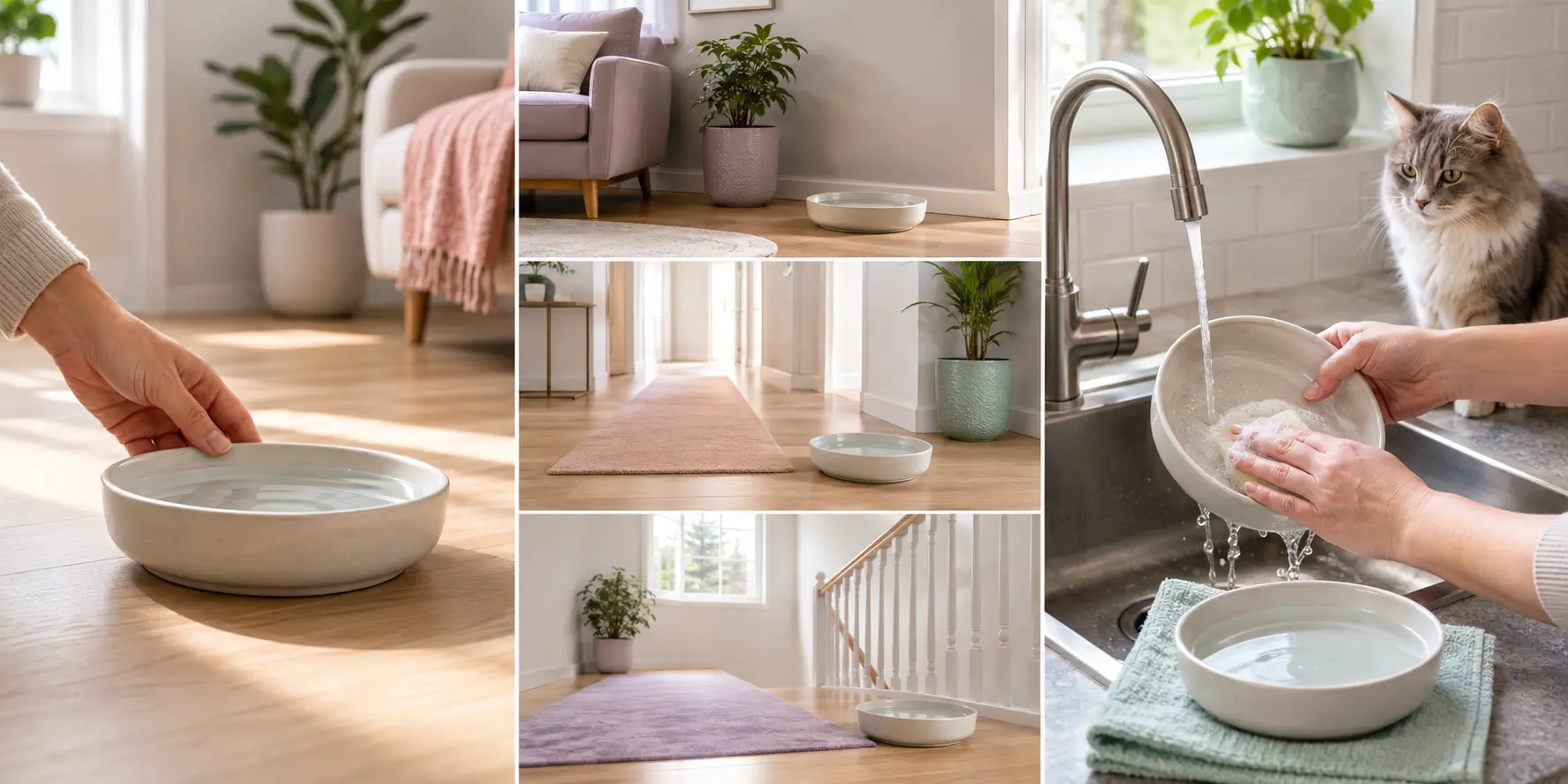
- 1Choose a wide bowl
Use a stable, shallow bowl that keeps the whiskers clear and place it away from food and litter.
- 2Offer separate choices
Put fresh water in several quiet locations so one route, noise or another cat cannot block access.
- 3Wash and refresh
Wash bowls regularly with mild unscented soap, rinse thoroughly and refill with fresh water.
Map the routes
Place bowls along routes each cat already uses, including different floors when relevant.
Prevent quiet competition
In a multi-cat home, one cat may block access without fighting. Separate stations give everyone another option.
Refresh the setup
Wash bowls often and watch for slime, food debris or a fountain filter that needs replacement.
Build choice into the water map
Place stations on routes each cat already uses, including different floors. Separate them from litter, noisy appliances and places where another animal can block access. Heavy ceramic or stainless-steel bowls are easy to inspect and keep stable.
Maintain the station, not just the water level
Wash bowls daily, follow the fountain maker’s cleaning and filter schedule and check for slime or trapped food. Note a clear change in refills and urine clumps, but never restrict water to measure intake.
Your quick checklist
Your progress is saved on this device.
Three simple things you can do
You do not have to change everything today. Pick one step that feels realistic, try it and see how your cat responds.
- 1Offer multiple clean water stations in calm, accessible locations.
- 2Use wide stable bowls and place at least one station away from food and litter.
- 3Refresh daily and note which material, height and location the cat actually chooses.
Common mistakes
×Placing every water source in one room or beside a noisy appliance.
×Using a fountain without frequent cleaning and filter care.
×Assuming increased or reduced drinking is behavioural without tracking it.
Questions cat people ask
How many water bowls should a cat have?+
There is no fixed number, but multiple stations create choice and resilience. Larger and multi-cat homes benefit from water in separate locations.
Are fountains better than bowls?+
Some cats prefer moving water, while others prefer a still wide bowl. Cleanliness, access and individual preference matter more than the product type.
Still looking for the right answer?
Search the full EverYes Cats encyclopedia with your own words — a symptom, food, behaviour, breed or everyday question.
Checked, dated and transparent
- Prepared by
- EverYes Cats editorial team
- Last updated
- 13 August 2026
- Source checked
- 13 August 2026
- Primary reference
- WSAVA Global Nutrition Guidelines ↗
We begin with the named reference, rewrite the information in plain language and add practical cat-parent steps. Urgent health statements are checked against veterinary sources. This guide has not been individually reviewed by a veterinarian unless explicitly stated. It provides education, not diagnosis or treatment.
Spotted something unclear or outdated? Tell us so we can review it.
Your answer helps us improve the cat encyclopedia.
A tall glass may seem fresh and interesting, but it can tip and may contain unsafe drinks. Learn what to observe, what to try safely and when to seek help.