Can cats eat grapes?
Do not give cats grapes or raisins. Their safety is uncertain and they can cause severe kidney injury in other pets, so avoidance and prompt advice are the safest choices.
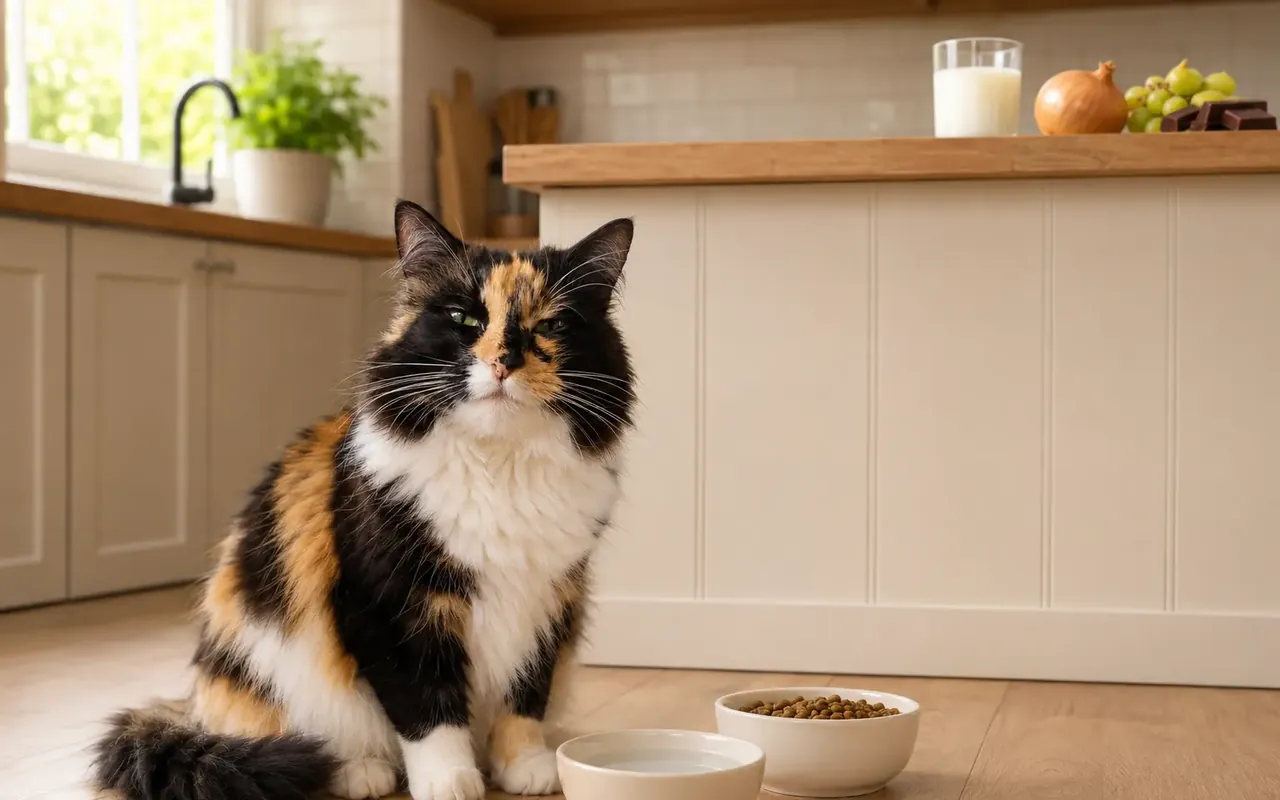 Topic illustration selected for this guide. Some learning images may be AI-assisted.
Do not give cats grapes or raisins. Their safety is uncertain and they can cause severe kidney injury in other pets, so avoidance and prompt advice are the safest choices.
Can cats eat grapes — the quick answer
✓ No: Treat any grape ingestion as urgent and call a veterinarian or poison service.
✓ Keep extras small and plain
✓ Call a veterinarian if symptoms or a toxic exposure are possible
The short answer is no: Treat any grape ingestion as urgent and call a veterinarian or poison service. A cat's main diet should still be complete and balanced for their life stage.
The practical answer
Treat any grape ingestion as urgent and call a veterinarian or poison service.
Portion and preparation
Do not offer it deliberately. Secure leftovers and ingredients, and collect the label, amount and time if an accident happens.
What to watch
A safe dose has not been established; do not wait for symptoms. Stop and seek veterinary advice for repeated vomiting, diarrhea, weakness, breathing trouble or unusual behavior.
What to check first
Remember raisins in bread, cereal, trail mix and baked goods. A cat may swallow one before symptoms appear, so waiting for vomiting or lethargy is not a safe test.
What to do next
Remove access, note the amount and time and call a veterinarian or animal poison service promptly for case-specific guidance. Suspected grape or raisin ingestion, vomiting, weakness, thirst change or reduced urine needs urgent professional advice.
Your quick checklist
Your progress is saved on this device.
Safer next steps
Prevention and a calm response matter more than a home remedy. Use these steps to reduce risk and know who to call after an exposure.
- 1Keep grapes, raisins and foods containing them completely inaccessible.
- 2Call a veterinarian or animal poison service promptly after ingestion.
- 3Bring packaging and estimate the amount and time without inducing vomiting yourself.
Common mistakes
×Waiting for symptoms.
×Assuming one grape is safe because evidence in cats is limited.
×Giving hydrogen peroxide, salt or another home remedy.
Questions cat people ask
Are grapes toxic to cats?+
The risk is best established in dogs, but uncertainty and potentially serious kidney injury mean grapes and raisins should not be offered to cats.
What if my cat ate one raisin?+
Call a veterinarian or poison service promptly with the amount, time and cat's weight. Do not wait for illness or induce vomiting unless instructed.
Still looking for the right answer?
Search the full EverYes Cats encyclopedia with your own words — a symptom, food, behaviour, breed or everyday question.
Checked, dated and transparent
- Prepared by
- EverYes Cats editorial team
- Last updated
- 14 August 2026
- Source checked
- 14 August 2026
- Primary reference
- Cornell Feline Health Center ↗
We begin with the named reference, rewrite the information in plain language and add practical cat-parent steps. Urgent health statements are checked against veterinary sources. This guide has not been individually reviewed by a veterinarian unless explicitly stated. It provides education, not diagnosis or treatment.
Spotted something unclear or outdated? Tell us so we can review it.
Your answer helps us improve the cat encyclopedia.
Water is the right everyday drink; adult cats commonly digest lactose poorly.