How many treats should a cat have?
Treats should stay a small, measured part of a cat's daily intake so complete food still supplies balanced nutrition. Count dental treats, toppers, table food and medication foods too.
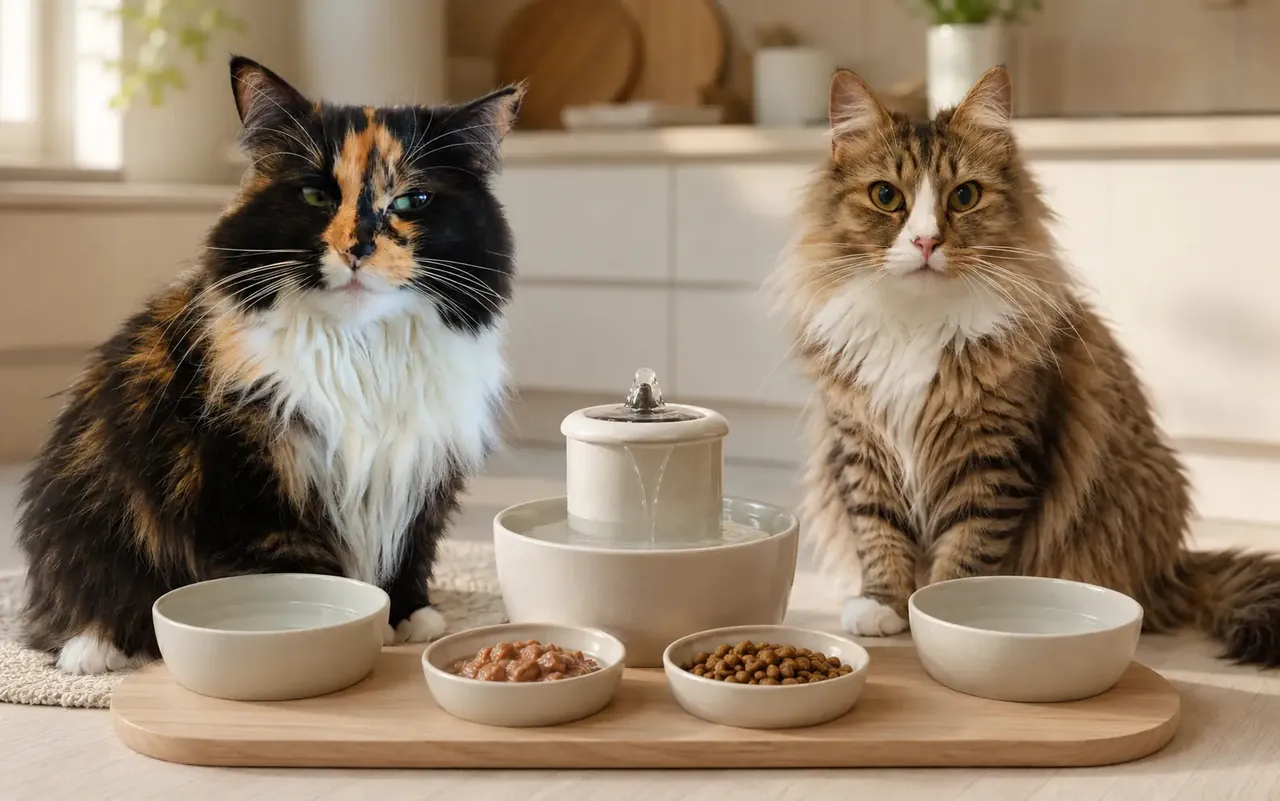
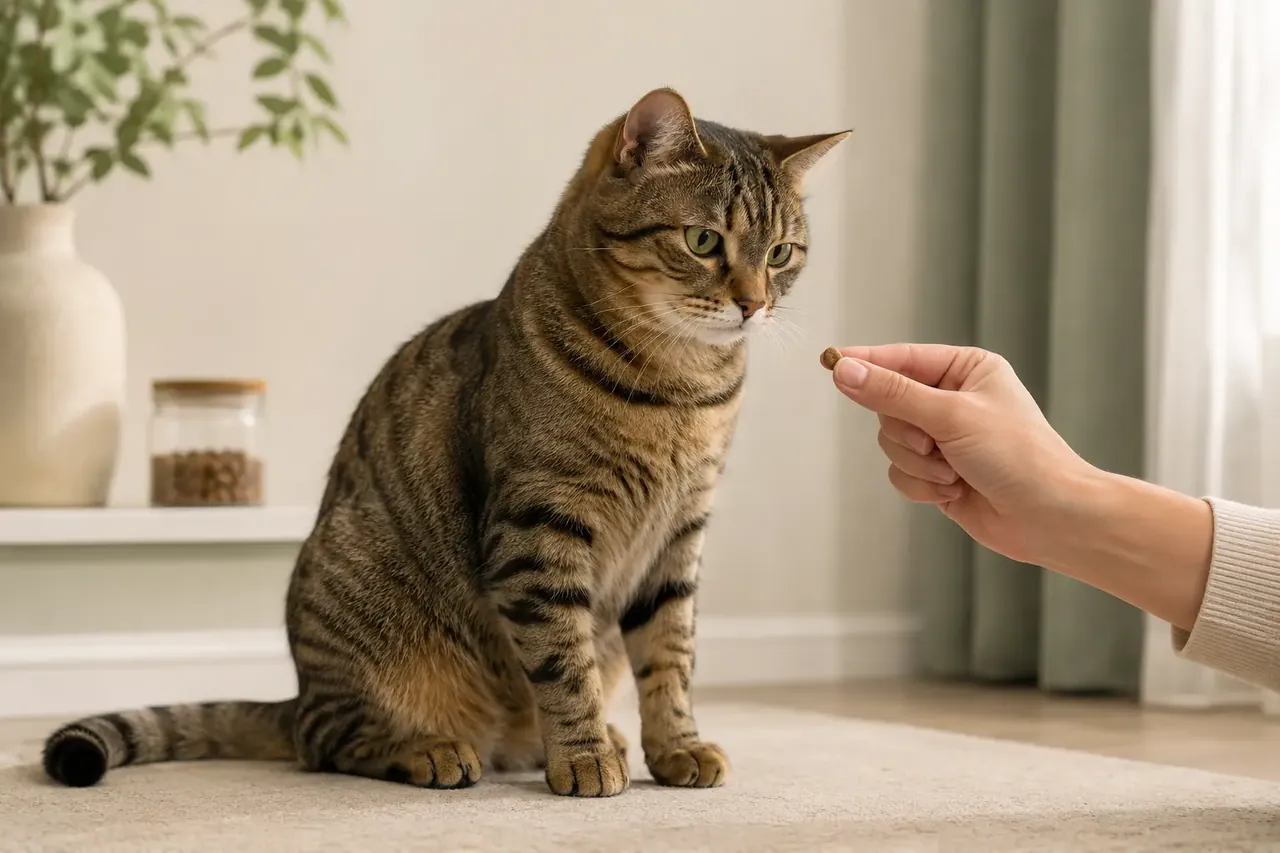 Topic illustration selected for this guide. Some learning images may be AI-assisted.
How many treats should a cat have — the quick answer
✓ Count every treat in the daily plan
✓ Break treats into smaller pieces
✓ Use part of the regular food for rewards
Treats are valuable for training and bonding, but they add to the day’s calories and should not replace complete food.
Start with the complete daily diet
A food labelled complete for the cat's life stage should provide the nutritional foundation. Treats, toppers and complementary foods are extras, even when marketed as natural or functional. WSAVA guidance notes that complementary foods should generally remain a small portion of intake. Ask the veterinary team for an individual calorie target rather than copying a number for every cat.
Count every extra
Include packaged treats, human food, lickable products, training rewards, supplements with calories and food used to give medicine. Small pieces offered by several family members can add up quickly. Measure a daily treat allowance into one container each morning so everyone can see what remains, and subtract food used in puzzle play or training from the normal ration when appropriate.
Use size, not number, to control portions
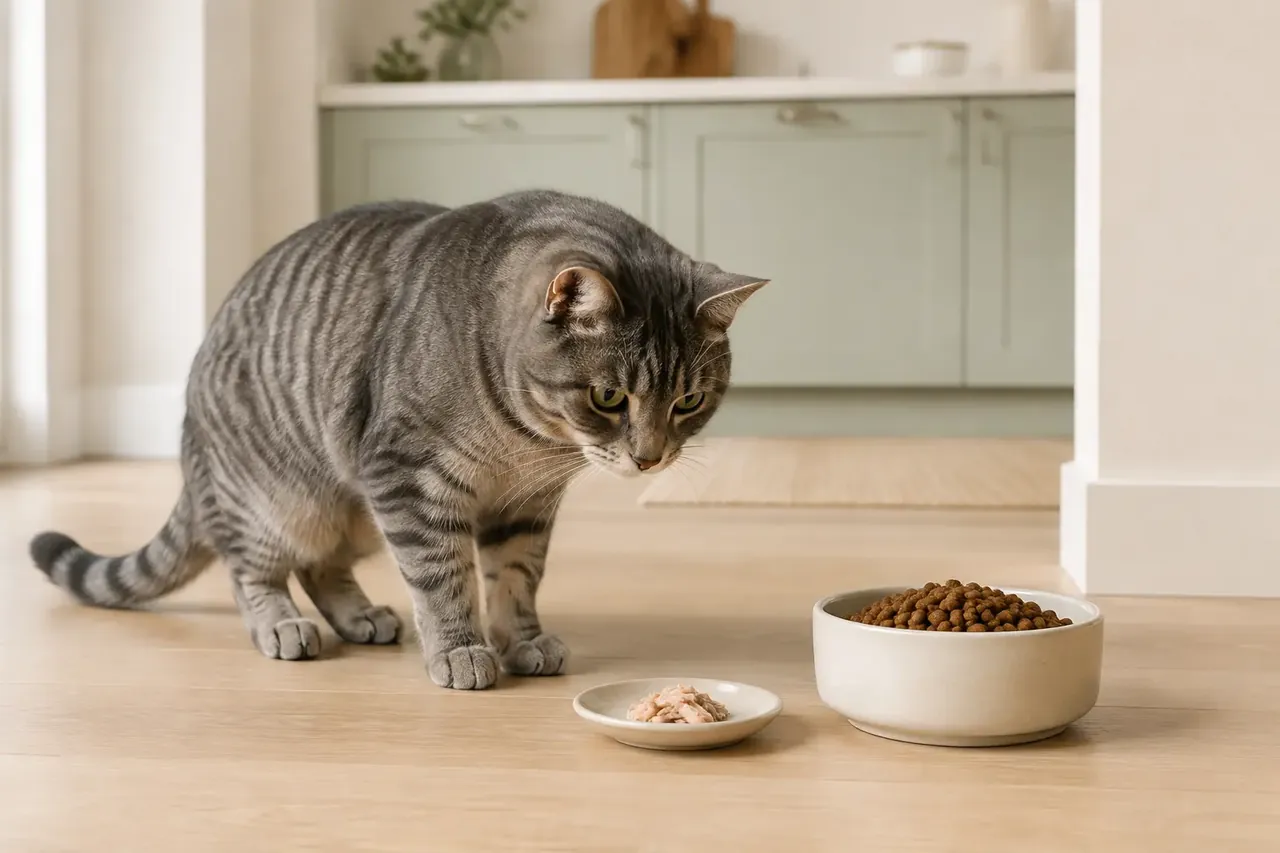
One large treat may contain more energy than several tiny ones. Break a suitable treat into smaller pieces so the cat receives more reward moments without more food. The package feeding guide is not a target to reach. For many cats, individual pieces of the normal kibble ration or a teaspoon from the measured wet food can function as rewards.
Protect special diets
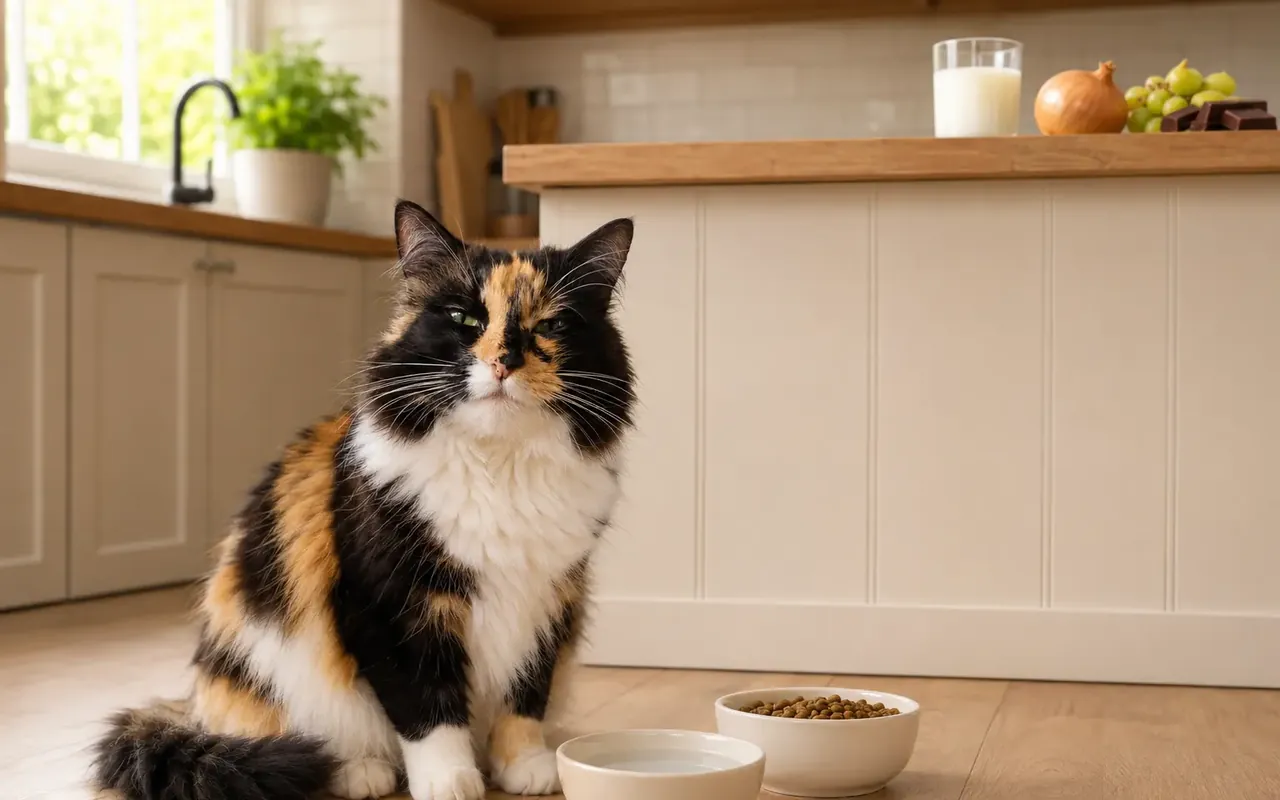
Cats with diabetes, food allergy, digestive disease, kidney disease, urinary conditions, obesity or a prescription diet may need stricter choices. A seemingly small extra can interfere with a diagnostic food trial or treatment plan. Ask what can be used before introducing a new treat, and tell every caregiver which foods are restricted.
Reward without food too
Play, grooming when enjoyed, access to a window perch, a cardboard box or calm social attention can all be rewards. Match the reward to the cat rather than assuming food is the only motivation. Non-food rewards are especially useful when calories are tightly controlled, but they should still respect consent and never force touch.
Reassess appetite and weight changes
Track body weight and condition rather than waiting for visible obesity. Reduce extras with veterinary guidance if weight rises, but never crash-diet a cat. A sudden increase in hunger, food stealing, weight loss despite eating or reduced interest in food needs assessment. Treats should not mask poor intake of the complete diet or persuade an unwell cat to avoid examination.
Your quick checklist
Loading saved progress…
Three simple things you can do
You do not have to change everything today. Pick one step that feels realistic, try it and see how your cat responds.
- 1Measure the day's treats into one container so everyone can see what remains.
- 2Choose tiny portions and use part of the regular ration for training when possible.
- 3Check ingredients, calories and whether the treat fits any veterinary diet.
Common mistakes
×Letting several family members give treats without a shared total.
×Assuming freeze-dried or natural automatically means unlimited.
×Using treats to replace balanced meals or to delay a health check for poor appetite.
Questions cat people ask
How many treats can a cat have?+
A common guide is to keep treats below ten percent of daily calories so complete food supplies the nutritional balance. Individual needs vary.
Can I use dry food as treats?+
Yes. Pieces from the measured daily ration can work well for training or puzzles without adding extra calories.
Still looking for the right answer?
Search the full EverYes Cats encyclopedia with your own words — a symptom, food, behaviour, breed or everyday question.
Checked, dated and transparent
- Prepared by
- EverYes Cats editorial team
- Last updated
- Source checked
- Primary reference
- WSAVA Guidelines on Selecting Pet Foods ↗
We begin with the named reference, rewrite the information in plain language and add practical cat-parent steps. Urgent health statements are checked against veterinary sources. This guide has not been individually reviewed by a veterinarian unless explicitly stated. It provides education, not diagnosis or treatment.
How we choose and use sources →
Spotted something unclear or outdated? Tell us so we can review it.
Loading your saved choice…
Pulling a towel over food may be an attempt to hide leftovers or respond to smell, but loose fabric and threads should never enter the bowl. Remove the material and serve smaller measured meals.
 01
 02
 03
 04
 05
 06