What kind of scratcher is best for a senior cat?
A low-angle or horizontal scratcher can let a senior cat stretch and maintain claws without balancing upright or reaching high. Stability and grip matter more than one universal shape.
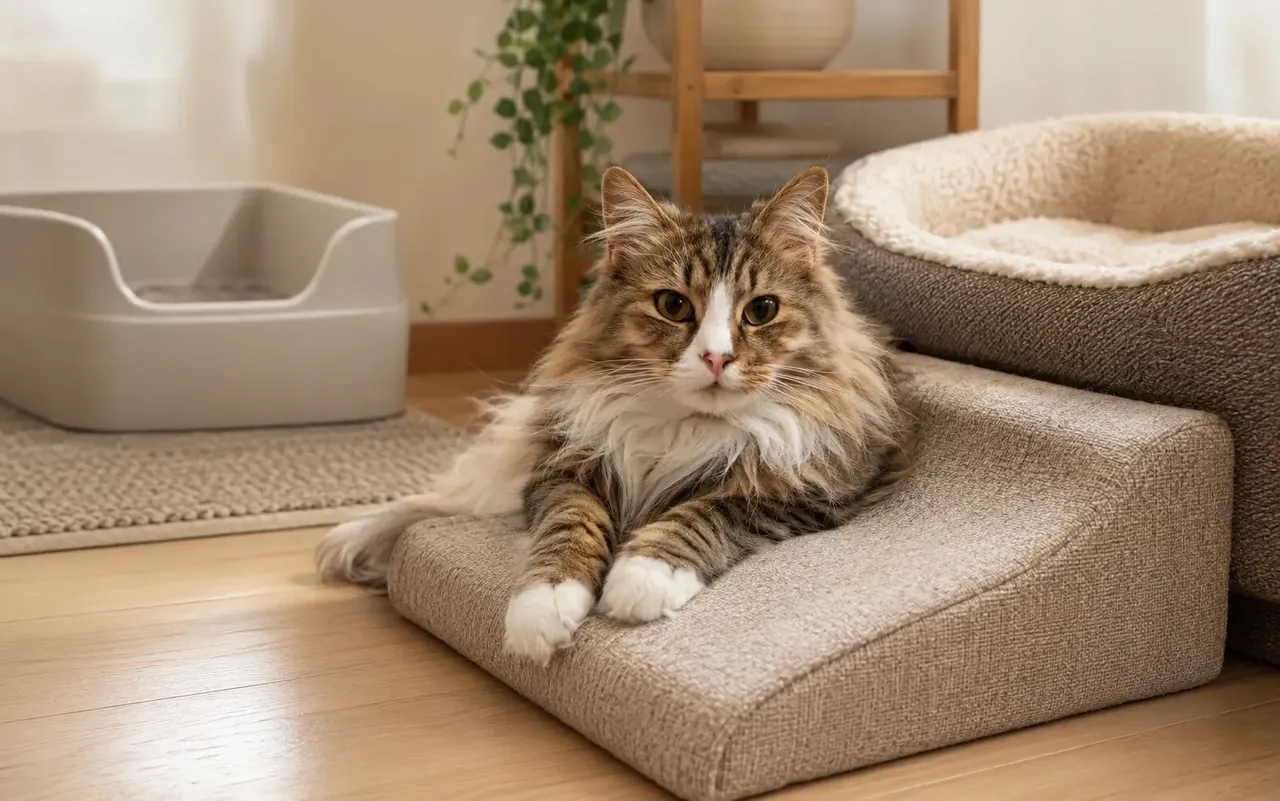 Topic illustration selected for this guide. Some learning images may be AI-assisted.
What kind of scratcher is best for a senior cat — the quick answer
✓ A stable low-angle or horizontal surface can allow stretching without difficult climbing or balance demands.
✓ Observe: Watch preferred posture, reach, grip and whether scratching has declined.
✓ Try this: Place nonslip options near beds and keep claws comfortably maintained.
A stable low-angle or horizontal surface can allow stretching without difficult climbing or balance demands. The useful question is not only what the moment resembles, but whether it fits this cat’s normal pattern. Context, frequency, recovery and accompanying changes make the interpretation safer and more accurate.
Observe the preferred posture
Watch whether the cat scratches rugs, bed edges, horizontal cardboard or a low vertical surface. Note reach, weight-bearing, slipping and whether one front leg is used less.
Build an easy scratching station
Place a wide stable scratcher on non-slip flooring near a resting or waking area. Offer horizontal and gently angled choices without removing a familiar accepted surface immediately.
Support claw and joint health
Check every claw including dewclaws for overgrowth, thickening or curling. Add ramps or floor-level routes and ask a veterinary professional to demonstrate trimming if the cat no longer maintains claws through scratching.
When veterinary advice matters
A sudden decline in scratching, limping, stiffness, painful handling, embedded claws or reduced jumping needs assessment. A torn claw, active bleeding, severe pain or inability to bear weight needs prompt care.
Your quick checklist
Loading saved progress…
Three simple things you can do
You do not have to change everything today. Pick one step that feels realistic, try it and see how your cat responds.
- 1Observe your cat’s individual baseline.
- 2Make one gentle change at a time.
- 3Ask a qualified professional when health or safety is involved.
Common mistakes
×Waiting for a dramatic symptom instead of noticing smaller changes from the cat’s normal routine.
×Changing several things at once, making it difficult to learn what actually helped.
×Treating general guidance as a substitute for advice from a veterinarian who knows the individual cat.
Questions cat people ask
Does every cat follow the same rule?+
No. Age, health, history, temperament and environment all change what works for an individual.
When should I seek professional help?+
Seek veterinary advice for sudden, persistent or concerning changes and urgent help for breathing difficulty, collapse, seizures, poisoning or urinary obstruction signs.
Still looking for the right answer?
Search the full EverYes Cats encyclopedia with your own words — a symptom, food, behaviour, breed or everyday question.
Checked, dated and transparent
- Prepared by
- EverYes Cats editorial team
- Last updated
- Source checked
- Primary reference
- AAHA: Evaluating the Healthy Senior Pet ↗
We begin with the named reference, rewrite the information in plain language and add practical cat-parent steps. Urgent health statements are checked against veterinary sources. This guide has not been individually reviewed by a veterinarian unless explicitly stated. It provides education, not diagnosis or treatment.
How we choose and use sources →
Spotted something unclear or outdated? Tell us so we can review it.
Loading your saved choice…
Older cats may shed claw sheaths less effectively and scratch less because of mobility change. Learn what to check, what to change safely and when professional help matters.
 02
 04
 05