Losing weight despite eating: why it matters
How to document a subtle change that can signal significant disease.
 Topic illustration selected for this guide. Some learning images may be AI-assisted.
Losing weight despite eating: why it matters — the quick answer
✓ Book a veterinary examination
✓ Measure food instead of estimating
✓ Track body weight on the same scale
✓ Do not add unlimited calories before finding the cause
Weight loss with a normal or increased appetite is not a successful diet. Hyperthyroidism, diabetes, intestinal disease and other conditions can create this pattern, particularly in middle-aged and older cats.
Confirm unexplained weight loss and prepare for the visit
Weight loss despite normal or increased appetite is not healthy dieting. Track the trend, keep normal complete food available and arrange veterinary assessment.
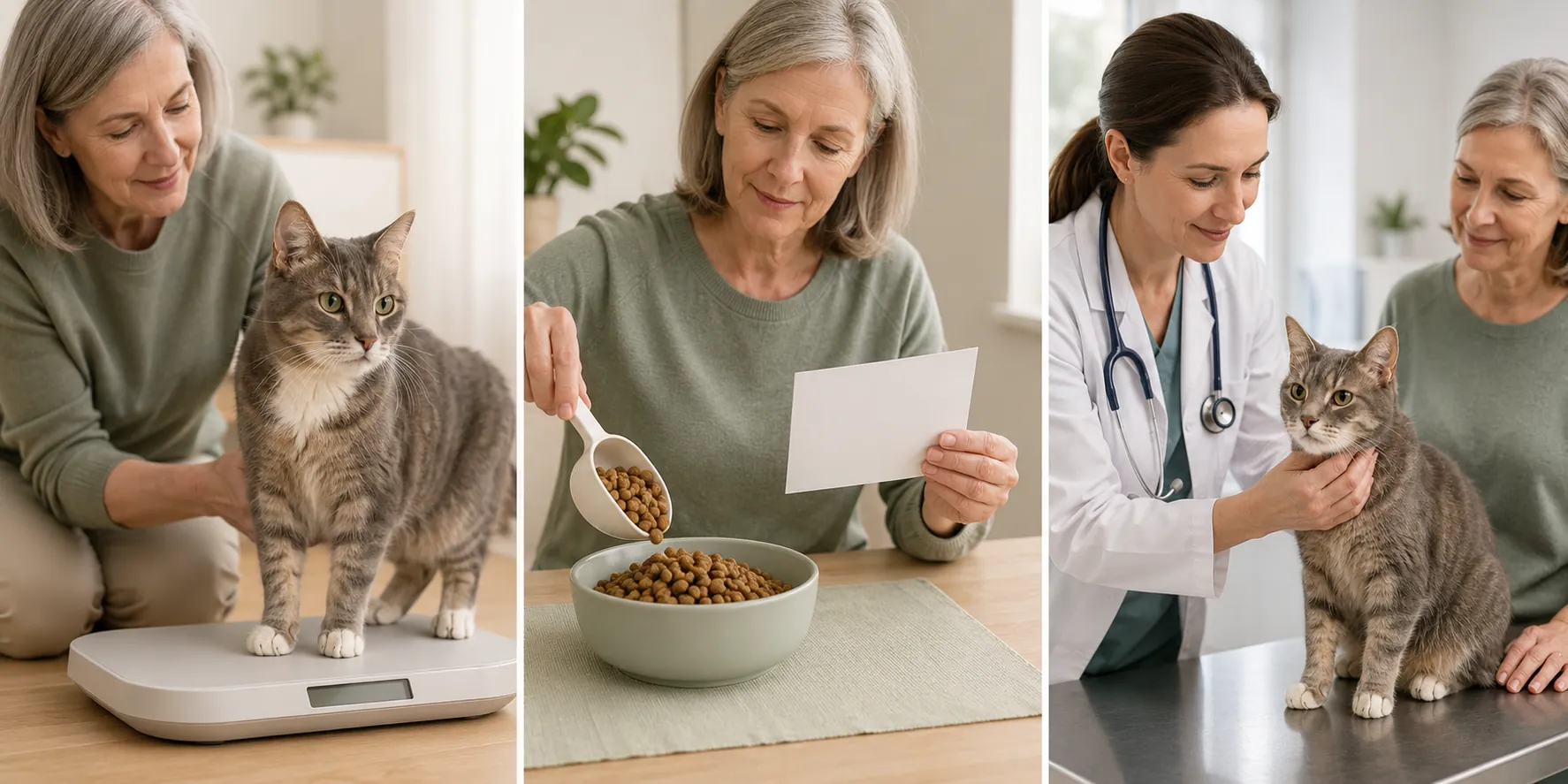
- 1Use the same scale
Weigh weekly under similar conditions and note the result; photographs can support the record, but they do not replace hands-on body and muscle assessment.
- 2Measure food and the whole pattern
Record portions and actual intake, feed cats separately when needed, and note thirst, urine, vomiting, stool, activity and coat changes.
- 3Investigate instead of adding unlimited calories
Book a veterinary examination because several diseases can look similar, and contact the clinic sooner for weakness, repeated vomiting, breathing trouble or refusal to eat.
Confirm the trend
Weigh the cat weekly on the same scale and record the result. Photos from above and the side can reveal gradual change, but hands-on body and muscle assessment is more useful than coat fluff.
Record the complete pattern
Note appetite, thirst, urine clump size, vomiting, diarrhea, activity, coat quality and medication. In a multi-cat home, feed separately so you know who eats what.
Why tests matter
Different diseases can look similar from home. A veterinary examination, blood pressure, blood work, urinalysis and other tests may be recommended based on age and findings.
Feed safely while waiting
Continue the usual complete diet unless the clinic advises otherwise. Contact the clinic sooner if the cat stops eating, becomes weak, vomits repeatedly or has breathing difficulty.
Your quick checklist
Your progress is saved on this device.
Three simple things you can do
You do not have to change everything today. Pick one step that feels realistic, try it and see how your cat responds.
- 1Weigh the cat weekly on the same scale and record food portions rather than estimating.
- 2Feed separately in a multi-cat home and track thirst, urine, vomiting, stool, activity and coat changes.
- 3Book a veterinary examination rather than simply increasing calories while the cause remains unknown.
Common mistakes
×Celebrating weight loss as successful dieting when it was not planned.
×Adding unlimited high-calorie food without measuring intake.
×Relying on photographs alone when a fluffy coat can hide muscle loss.
Questions cat people ask
Why is my cat losing weight but still eating well?+
Hyperthyroidism, diabetes, intestinal disease and other conditions can create this pattern. The similar outward signs require examination and often blood and urine tests to separate.
How much weight loss is concerning?+
Unexpected downward change deserves attention even before a dramatic percentage is reached. A trend on the same scale plus muscle and body-condition assessment is most useful.
Still looking for the right answer?
Search the full EverYes Cats encyclopedia with your own words — a symptom, food, behaviour, breed or everyday question.
Checked, dated and transparent
- Prepared by
- EverYes Cats editorial team
- Last updated
- 7 August 2026
- Source checked
- 7 August 2026
- Primary reference
- Cornell Feline Health Center ↗
We begin with the named reference, rewrite the information in plain language and add practical cat-parent steps. Urgent health statements are checked against veterinary sources. This guide has not been individually reviewed by a veterinarian unless explicitly stated. It provides education, not diagnosis or treatment.
Spotted something unclear or outdated? Tell us so we can review it.
Your answer helps us improve the cat encyclopedia.
Why senior screening matters before vision or brain changes appear.