Helping a senior cat stay comfortable
Senior cats benefit from easier access, weight and muscle tracking, regular veterinary checks and prompt attention to subtle changes. Slowing down should not automatically be dismissed as age.
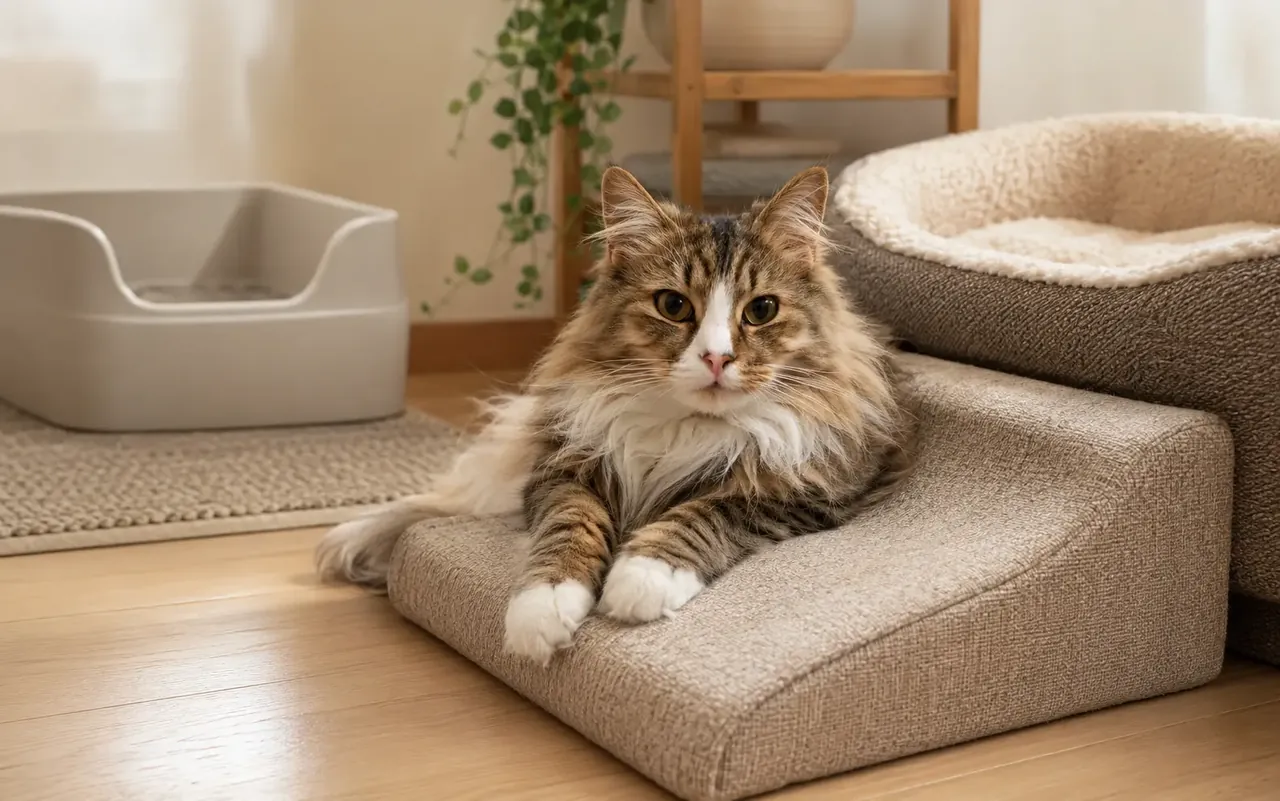 Topic illustration selected for this guide. Some learning images may be AI-assisted.
Helping a senior cat stay comfortable — the quick answer
✓ Schedule regular veterinary checks
✓ Make food, water and litter easy to reach
✓ Track weight, appetite and mobility
Older cats benefit from easier access to resources and closer attention to subtle changes. Aging itself is not a diagnosis.
Reduce physical effort
Low-entry litter boxes, steps to favorite furniture and non-slip rugs can support cats with reduced mobility.
Keep routines gentle
Warm beds, predictable meals and short play sessions can support comfort without demanding too much.
Do not dismiss change
Weight loss, increased thirst, confusion or reduced grooming should be investigated rather than accepted as normal aging.
Adapt the home before access is lost
Add non-slip routes, warm beds, low-entry litter trays and steps to favourite places. Keep food, water and litter available without stairs when mobility is reduced. Preserve familiar routines and make changes gradually so support does not feel like disruption.
Track the quiet health signals
Weigh on the same scale, photograph body shape and note jumping, grooming, thirst, appetite, stool, urine, sleep and nighttime vocalising. Arthritis, dental pain, kidney disease, thyroid disease and cognitive changes may first look like normal ageing. Bring the record to preventive visits.
Your quick checklist
Your progress is saved on this device.
Three simple things you can do
You do not have to change everything today. Pick one step that feels realistic, try it and see how your cat responds.
- 1Weigh your senior cat regularly on the same scale.
- 2Add non-slip paths and low-entry resources.
- 3Write down subtle changes before veterinary appointments.
Common mistakes
×Waiting for a dramatic symptom instead of noticing smaller changes from the cat’s normal routine.
×Changing several things at once, making it difficult to learn what actually helped.
×Treating general guidance as a substitute for advice from a veterinarian who knows the individual cat.
Questions cat people ask
At what age is a cat senior?+
Life-stage labels vary, and biological aging is individual. Preventive care should respond to the cat’s actual health rather than one birthday.
Is slowing down always arthritis?+
No, but pain and mobility changes are common and treatable. A veterinary assessment can identify the cause and suitable support.
Still looking for the right answer?
Search the full EverYes Cats encyclopedia with your own words — a symptom, food, behaviour, breed or everyday question.
Checked, dated and transparent
- Prepared by
- EverYes Cats editorial team
- Last updated
- 8 August 2026
- Source checked
- 8 August 2026
- Primary reference
- AAHA/AAFP Feline Life Stage Guidelines ↗
We begin with the named reference, rewrite the information in plain language and add practical cat-parent steps. Urgent health statements are checked against veterinary sources. This guide has not been individually reviewed by a veterinarian unless explicitly stated. It provides education, not diagnosis or treatment.
Spotted something unclear or outdated? Tell us so we can review it.
Your answer helps us improve the cat encyclopedia.
Low-cost changes for joints, senses, warmth and independence.