How to play with a senior cat
Senior cats still benefit from hunting-style play when it is short, low-impact and easy to win. Keep toys near floor level, use non-slip footing and treat new reluctance to move as health information.
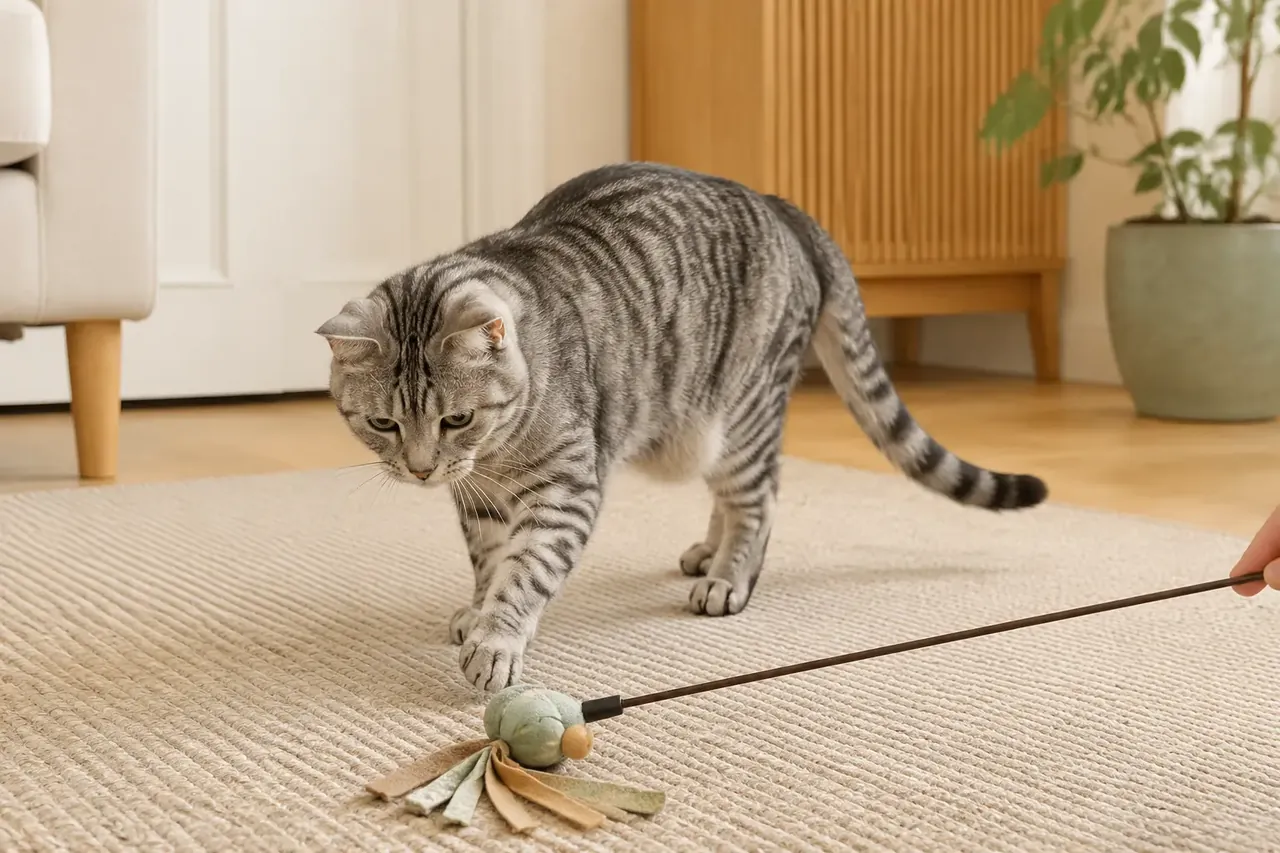 Topic illustration selected for this guide. Some learning images may be AI-assisted.
How to play with a senior cat — the quick answer
✓ Keep sessions short and easy to finish
✓ Move toys across the floor rather than demanding jumps
✓ Stop if movement looks stiff or uncomfortable
Older cats may move differently, but many still enjoy predictable, low-impact play. The best session meets the cat at their current comfort level.
Lower the intensity
Slide a soft toy around a chair leg, rustle paper or use a wand toy close to the floor. Small movements can be highly engaging.
Offer easy wins
Let the cat catch the toy often. A successful final catch makes the sequence feel complete without exhausting them.
Adapt the environment
Use non-slip rugs and play near a warm resting place. New reluctance to move deserves a veterinary conversation.
Adapt the hunt instead of removing it
Slide a soft toy behind a chair leg, move a wand slowly across the floor or hide part of a measured meal in an easy puzzle. Let the cat stalk from a warm bed and catch frequently; engagement matters more than distance or speed.
Use play to observe mobility
Notice hesitation, stiffness, unequal movement, missed jumps, shortened sessions and recovery afterward. Record a short video and discuss persistent changes with a veterinarian. Avoid slippery floors, forced jumping and play that requires painful twisting.
Your quick checklist
Your progress is saved on this device.
Three simple things you can do
You do not have to change everything today. Pick one step that feels realistic, try it and see how your cat responds.
- 1Offer short play at the time of day your senior cat is naturally alert.
- 2Move toys slowly across the floor and provide easy catches without high jumps.
- 3Use non-slip footing and stop before fatigue, stiffness or frustration appears.
Common mistakes
×Assuming an older cat no longer wants to play.
×Expecting kitten-speed chasing or repeated vertical jumps.
×Treating a sudden loss of interest as ageing without checking health and pain.
Questions cat people ask
How much play does a senior cat need?+
Several very short sessions may suit an older cat better than one long session. Let mobility, breathing, recovery and enthusiasm set the pace.
What toys are best for an arthritic cat?+
Try ground-level wand movement, soft rolling toys, scent games and easy puzzle feeding on non-slip surfaces. Ask your veterinarian about pain and safe activity.
Still looking for the right answer?
Search the full EverYes Cats encyclopedia with your own words — a symptom, food, behaviour, breed or everyday question.
Checked, dated and transparent
- Prepared by
- EverYes Cats editorial team
- Last updated
- 13 August 2026
- Source checked
- 13 August 2026
- Primary reference
- AAHA/AAFP Feline Life Stage Guidelines ↗
We begin with the named reference, rewrite the information in plain language and add practical cat-parent steps. Urgent health statements are checked against veterinary sources. This guide has not been individually reviewed by a veterinarian unless explicitly stated. It provides education, not diagnosis or treatment.
Spotted something unclear or outdated? Tell us so we can review it.
Your answer helps us improve the cat encyclopedia.
Low-cost changes for joints, senses, warmth and independence.