Nail care for senior cats
Senior claws may thicken, curve and shed their outer sheaths less effectively. Check every claw regularly and get help before an overgrown claw reaches the paw pad.
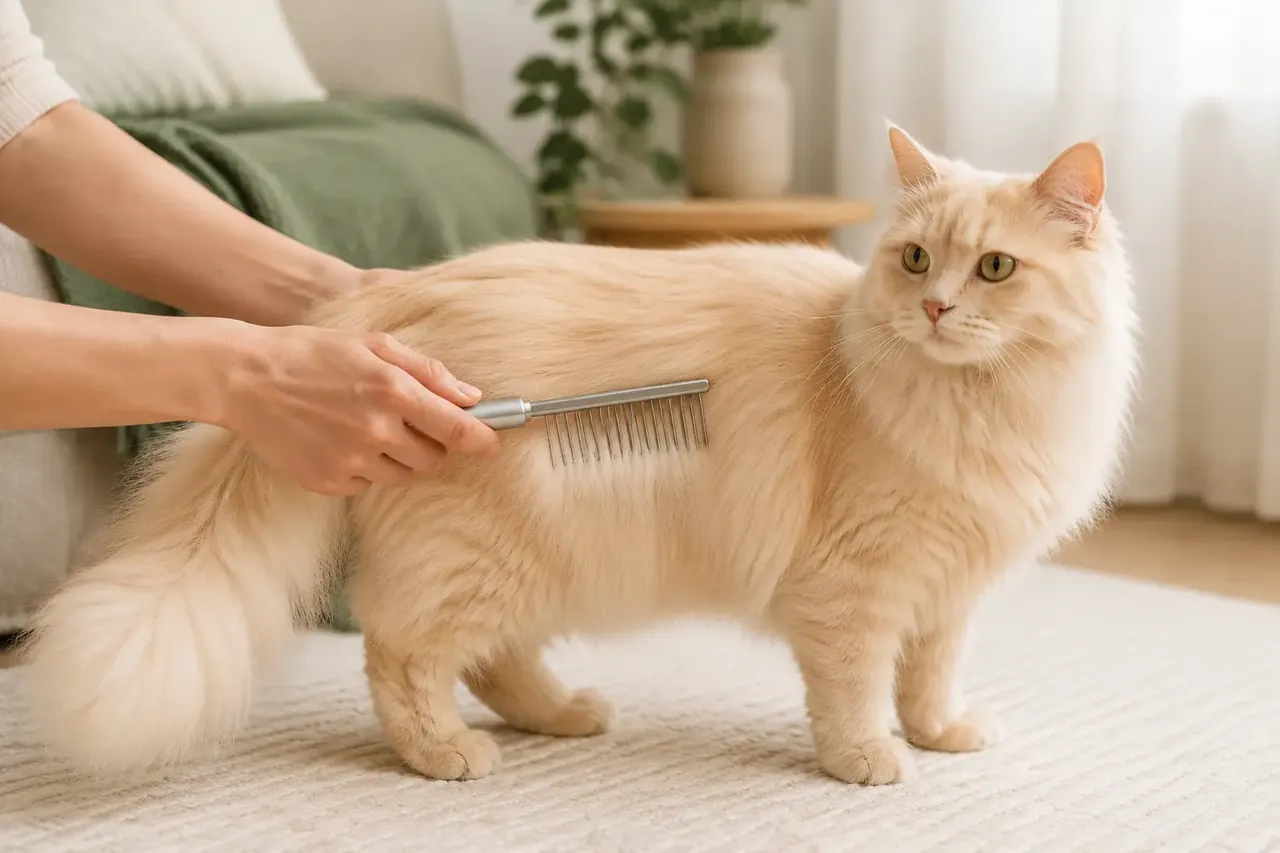 Topic illustration selected for this guide. Some learning images may be AI-assisted.
Nail care for senior cats — the quick answer
✓ Thick curved claws can catch in fabric or eventually press into a paw pad.
✓ Check every claw regularly in good light and ask a veterinary professional to demonstrate safe trimming.
✓ A claw touching the pad, bleeding, swelling, limping or painful handling needs veterinary care.
Senior cats may scratch and shed claw sheaths less effectively as activity and mobility change.
The short answer
Senior cats may scratch and shed claw sheaths less effectively as activity and mobility change.
Why it may happen
Thick curved claws can catch in fabric or eventually press into a paw pad.
Read the whole situation
One behaviour rarely has one guaranteed meaning. Compare it with your cat’s age, health, posture, appetite, litter habits, environment and usual pattern before drawing a conclusion.
What to do now
Check every claw regularly in good light and ask a veterinary professional to demonstrate safe trimming.
What not to do
Avoid punishment, forced handling and sudden large changes. They can add fear while hiding the information that would help you understand the original cause.
When to contact a veterinarian
A claw touching the pad, bleeding, swelling, limping or painful handling needs veterinary care.
Keep a useful record
Write down when it started, how often it happens and what immediately precedes and follows it. Photos, weights or short videos can make a veterinary or behaviour consultation more productive.
Check the claws without forcing the paws
Choose a relaxed moment and use good light. Look at front claws, dewclaws and back claws, then stop if the cat becomes tense. Reduced scratching, arthritis and less grooming can allow overgrowth that is easy to miss under fur.
DEEPER GUIDE1 more detailed sectionsOpen +
Trim only what you can identify safely
Ask a veterinary professional to demonstrate technique and suitable clippers. Take tiny amounts from the clear tip and avoid the blood supply inside the claw. A claw touching the pad, bleeding, swelling, limping or painful handling needs veterinary care.
Your quick checklist
Your progress is saved on this device.
Three simple things you can do
You do not have to change everything today. Pick one step that feels realistic, try it and see how your cat responds.
- 1Check claws every one to two weeks for thickening, splitting and curling toward the pad.
- 2Trim only the clear hook in short calm sessions with good light.
- 3Ask a veterinary professional for help when claws are dark, overgrown or painful.
Common mistakes
×Assuming scratching posts wear senior claws enough.
×Cutting a thick claw without locating the quick.
×Pulling loose sheaths or forcing painful paws.
Questions cat people ask
Why do senior cats get thick overgrown claws?+
Reduced activity and scratching, altered gait and age-related nail changes can prevent normal sheath shedding. Curved claws may eventually enter the pad.
How often should an older cat's claws be trimmed?+
Individual growth varies, so inspect every one to two weeks and trim as needed. Cats with deformity or poor mobility may need a professional schedule.
Still looking for the right answer?
Search the full EverYes Cats encyclopedia with your own words — a symptom, food, behaviour, breed or everyday question.
Checked, dated and transparent
- Prepared by
- EverYes Cats editorial team
- Last updated
- 13 August 2026
- Source checked
- 13 August 2026
- Primary reference
- AAHA/AAFP Feline Life Stage Guidelines ↗
We begin with the named reference, rewrite the information in plain language and add practical cat-parent steps. Urgent health statements are checked against veterinary sources. This guide has not been individually reviewed by a veterinarian unless explicitly stated. It provides education, not diagnosis or treatment.
Spotted something unclear or outdated? Tell us so we can review it.
Your answer helps us improve the cat encyclopedia.
Jumping down places force through joints and may become harder before ordinary walking changes. A practical guide to what matters, what to do and when to seek help.