Why is my cat drinking more than usual?
A clear increase in thirst is worth measuring and discussing with a veterinarian. Never restrict water while you investigate the cause.
 Topic illustration selected for this guide. Some learning images may be AI-assisted.
Why is my cat drinking more than usual — the quick answer
✓ Never restrict access to water
✓ Larger urine clumps support that the change is real
✓ Book a veterinary appointment for a persistent increase
✓ Weight or appetite changes make the history especially useful
A noticeable rise in thirst may be the first visible clue to kidney disease, diabetes, hyperthyroidism or another problem. It is not possible to diagnose the cause from thirst alone, but the change is worth measuring and discussing.
Measure increased thirst without restricting water
A sustained change in drinking or urine can be important health information. Keep water freely available and collect a short, practical record for the clinic.
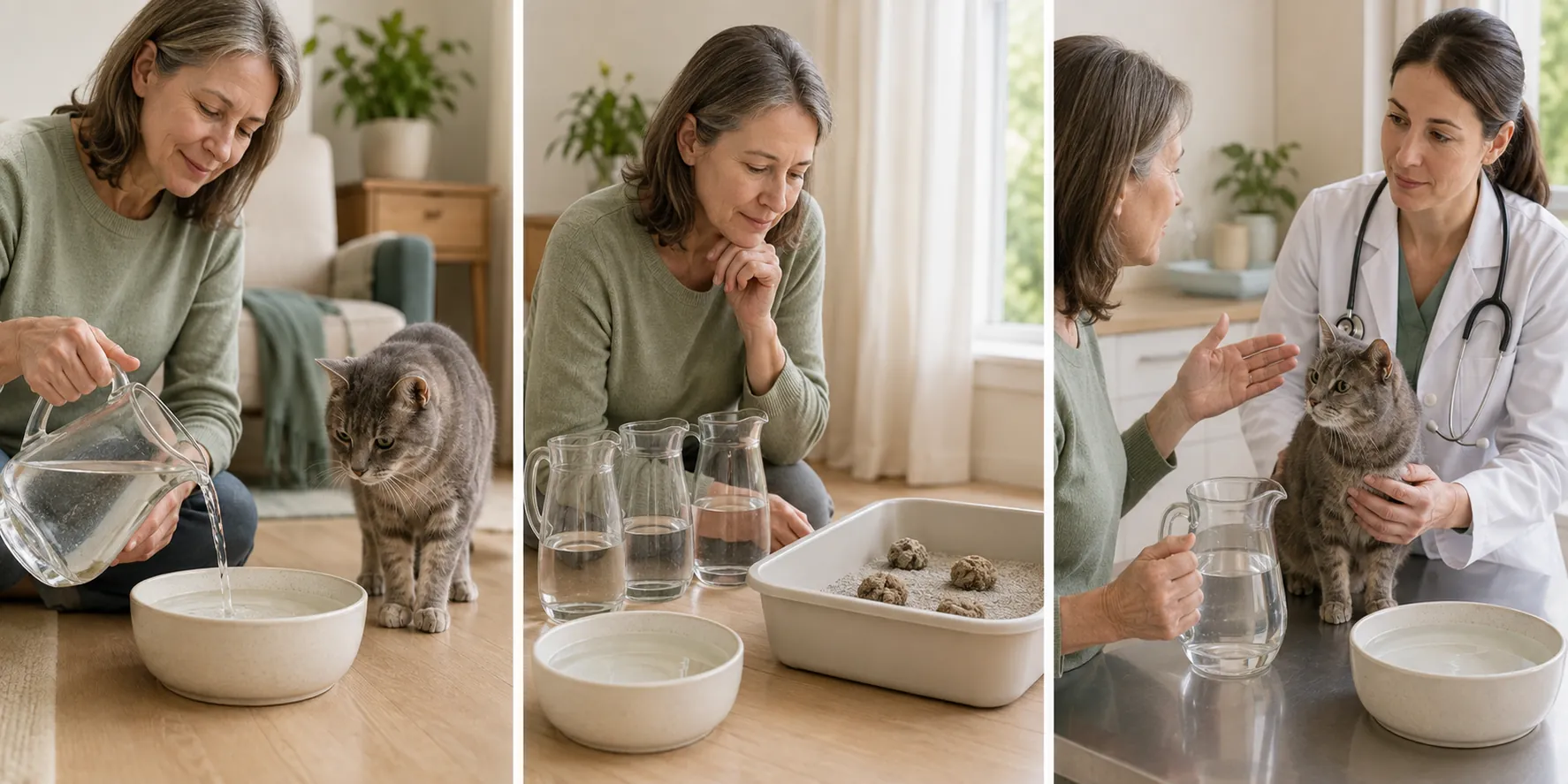
- 1Measure every refill
Use a measured amount for several days and include bowls, fountains, taps and wet-food moisture without limiting how much your cat can drink.
- 2Compare water, urine and weight
Record refills, urine-clump size or frequency, appetite, food type, vomiting, activity and weight so the whole pattern is visible.
- 3Share a persistent change
Book veterinary advice when increased thirst continues, and call sooner for weakness, repeated vomiting, weight loss, poor eating or very little urine.
Confirm the pattern
Refill bowls with a measured amount for several days, allowing for evaporation and other pets. Note fountain use, taps, toilets and larger or more frequent urine clumps.
Consider ordinary changes
Hot weather, more activity, a switch from wet to dry food or a new fountain can alter visible drinking. These details help interpretation but should not be used to dismiss a sustained change.
Why an examination matters
Kidney disease, diabetes, hyperthyroidism, vomiting, diarrhea and some medicines can change water balance. Blood and urine testing may be needed to tell them apart.
What to do now
Keep several clean water sources available and arrange a veterinary check if the change continues. Call sooner if the cat is weak, vomiting, losing weight, not eating or producing very little urine.
Confirm the change without delaying care
Refill measured bowls at the same time each day and record what remains, while remembering that fountains, wet food and several pets make exact totals difficult. More frequent or larger urine clumps often support that the change is real. Do not wait for a perfect measurement before booking advice.
What the clinic will want to know
Bring the start date, food type, appetite, weight trend, urine and stool changes, medicines and any vomiting. Kidney disease, diabetes, thyroid disease and other conditions can increase thirst, but an examination and tests—not an online list—are needed to identify the cause.
Your quick checklist
Your progress is saved on this device.
Three simple things you can do
You do not have to change everything today. Pick one step that feels realistic, try it and see how your cat responds.
- 1Measure what goes into bowls for three days while keeping every usual water source freely available.
- 2Record urine-clump size, food type, appetite, weight and any vomiting or activity change.
- 3Book a veterinary appointment for a sustained increase and call sooner if the cat is weak, vomiting, losing weight or not eating.
Common mistakes
×Restricting water to reduce urination or test whether the cat is truly thirsty.
×Assuming hot weather explains a persistent change without measuring it.
×Watching bowl use while overlooking fountains, taps, toilets and wet-food moisture.
Questions cat people ask
How much water is too much for a cat?+
Needs vary with body size, food moisture, heat and health, so a change from the individual baseline is often more useful than one universal number. Your veterinarian can interpret measured intake.
What illnesses can make a cat drink more?+
Kidney disease, diabetes, hyperthyroidism and several other conditions can increase thirst or urine. Home observation cannot distinguish them; examination, blood work and urine testing may be needed.
Still looking for the right answer?
Search the full EverYes Cats encyclopedia with your own words — a symptom, food, behaviour, breed or everyday question.
Checked, dated and transparent
- Prepared by
- EverYes Cats editorial team
- Last updated
- 8 August 2026
- Source checked
- 8 August 2026
- Primary reference
- Cornell Feline Health Center: Hydration ↗
We begin with the named reference, rewrite the information in plain language and add practical cat-parent steps. Urgent health statements are checked against veterinary sources. This guide has not been individually reviewed by a veterinarian unless explicitly stated. It provides education, not diagnosis or treatment.
Spotted something unclear or outdated? Tell us so we can review it.
Your answer helps us improve the cat encyclopedia.
One soft stool may be monitored in an otherwise well adult cat, but repeated diarrhoea, blood or illness signs require veterinary advice—sooner for kittens and seniors.