Steps or ramps for a senior cat?
Choose steps or a ramp by observing which movement is easiest for the individual senior cat. Stability, width, grip and a gentle approach matter more than the product label.
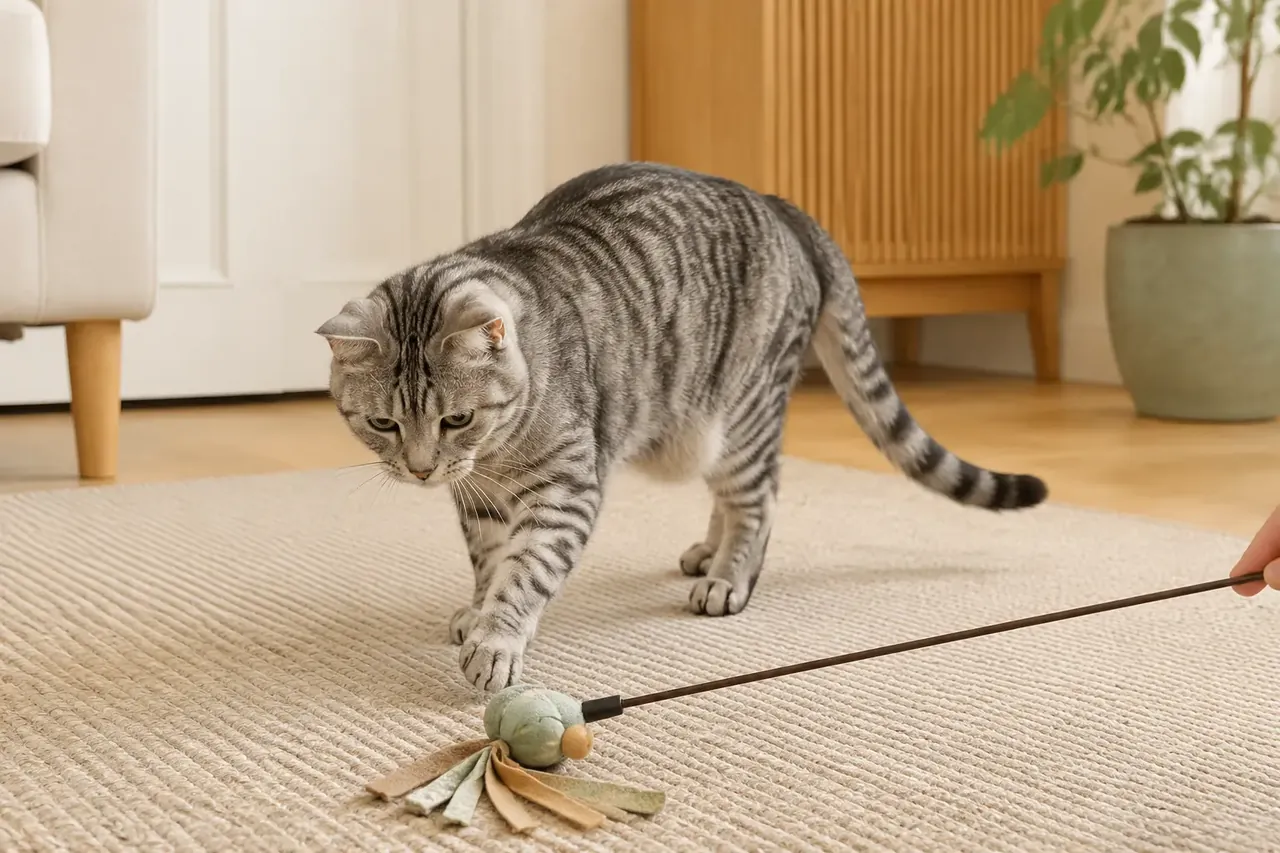 Topic illustration selected for this guide. Some learning images may be AI-assisted.
Steps or ramps for a senior cat — the quick answer
✓ Cats differ in whether bending joints, climbing steeply or balancing on narrow surfaces is hardest.
✓ Test a wide stable non-slip option at a gentle angle and reward exploration without forcing it.
✓ Limping, hesitation, falling, reduced grooming or difficulty standing should be discussed with a veterinarian.
A small step, ramp or rearranged furniture can preserve access to a favourite bed without demanding a large jump.
The short answer
A small step, ramp or rearranged furniture can preserve access to a favourite bed without demanding a large jump.
Why it may happen
Cats differ in whether bending joints, climbing steeply or balancing on narrow surfaces is hardest.
Read the whole situation
One behaviour rarely has one guaranteed meaning. Compare it with your cat’s age, health, posture, appetite, litter habits, environment and usual pattern before drawing a conclusion.
What to do now
Test a wide stable non-slip option at a gentle angle and reward exploration without forcing it.
What not to do
Avoid punishment, forced handling and sudden large changes. They can add fear while hiding the information that would help you understand the original cause.
When to contact a veterinarian
Limping, hesitation, falling, reduced grooming or difficulty standing should be discussed with a veterinarian.
Keep a useful record
Write down when it started, how often it happens and what immediately precedes and follows it. Photos, weights or short videos can make a veterinary or behaviour consultation more productive.
Compare one option at a time
A broad low step may suit a cat who dislikes long slopes, while a wide gentle ramp may reduce joint bending. Secure the option firmly, add non-slip material and place it beside—not instead of—a familiar route during testing.
DEEPER GUIDE1 more detailed sectionsOpen +
Use hesitation as health information
Never pull or lure a painful cat beyond comfort. Note stiffness, missed jumps, unequal movement, falling or difficulty standing and share a short natural video with the veterinary team. Mobility change deserves assessment.
Your quick checklist
Your progress is saved on this device.
Three simple things you can do
You do not have to change everything today. Pick one step that feels realistic, try it and see how your cat responds.
- 1Use wide stable steps with non-slip surfaces and a gentle approach angle.
- 2Place aids beside existing preferred routes and reward voluntary exploration.
- 3Keep essential resources on one floor even when the cat can use steps.
Common mistakes
×Using a steep smooth ramp.
×Forcing the cat up the new equipment.
×Treating access aids as a substitute for pain assessment.
Questions cat people ask
Are steps or a ramp better for an older cat?+
The best choice depends on joint range, confidence, vision and the height involved. Many cats prefer broad shallow steps; others use a gently sloped carpeted ramp.
How do I teach my cat to use pet stairs?+
Make them stable, place them on a familiar route and reward looking, touching and climbing one step at a time. Never push or carry the cat onto them.
Still looking for the right answer?
Search the full EverYes Cats encyclopedia with your own words — a symptom, food, behaviour, breed or everyday question.
Checked, dated and transparent
- Prepared by
- EverYes Cats editorial team
- Last updated
- 13 August 2026
- Source checked
- 13 August 2026
- Primary reference
- AAHA/AAFP Feline Life Stage Guidelines ↗
We begin with the named reference, rewrite the information in plain language and add practical cat-parent steps. Urgent health statements are checked against veterinary sources. This guide has not been individually reviewed by a veterinarian unless explicitly stated. It provides education, not diagnosis or treatment.
Spotted something unclear or outdated? Tell us so we can review it.
Your answer helps us improve the cat encyclopedia.
A senior may notice sound, light or scent, but new fixed staring can also accompany vision, hearing or cognitive change. A practical guide to what matters, what to do and when to seek help.